Quick answer
Choose your first Dwarvenite set by matching it to the scene you run most often. If you need a dungeon core, start with a wall-and-post set such as Fieldstone Core - Standard Walls & Posts (Unpainted). If you want a dramatic centerpiece, the Dread Pedestal (Unpainted) gives you a 4x4 footprint without committing to a full room. If you want to surprise players with hidden mechanics, Dungeon Magnetic Walls - Classic (Painted) adds a metal plate that holds magnetic accessories.
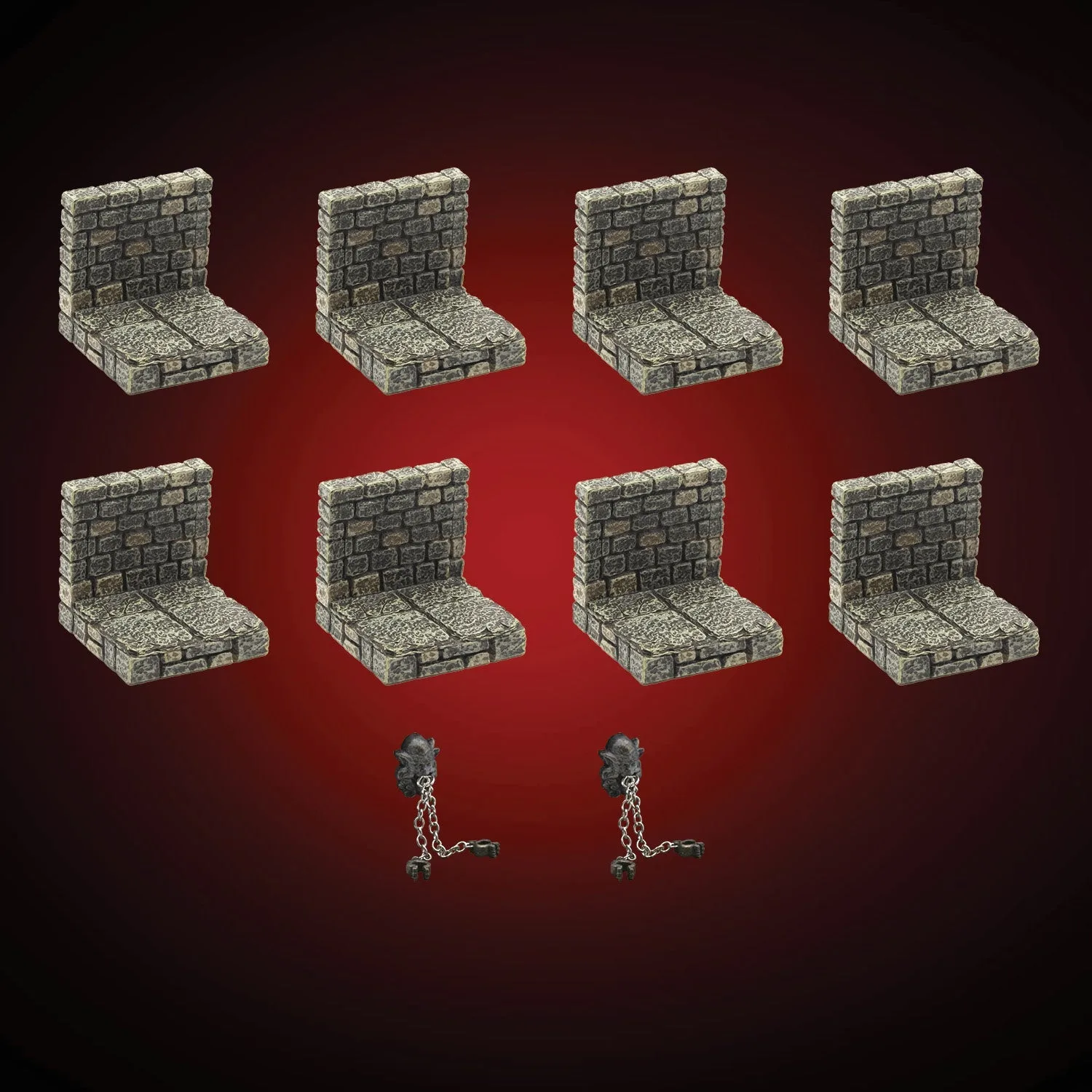
Dungeon Magnetic Walls - Classic (Painted)
Your first Dwarvenite set should solve the problem you actually have at the table, not the one you imagine you will have after buying six more sets. Most beginners get pulled toward the biggest or flashiest box, then discover they still lack enough walls to close a room. The better approach is to pick one scene type, buy enough pieces to run it, and expand from there.
This guide walks through the practical trade-offs: painted versus unpainted, core sets versus individual pieces, and magnetic versus standard walls. It uses real catalog facts from Dwarven Forge products so you can see how each choice changes your setup, your paint time, and your budget.
Start with the scene you run most often
Before comparing prices, write down the three encounters you ran in your last month of play. If most were dungeon corridors and rooms, a dungeon wall-and-post set is your foundation. If most were city streets, taverns, or rooftops, a city set is the better first purchase. If your table leans on big set-piece moments, a centerpiece piece can carry more excitement per dollar than another ten feet of wall.
This matters because Dwarvenite sets are modular, but they are not interchangeable across themes. A dungeon wall set will not build a believable city street, and a city wall set will not give you the rough stone look of a dungeon. Choosing a theme first prevents you from buying two half-sets that never quite finish a room.
- List your last three encounters and tag each as dungeon, city, or wilderness.
- Buy for the tag that appears most often, even if another theme looks more fun.
Decide painted versus unpainted before you compare prices
Unpainted sets cost less and let you match your existing paint scheme, but they add hours of priming and finishing before the first session. Painted sets cost more and lock you into a specific look, but they are ready to place on the table the day they arrive. Neither is wrong; the question is whether your hobby time is better spent painting or playing.
If you already own paints and enjoy the finishing step, unpainted is the efficient choice. If your group meets weekly and you do not want to delay a session, painted is the practical choice. You can also mix: buy a painted core so you can play immediately, then add unpainted individual pieces later to stretch your budget.
- Unpainted saves money but costs hobby time; painted saves time but costs more.
- A painted core plus unpainted add-ons is a common middle path.
Core sets versus individual pieces
A core set gives you enough walls, corners, and posts to enclose a room, which is the minimum for a usable dungeon. Individual pieces are for filling gaps, adding elevation, or testing a theme before committing to a full set. Beginners usually regret starting with individual pieces because a single block or pedestal cannot enclose a space on its own.
The exception is when you already own terrain from another system and only need a specific piece to bridge the two. In that case, an individual piece like the Dungeon Elevation Block (Unpainted) can add height and bridge compatibility without duplicating walls you already have.
- Buy a core set first if you cannot yet close a 4x4 room.
- Buy individual pieces only to fill a known gap or test a theme.
Magnetic walls: surprise value versus simplicity
Magnetic walls hide a metal plate beneath the front face so they can hold magnetic accessories. That lets you pop a trap onto a wall mid-session or remove an accessory the players already saw, which is a strong tool for tables that enjoy hidden information and reveals. Standard walls are simpler and usually cheaper for the same footprint.
If your group loves traps, secret doors, and physical props, magnetic walls earn their place quickly. If your group mostly wants clean rooms and corridors, standard walls are the better first buy because every dollar goes toward coverage rather than a feature you may not use.
- Choose magnetic if you run traps or hidden objects often.
- Choose standard if you need maximum wall coverage per dollar.
Fit guidance: matching pieces to your table and storage
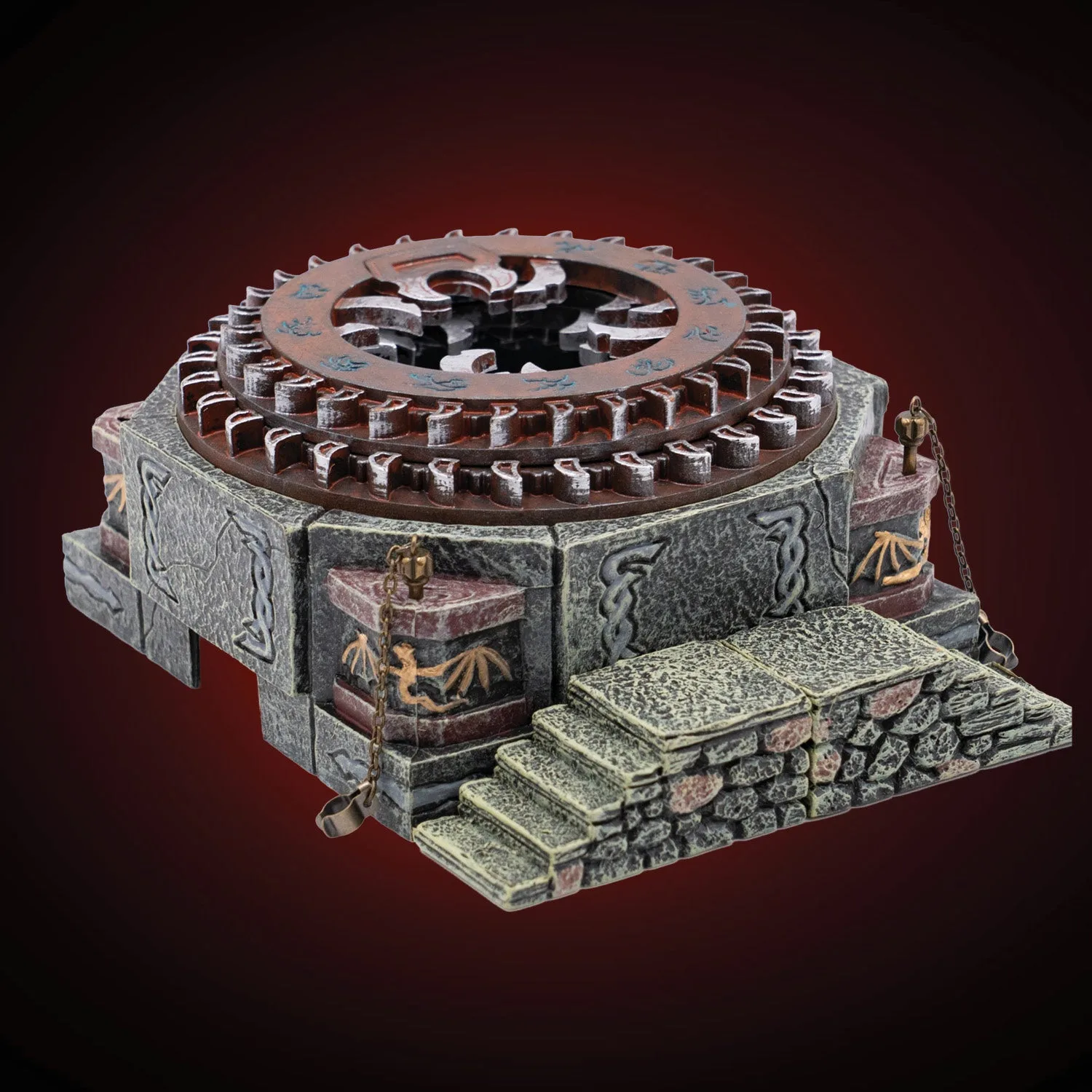
Check the footprint of any centerpiece before buying. The Dread Pedestal (Unpainted) has a solid 4x4 inch footprint and sits 2 inches high, so it occupies the same table space as a large floor tile and builds in-line with other pieces or as scatter terrain. That is a real commitment if your table is already crowded.
Also check how the set connects to what you own. Fieldstone Core - Standard Walls & Posts (Unpainted) includes corner posts remastered to include holes for facades, which matters if you plan to add city facades later. If a specification is not listed, treat it as unknown rather than assuming compatibility.
- Measure your play area before buying a 4x4 centerpiece.
- Confirm connection points and post holes before mixing themes.
Decision rules for your first Dwarvenite set
- If you cannot close a 4x4 room yet: Buy a wall-and-post core set before any centerpiece or individual piece. Coverage beats drama for a first purchase because a room you cannot enclose is not playable. Checkpoint: can you build four walls and four corners? If not, buy the core.
- If your group meets weekly and you do not paint: Choose painted sets so you can play the day the box arrives. Unpainted saves money but adds priming and finishing time before the first session. Checkpoint: will the paint time delay a scheduled session? If yes, buy painted.
- If you run traps and hidden objects often: Choose magnetic walls such as Dungeon Magnetic Walls - Classic (Painted). The hidden metal plate lets you add or remove accessories mid-scene without the players seeing the change coming. Checkpoint: do you reveal physical props during play? If yes, magnetic is worth the premium.
- If you want one dramatic centerpiece: Consider the Dread Pedestal (Unpainted) for its 4x4 footprint and four accessory holes. It builds in-line or as scatter terrain, so it works with a core set rather than replacing it. Checkpoint: measure your table first. A 4x4 piece is a real footprint.
- If you are unsure between dungeon and city: Buy the theme that matches your last three encounters. Fieldstone Core - Standard Walls & Posts (Unpainted) is a city core with facade-ready corner posts, so it points toward city campaigns, not dungeons. Checkpoint: count your last three encounters by theme and buy the majority.
Catalog facts that change the decision
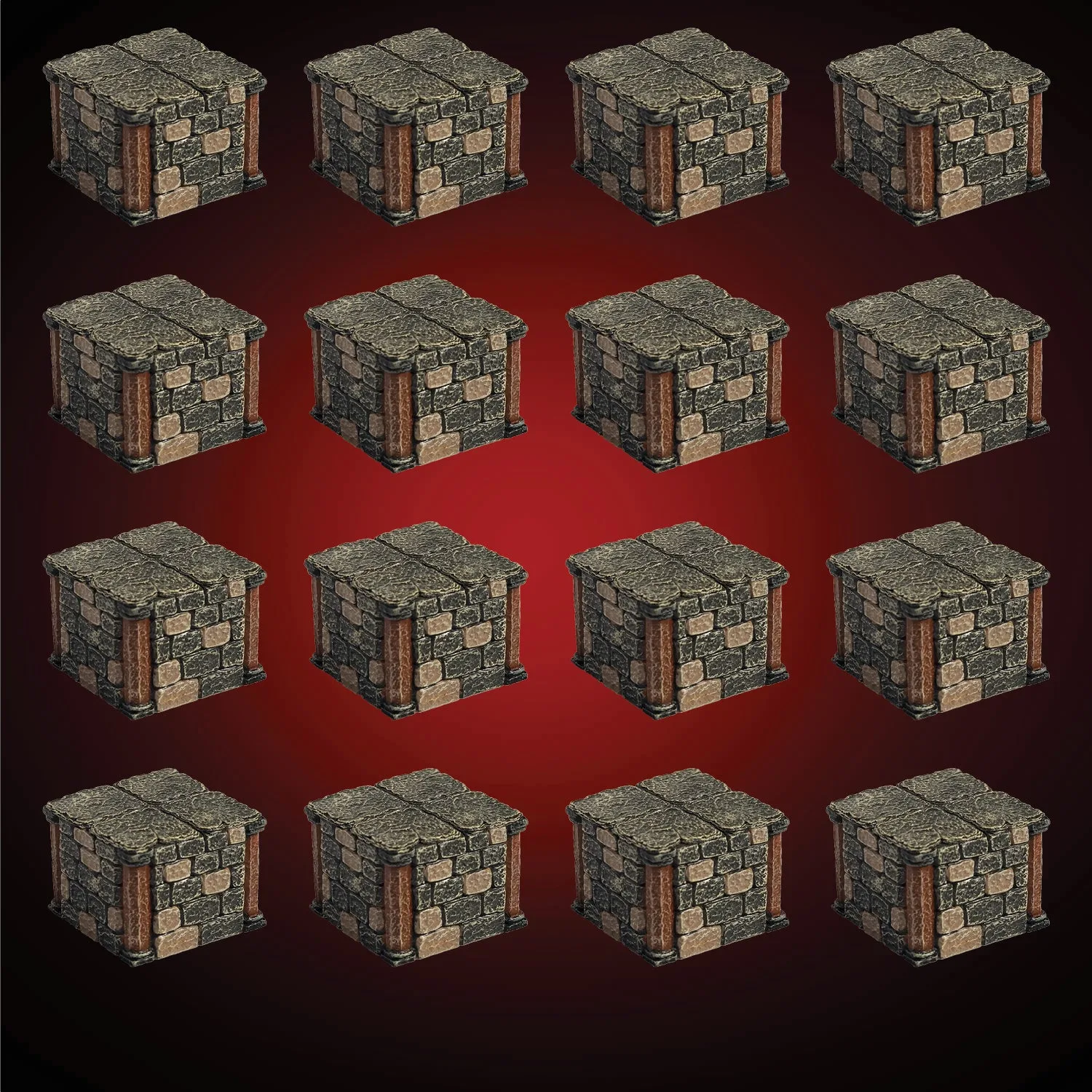
- Fieldstone Core - Standard Walls & Posts (Unpainted): Start your Cities collection with a wonderful array of solid, window, and door walls. With enough wall and corner posts to fully complement each floor pack, and our new window pane inserts. The corner posts are remastered from the original cities design to include holes for facades. This is a city-focused core, not a dungeon core. The remastered corner posts with facade holes make it easier to expand into city facades later, which is a strong fit if your campaign spends most of its time in settlements.
- Dread Pedestal (Unpainted): This chunky piece boasts a solid 4"x4" footprint and sits 2" high. It has four pole accessory holes to further tweak its look by adding thematic accessories, such as the included manacles. It builds in-line with your other pieces like a large 4x4 floor, or can be scatter built on top of... A 4x4 footprint is the same table space as a large floor tile, so it is a centerpiece commitment. The four accessory holes let you change the scene without buying a new piece, which is useful for boss rooms and ritual scenes.
- Dungeon Magnetic Walls - Classic (Painted): These walls hide a metal plate beneath their front face so they can hold any of our magnetic accessories so you can add décor or danger to your build. Our magnetic walls are indistinguishable from our regular walls so you can surprise your players by popping a magnetic trap on them during play, or by removing an accessory already on the wall. Comes with a pair of magnetic Manacles which can clip onto the limbs of... Magnetic walls look identical to standard walls, so the surprise is preserved. This is a strong first buy for groups that enjoy traps and physical reveals, but it costs more than plain walls for the same coverage.
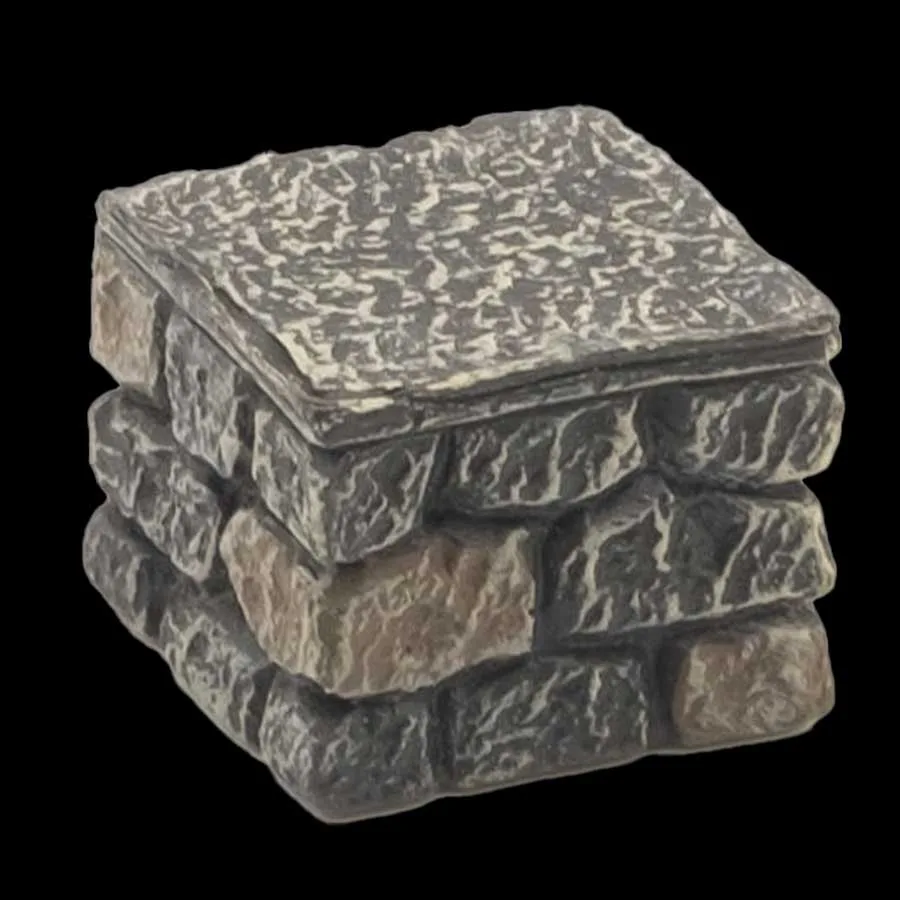
- Dungeon Elevation Block (Unpainted): The Dungeon Elevation Block (Unpainted) is an individual piece from Dwarven Forge's Dungeon of Doom (KS5) line, part of the Vaulted Dungeon and Elevation & Bridges offerings. It ships unpainted, ready for you to prime and finish in the colors that match your build. This is a single piece, not a room. It is best as a gap-filler once you already own a core set, or as a low-cost way to test whether elevation matters to your group before buying a larger elevation set.
Who this approach fits
Best for
- New Game Masters who want a playable room before buying centerpieces
- Groups that run one theme, such as dungeon or city, most weeks
- Players who want to mix painted cores with unpainted add-ons to manage budget
Not for
- Collectors who want every theme at once rather than a playable core
- Tables that only need scatter terrain and never enclose rooms
- Buyers who cannot measure their play area before committing to a 4x4 centerpiece
Buy the set that finishes a room you will actually run, then expand toward the pieces that add drama. Start with coverage, choose painted or unpainted based on your hobby time, and add magnetic walls or a centerpiece only when your table will use them.