Quick answer
Encourage imaginative play by giving children open-ended wooden toys and then stepping back. Set out a few pieces, follow your child's idea instead of directing it, and keep the setup simple. A small set like My Little Rock Pool or Monster Lock Box gives children something to explore, hide, sort, and story-build without a screen or a script.
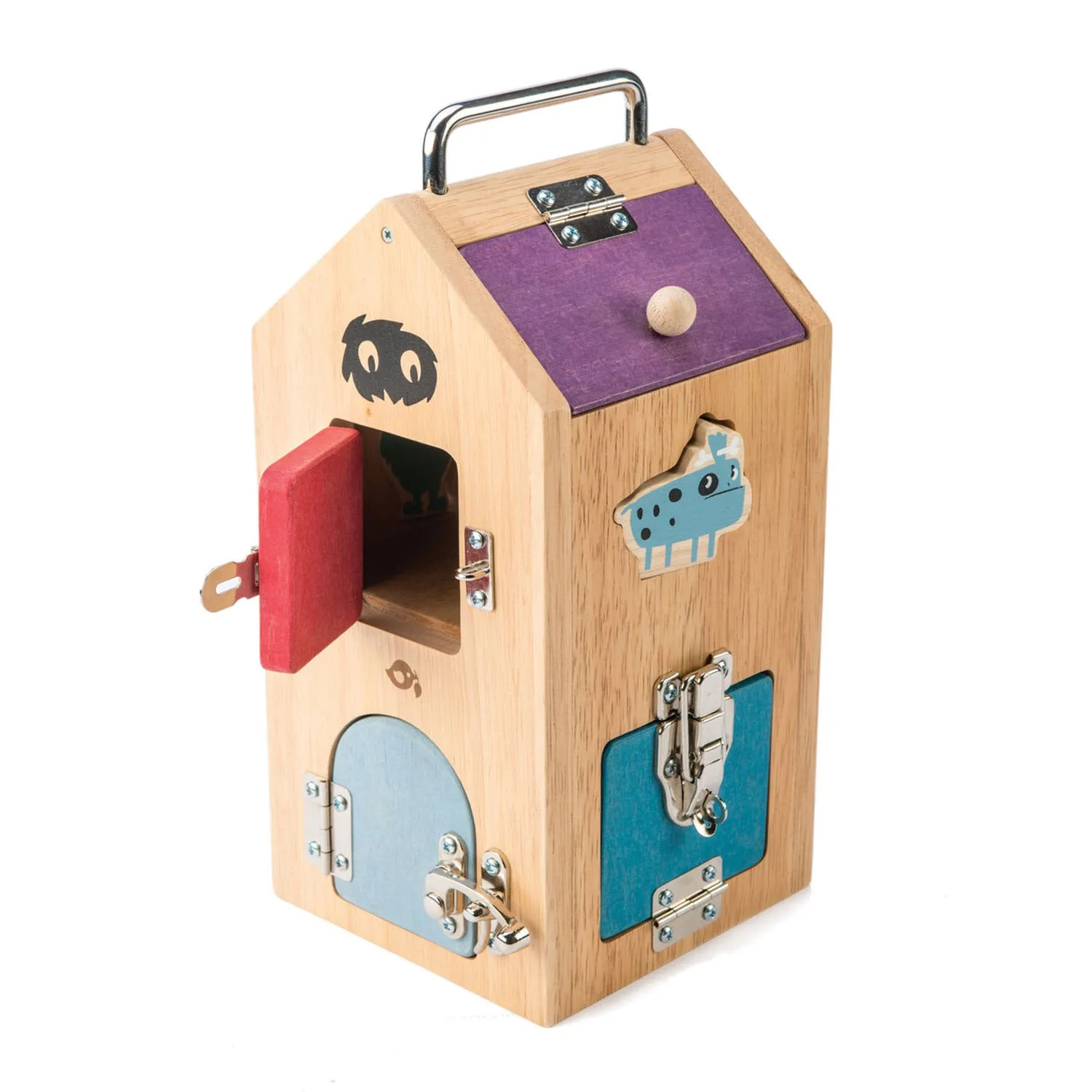
Monster Lock Box
Imaginative play does not need a script, a screen, or a room full of toys. It needs a child, a few open-ended objects, and an adult who knows when to stay quiet. Wooden toys are especially good at this because they rarely do the imagining for the child. A plain block can become a phone, a boat, or a slice of cake depending on the day.
This guide walks through seven steps you can use at home, from choosing toys to joining play without taking it over. Each step includes a common mistake so you can spot it early. The goal is not a perfect play session. It is a habit of creative play that grows with your child.
Start with open-ended toys, not scripted ones
Open-ended toys can become many things. A toy that only makes one sound or tells one story runs out of ideas quickly, while a set of rocks, figures, or doors keeps offering new combinations. When you choose wooden toys for imagination, look for pieces that can be sorted, stacked, hidden, or rearranged. That flexibility is what keeps a child returning to the same set weeks later.
You do not need a large collection. A few well-chosen sets that overlap in theme or scale often work better than a crowded shelf, because children can connect them into one story. A coastal set, a lock box, and a couple of small animal figures can cover a lot of pretend play ground.
- Pick toys with no fixed outcome, such as blocks, figures, and sorting sets.
- Rotate a small selection rather than displaying everything at once.
Set the stage, then step back
A little setup goes a long way. Place a few toys where your child can reach them, then leave the scene alone. You might put the rock pool pieces on a low table with a cloth nearby, or line up the monster doors so they are ready to open. This invites play without instructing it.
The common mistake here is over-preparing. If you build the whole scene and explain what happens next, you have done the imagining. Children often need a starting point, not a finished story. Aim for a partial setup that leaves obvious gaps for them to fill.
- Set out three to five items, not the entire collection.
- Leave one part of the scene unfinished so your child can decide it.
Follow your child's lead instead of directing
Once play begins, your job shifts to watching and responding. If your child says the octopus is baking bread, the octopus is baking bread. Adding a small detail, such as asking what the bread is for, keeps the story moving without taking it over. This is one of the clearest pretend play benefits: children practice language, sequencing, and perspective when they run the story themselves.
Adults often slip into teaching mode, correcting names or steering the plot toward something more realistic. That can end a play session fast. Save the facts for later and stay inside the story while it is happening.
- Ask open questions like what happens next rather than what is that.
- Match your child's tone and energy instead of redirecting the story.
Use simple props and real objects
You do not need themed accessories for every idea. A scarf, a cardboard box, or a wooden garland can extend a story at no extra cost. Props work best when they are vague enough to change roles. A garland can be a fishing line, a bridge, or a decoration for a pretend cafe.
The mistake is buying a prop for every scenario. That turns play into a shopping list and can make children dependent on the right accessory before they start. Keep a small box of flexible extras and let your child choose.
- Keep a basket of fabrics, boxes, and clips near the play area.
- Let your child decide what a prop represents, even if it changes mid-story.
Build small routines that invite play
Imaginative play happens more often when it has a predictable slot in the day. A quiet twenty minutes after lunch, or a wind-down session before dinner, gives children permission to sink into a story. The routine matters more than the length. Short, regular windows beat one long weekend session.
A common mistake is scheduling play right after a stimulating activity, such as screen time or a busy outing. Children often need a calm transition first. A snack, a drink, and a quiet room make it much easier for play to start on its own.
- Anchor play to an existing routine like after lunch or before bath.
- Protect the time from interruptions, including your own phone.
Keep the setup low and reachable
Children play more when they can get to their toys without help. Low shelves, open baskets, and floor-level trays make it easy to start and easy to tidy. This also supports independence, which feeds imaginative play because children can choose their own starting point.
The mistake is storing toys in high boxes or lidded containers that require an adult. If your child has to ask for every piece, play stalls. Keep the most-used sets visible and let the rest rotate in and out.
- Use open baskets so pieces are visible and easy to grab.
- Store small parts in a shallow tray so they do not get lost.
Refresh the scene without replacing the toys
When interest drops, change the setting rather than buying something new. Move the same set to a different room, add a cloth, or pair it with a different figure. Familiar toys in a new context often spark a fresh story. This is a simple imaginative play idea that costs nothing.
The mistake is assuming boredom means the toy is finished. Usually the child needs a new problem to solve or a new character to meet. A small change, such as adding a second animal or hiding one piece, can restart play quickly.
- Rotate one or two pieces in or out instead of replacing the whole set.
- Try the same toys in a new spot, such as a hallway or garden table.
Seven steps to encourage imaginative play
- Choose open-ended wooden toys: Pick sets that can be sorted, hidden, stacked, or rearranged, such as My Little Rock Pool or Monster Lock Box. Avoid toys that only do one thing. Checkpoint: can your child use this toy in at least three different stories?
- Set out a small invitation to play: Place three to five pieces within reach and leave part of the scene unfinished. Do not build the whole story for your child. Mistake to avoid: over-preparing the setup so there is nothing left to imagine.
- Let your child lead the story: Follow the plot your child creates and respond inside it. Ask what happens next instead of correcting names or facts. Checkpoint: did your child make most of the decisions in the last five minutes?
- Add flexible props: Keep a basket of scarves, boxes, and simple items nearby. Let your child decide what each prop represents, even if it changes. Mistake to avoid: buying a specific accessory for every new idea.
- Anchor play in a daily routine: Choose a calm, predictable window such as after lunch or before bath. Keep it short and protect it from interruptions. Checkpoint: is the slot after a calm transition rather than screen time?
- Make toys easy to reach: Use low shelves and open baskets so children can start and tidy up without adult help. Rotate the rest out of sight. Mistake to avoid: storing everyday toys in high or lidded containers.
- Refresh the scene, not the toy box: When interest fades, move the same set to a new room, add a cloth, or swap in one different figure before buying anything new. Checkpoint: did a small change restart play within a few minutes?
Wooden toys that support imaginative play
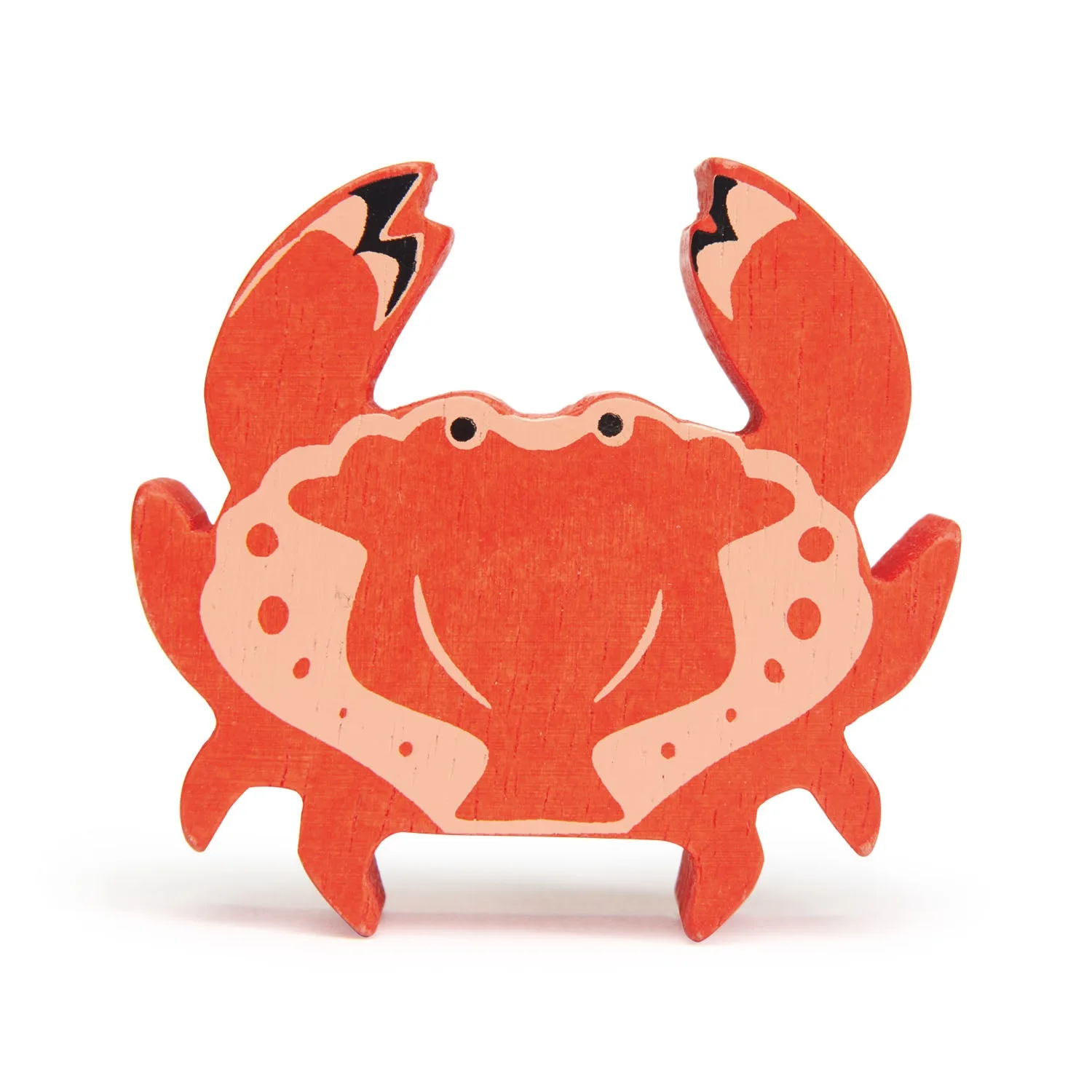
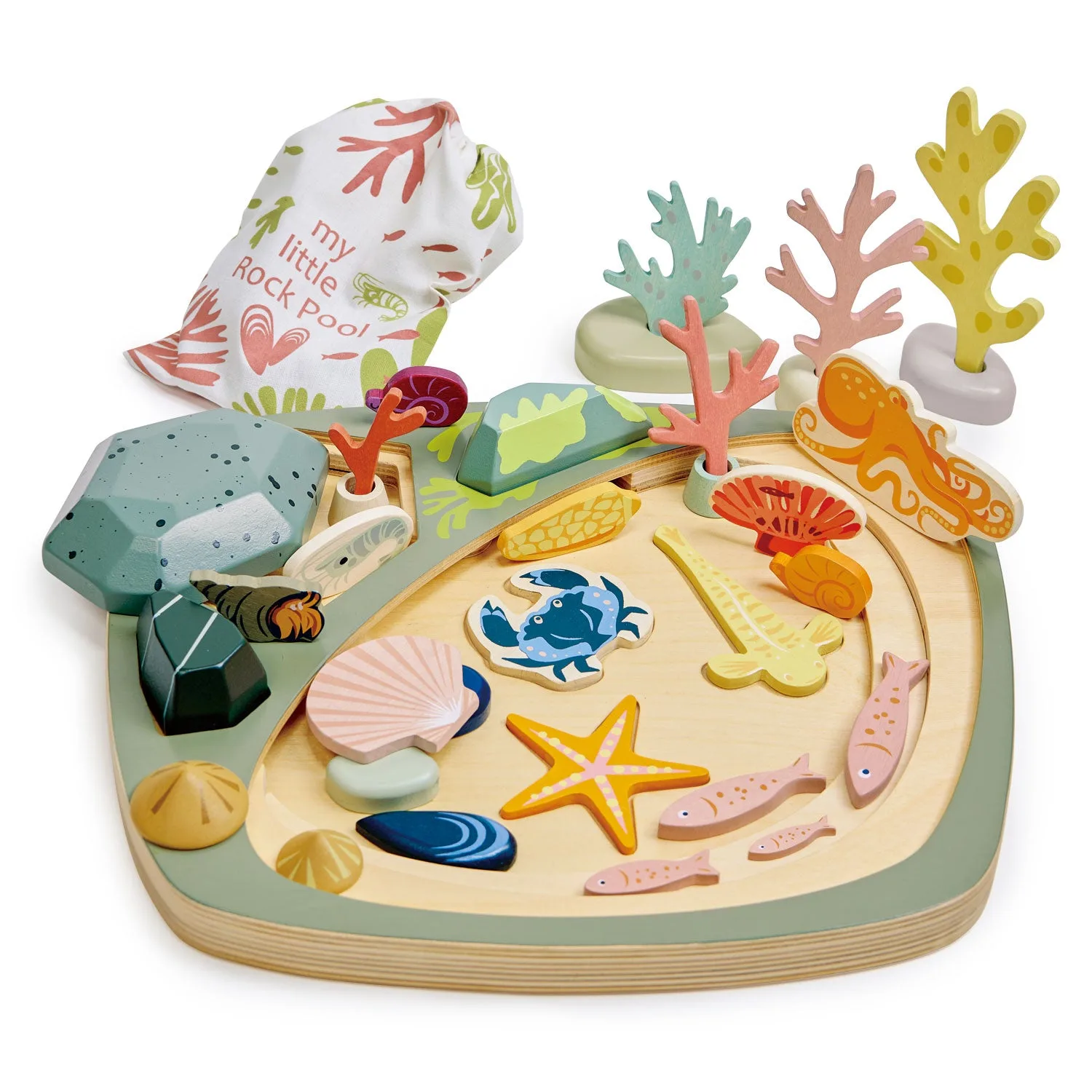
- My Little Rock Pool: Includes 8 rocks, an octopus, starfish, crab, mud hopper, a family of 4 fish, 2 snails, a sea shell, a hermit crab, 2 barnacles, a shrimp, a mussel, a scallop, a sea anemone, and 2 limpets, with 3 large rocks covering cavities and 3 shapes in the base layer for shape sorting. The mix of hiding spots, small sea creatures, and a sorting base gives children several ways to play: they can sort shapes, hide animals, or build a seaweed forest from the rocks with holes.
- Monster Lock Box: Features 8 different doors with various lock mechanisms and 2 monster shapes, and is designed for free exploration and hiding monsters while helping children learn to open and close different locks. Opening and closing the doors builds problem-solving skills, and the hidden monsters turn a practical task into a pretend game with a clear goal.
- Coastal Summer Garland: An illustrated plywood garland with hand-drawn coastal prints including seashells, buckets, and crabs, described as durable and eco-friendly. It works as a flexible prop for seaside stories and can also decorate a play corner, so it supports pretend play without adding another scripted toy.
Encouraging imaginative play is less about buying more and more about setting up a few open-ended toys, stepping back, and letting your child run the story. Start with one set, one small routine, and one habit of following your child's lead. The rest tends to take care of itself.