Quick Answer
To install a belted booster seat safely, place it on the vehicle seat, have your child sit in it, and thread the lap and shoulder belt through the correct guides. The seatbelt must lie flat and tight across the child's lap and chest.
Why a Belted Booster Seat Matters for Older Children
Once your child outgrows a high-back booster, a belted booster seat like the For Your Little One UpGo Belted Booster Seat lifts them so the adult seatbelt fits correctly. Without it, the lap belt can ride up onto the stomach and the shoulder belt can cross the neck, both of which are unsafe in a crash.
A belted booster seat uses your car's existing seatbelt rather than a built-in harness. This makes it lightweight and easy to move between vehicles, but it also means correct installation is entirely up to you. A mistake as simple as a twisted belt or wrong routing can reduce protection.
When Your Child Is Ready for a Belted Booster
The UpGo Booster Seat is designed for children 125–150 cm tall, roughly ages 6 to 12. Your child should be mature enough to sit properly without slouching or leaning, since the booster does not have side wings to keep them in position. If your child cannot sit still for the whole trip, a high-back booster with a harness may still be the safer choice.
Step-by-Step Installation Guide
- Position the booster seat: Place the booster seat on the vehicle seat, centered on the seating position. Ensure it sits flat against the seat back with no gap. The booster should not be tilted or angled. Common mistake: placing the booster on a sloped seat without checking for a level fit.
- Have your child sit and adjust: Ask your child to sit all the way back against the vehicle seat, with their knees bent over the edge of the booster. Their back should be straight against the seat back. Check: If your child slouches forward, the belt will not fit properly. Practice sitting correctly before buckling.
- Route the lap belt: Pull the vehicle's lap belt across your child's lap, making sure it lies low and snug across the upper thighs, not the stomach. Thread it through the lap belt guides on the booster (usually marked with a blue or red indicator). Common mistake: leaving the lap belt too high or forgetting to thread it through the guide.
- Route the shoulder belt: Pull the shoulder belt across your child's chest and thread it through the shoulder belt guide on the booster. The belt should cross the center of the shoulder, not the neck or arm. Ensure the belt lies flat with no twists. Check: If the shoulder belt touches your child's neck, the booster may be too low or the seat position wrong.
- Tighten and test: Pull the seatbelt tight to remove slack. You should not be able to pinch any excess belt webbing at the lap or shoulder. The belt should be snug enough that your child cannot slide their hand under it easily. Final test: Do a quick shake test — the booster should not move more than 2.5 cm (1 inch) side to side or forward.
Product Facts
-
For Your Little One UpGo Belted Booster Seat - Sage Teal (6-12 Years): Designed for children aged 6 to 12 years (125–150cm), the UpGo Booster Seat keeps your child safe, comfortable and ready for every journey. This height range ensures the adult seatbelt crosses the child's shoulder and hips correctly, not their neck or stomach.
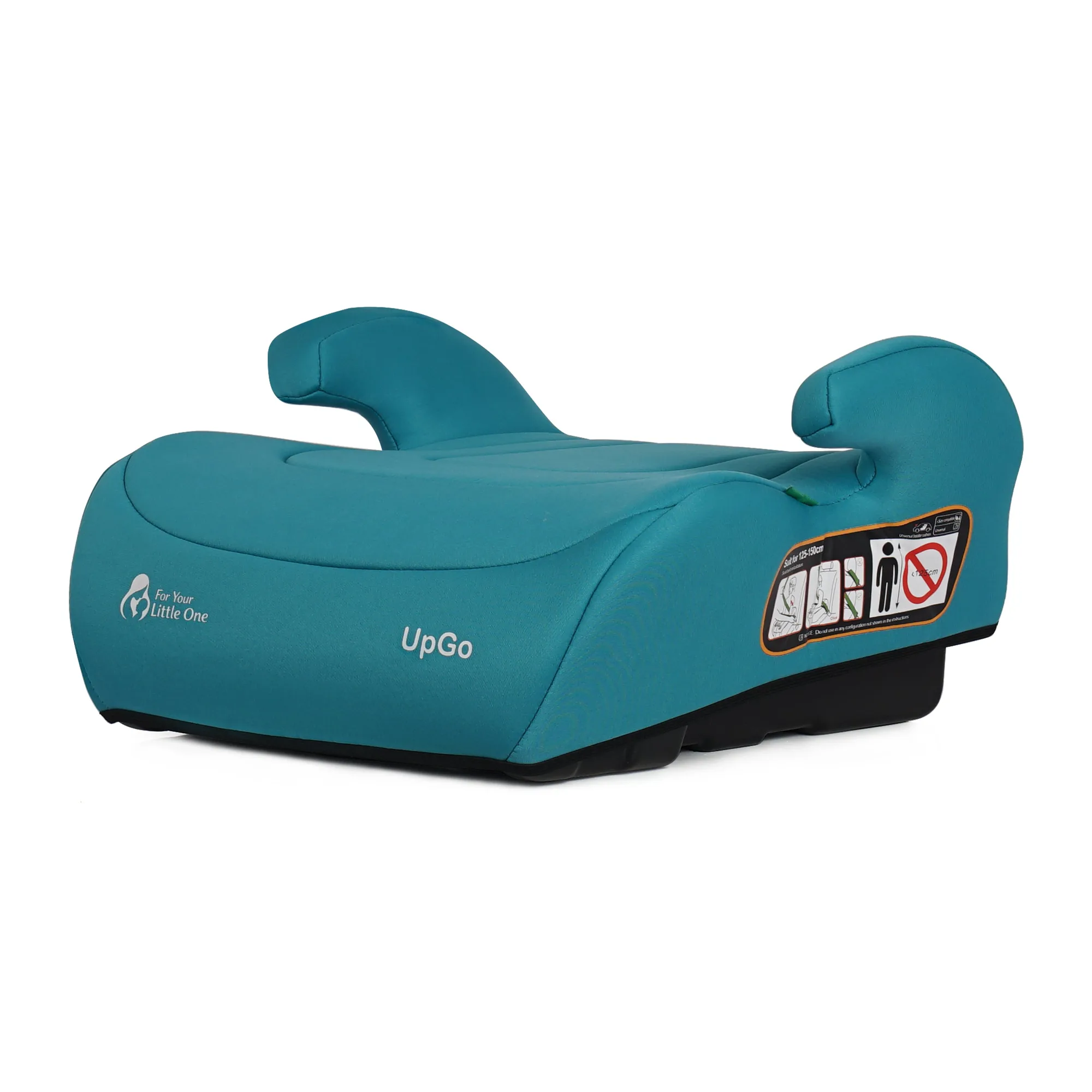
For Your Little One UpGo Belted Booster Seat - Sage Teal (6-12 Years)
-
For Your Little One UpGo Belted Booster Seat - Slate Mist (6-12 Years): A lightweight, no-fuss booster seat that uses your car's existing seatbelt — perfect for the school run, long trips, or everything in between. Because it uses the car's seatbelt, you can move it between vehicles quickly, but you must check the fit each time.
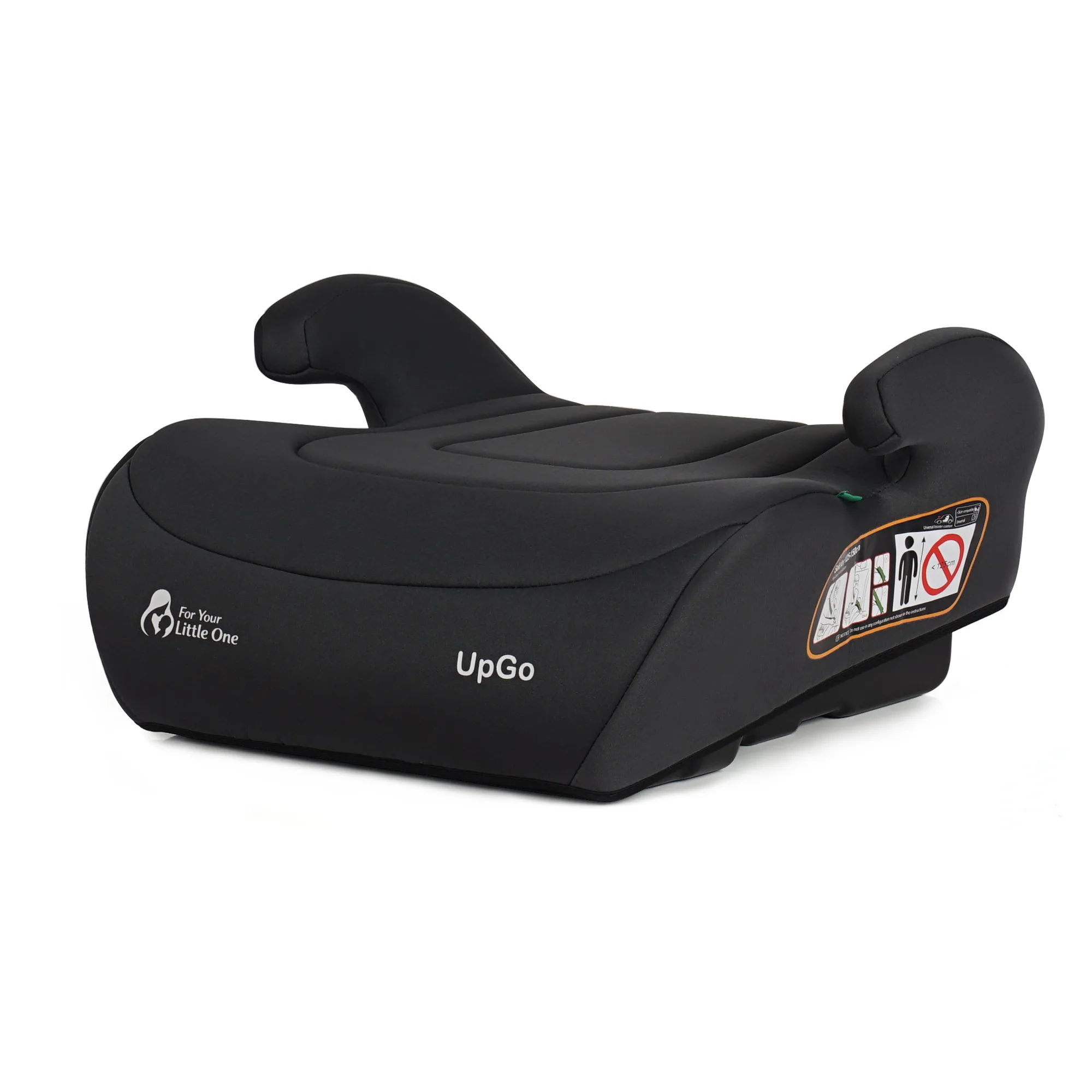
For Your Little One UpGo Belted Booster Seat - Slate Mist (6-12 Years)