Quick answer
To install a car seat base without the LATCH system, use the vehicle's seat belt and lock it tightly, then check for no more than 1 inch of movement at the belt path.
Why you might need to skip LATCH
Many vehicles have LATCH anchors only in the outboard rear seats, and some older models lack them entirely. Also, once the combined weight of the child and car seat exceeds 65 pounds (per NHTSA guidelines), LATCH is no longer allowed and you must switch to the seat belt method. Knowing how to install with the belt gives you a safe option in any vehicle.
Trade-off: seat belt vs. LATCH
Seat belt installation can feel less intuitive than clicking into LATCH anchors, but it is equally safe when done correctly. The main challenge is ensuring the belt stays locked and the base does not shift. Some seat belts have a locking retractor, while others require a locking clip—check your vehicle owner's manual to know which type you have.
Step-by-step seat belt installation
- 1. Position the base: Place the car seat base on the vehicle seat in the desired rear-facing position. Ensure the base is flat against the seat cushion and the recline angle is correct (check the base's level indicator). Common mistake: placing the base on a slope or over a seat crease can prevent a tight fit.
- 2. Route the seat belt: Pull the vehicle seat belt out fully and thread it through the base's belt path. The belt path is the slot on the base where the belt goes—consult your base manual if unsure. Buckle the seat belt. Checkpoint: make sure the belt is not twisted, as twists reduce holding force.
- 3. Lock the seat belt: If your vehicle has a locking retractor, slowly pull the belt all the way out until it clicks, then let it retract. If it does not lock, you will need a locking clip (check your vehicle manual). For the NurtureMax base, ensure the belt is snug against the base. Common mistake: not fully extending the retractor—this prevents the lock from engaging.
- 4. Tighten the base: Push down firmly on the base with one hand while pulling the seat belt webbing tight with the other. Use your body weight to compress the vehicle seat cushion. Continue tightening until the base does not move more than 1 inch side-to-side or front-to-back at the belt path. Checkpoint: test the movement at the belt path, not at the top of the base.
- 5. Double-check the lock: Once the base is tight, give the seat belt a tug at the buckle to confirm it is locked. If the belt loosens, repeat the locking step or use a locking clip. Attach the carrier to the base and verify it clicks securely. Final check: the base should remain tight even if you shift your weight off it.
Product spotlight
-
NurtureMax Infant Car Seat Base Support: The Evenflo NurtureMax Infant Car Seat Base installs quickly via the standard lower anchor system or a vehicle seat belt. This means you can use the same base with a seat belt when LATCH is not available, and the anti-rebound design helps absorb crash forces for added safety.
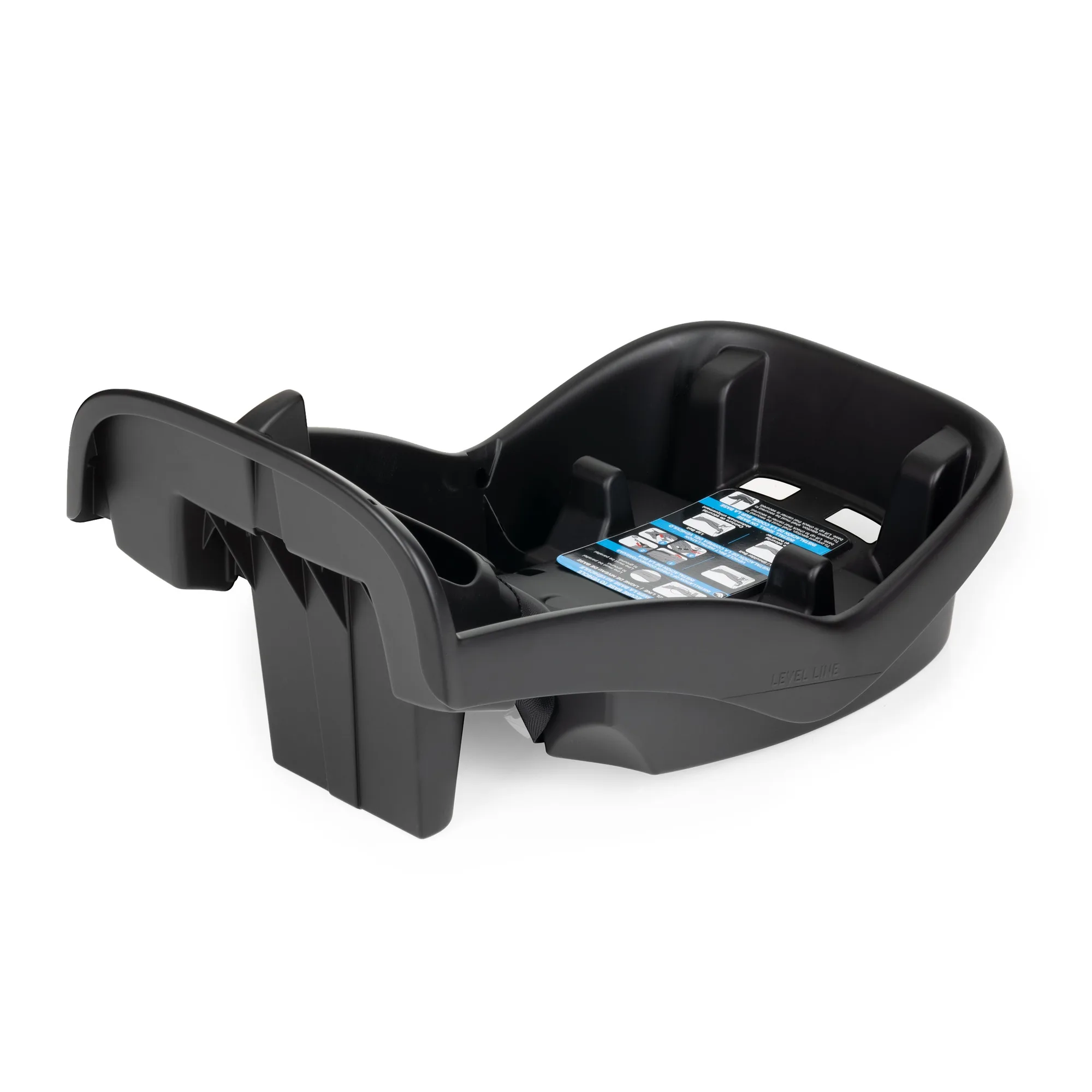
NurtureMax Infant Car Seat Base Support