Quick answer
Layer a down filled anorak by starting with a moisture-wicking base, adding an insulating mid layer, and finishing with the anorak itself. This traps warmth without overheating.
Why layering matters for a down anorak
Down insulation works by trapping body heat in air pockets. But if your child sweats, moisture can reduce the loft and warmth of the down. Layering helps manage sweat and temperature, so the anorak performs best in cold, dry conditions.
The Bobo Choses down filled anorak uses 100% duck down and has a recycled polyamide shell and lining. This makes it lightweight and packable, but the shell isn't waterproof. In wet snow or rain, you may want a waterproof outer layer over it.
Trade-offs to consider
More layers aren't always better. Too many bulky layers can restrict movement and make the anorak fit too snugly. The anorak is designed for active kids, so prioritize thin, breathable fabrics that allow freedom of movement.
For milder winter days (above freezing), a single long-sleeve shirt under the anorak may be enough. Reserve the full three-layer system for temperatures below 20°F (-6°C) or windy conditions.
Step-by-step layering guide
- Start with a moisture-wicking base layer: Choose a thin, snug top made of merino wool or synthetic fabric (like polyester). Avoid cotton, which holds sweat and makes kids cold. A long-sleeve thermal shirt works well. Check that the base layer is not too tight under the arms or neck—it should feel like a second skin without restricting movement.
- Add an insulating mid layer: Use a fleece jacket, wool sweater, or lightweight puffer vest. This layer traps additional warm air. For active kids, a fleece is ideal because it breathes and dries quickly. Avoid thick cable-knit sweaters under the anorak—they create bulky lumps that reduce the anorak's fit and warmth.
- Put on the down filled anorak: Zip up the Bobo Choses anorak over the mid layer. The anorak should fit comfortably without pulling at the shoulders or chest. If the zipper feels strained, remove the mid layer or size up. The anorak's down needs room to loft—if it's compressed by too many layers, it won't insulate as well.
- Add a waterproof outer shell if needed: In wet snow or rain, layer a waterproof jacket over the anorak. Choose a shell that is large enough to fit over the anorak without compressing it. This keeps the down dry and warm. Never wear a waterproof shell under the anorak—it traps moisture against the down and reduces insulation.
- Accessorize for extremities: Add a hat, gloves, and warm socks. The anorak has a hood, but a beanie underneath adds extra warmth. Mittens are warmer than gloves for young kids. Check that the anorak's cuffs and hem fit snugly—if they ride up, cold air can enter and undo your layering work.
Product facts
-
Bobo Choses down filled anorak: This Bobo Choses down filled anorak is filled with 100% duck down and has a shell and lining made from 100% recycled polyamide. The down provides excellent warmth-to-weight ratio, but the recycled polyamide shell is not waterproof, so avoid wearing it as the outermost layer in wet weather.
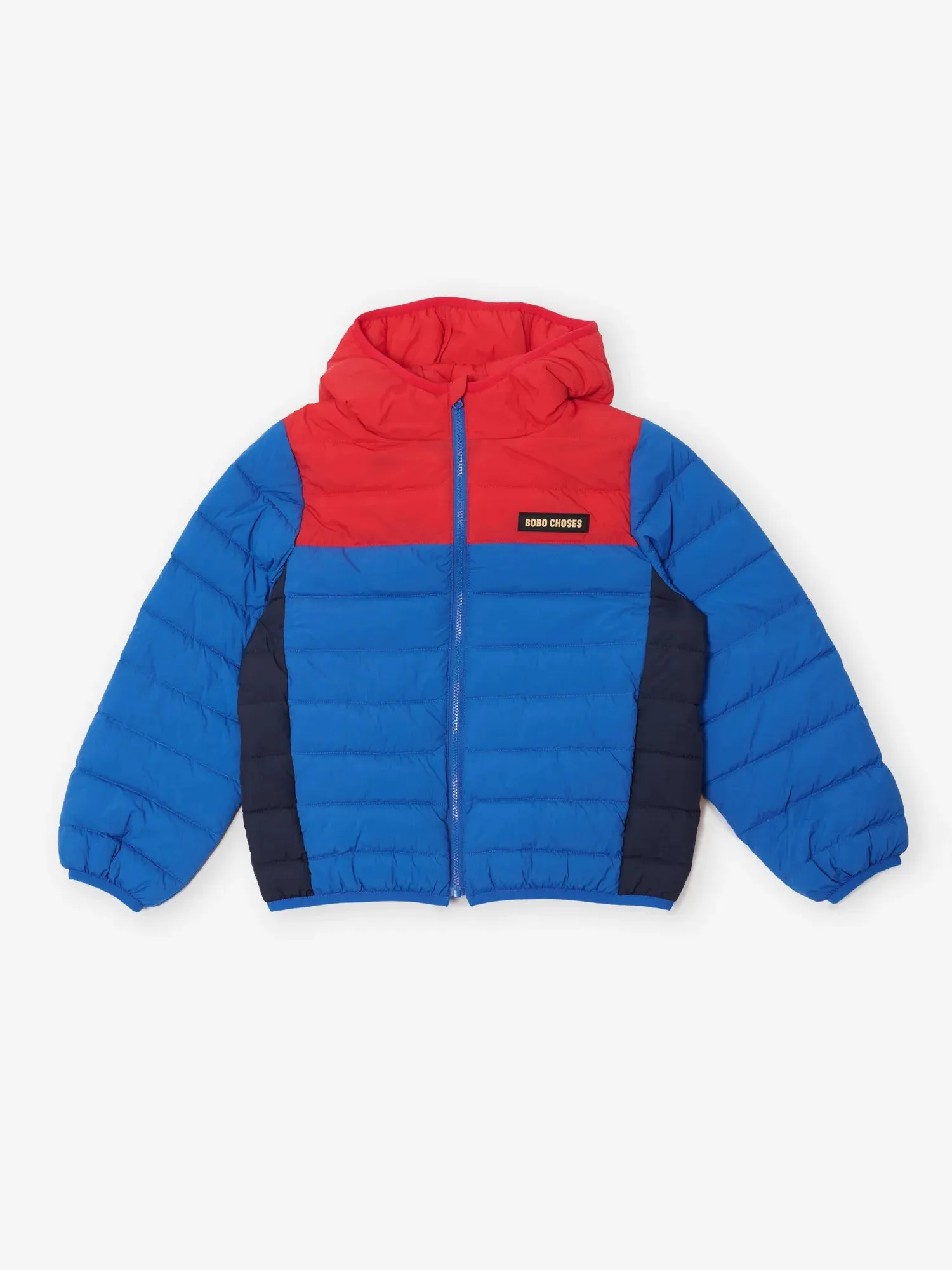
Bobo Choses down filled anorak