Quick answer
Start with a thin base layer, add an insulating mid-layer, then top with a jacket that fits comfortably over both. Choose natural fibers like wool for breathability and warmth.
Why fabric choice matters for layering
Natural materials like wool regulate temperature better than synthetics, so you stay warm without overheating. A brushed wool jacket, for example, traps heat while allowing moisture to escape—key for active days.
How to layer a jacket in 4 steps
- Start with a thin base layer: Choose a lightweight merino wool or silk top that fits snugly. This wicks moisture away from your skin, keeping you dry and warm. Avoid cotton base layers—they trap sweat and make you cold.
- Add an insulating mid-layer: Wear a sweater, fleece, or cardigan over your base. This layer traps body heat. Make sure it’s not too thick, or your jacket won’t close properly. Check that you can still move your arms freely after adding this layer.
- Choose a jacket that fits over both layers: Your jacket should close comfortably without pulling. A brushed wool style like the Capas Jacket offers warmth and a tailored look that accommodates layers. If the jacket feels tight when buttoned, size up or remove a mid-layer.
- Finish with accessories for extra warmth: Add a scarf, hat, or gloves to seal gaps at the neck and wrists. This prevents heat loss and completes your winter outfit. Don’t forget to tuck your scarf inside the jacket collar for a polished finish.
Product spotlight
-
Capas Jacket: 100% wool, made in France, fiber from South America, spun in Czech Republic, knitted and sewn in France. Wool's natural breathability and warmth make it an ideal outer layer for fall and winter layering without adding bulk.
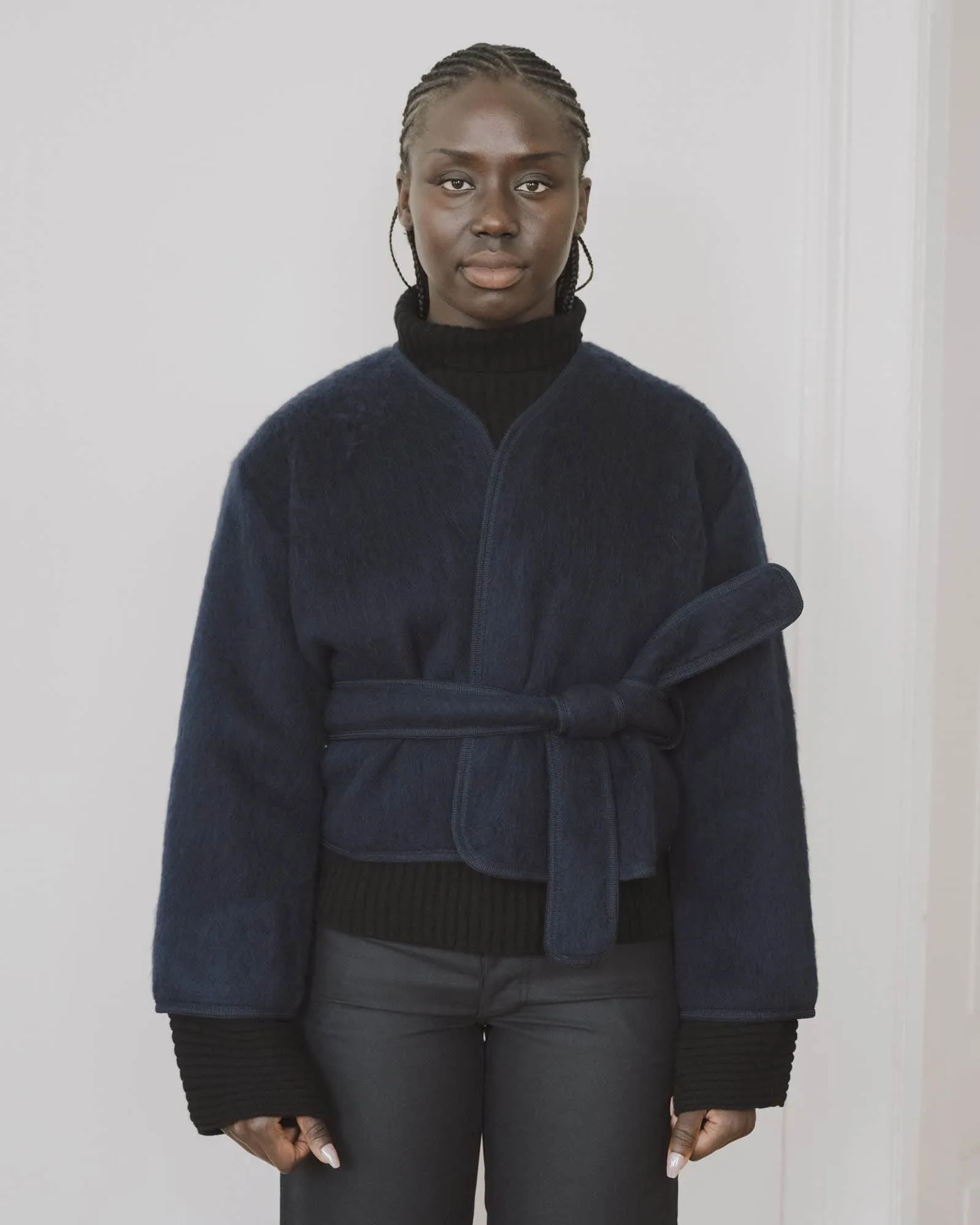
Capas Jacket