Quick Answer
Layer gold filled necklaces by keeping at least a 1–2 inch length difference between each chain, putting the shortest piece on first, and clasping one necklace at a time. If two pendants sit at the same drop point, they will twist into each other no matter how carefully you fasten them. A simple 16-inch and 18-inch pairing, like a Demi Lune with a Halo pendant, is the easiest combination to live with daily.
Choose Lengths Before You Choose Pendants
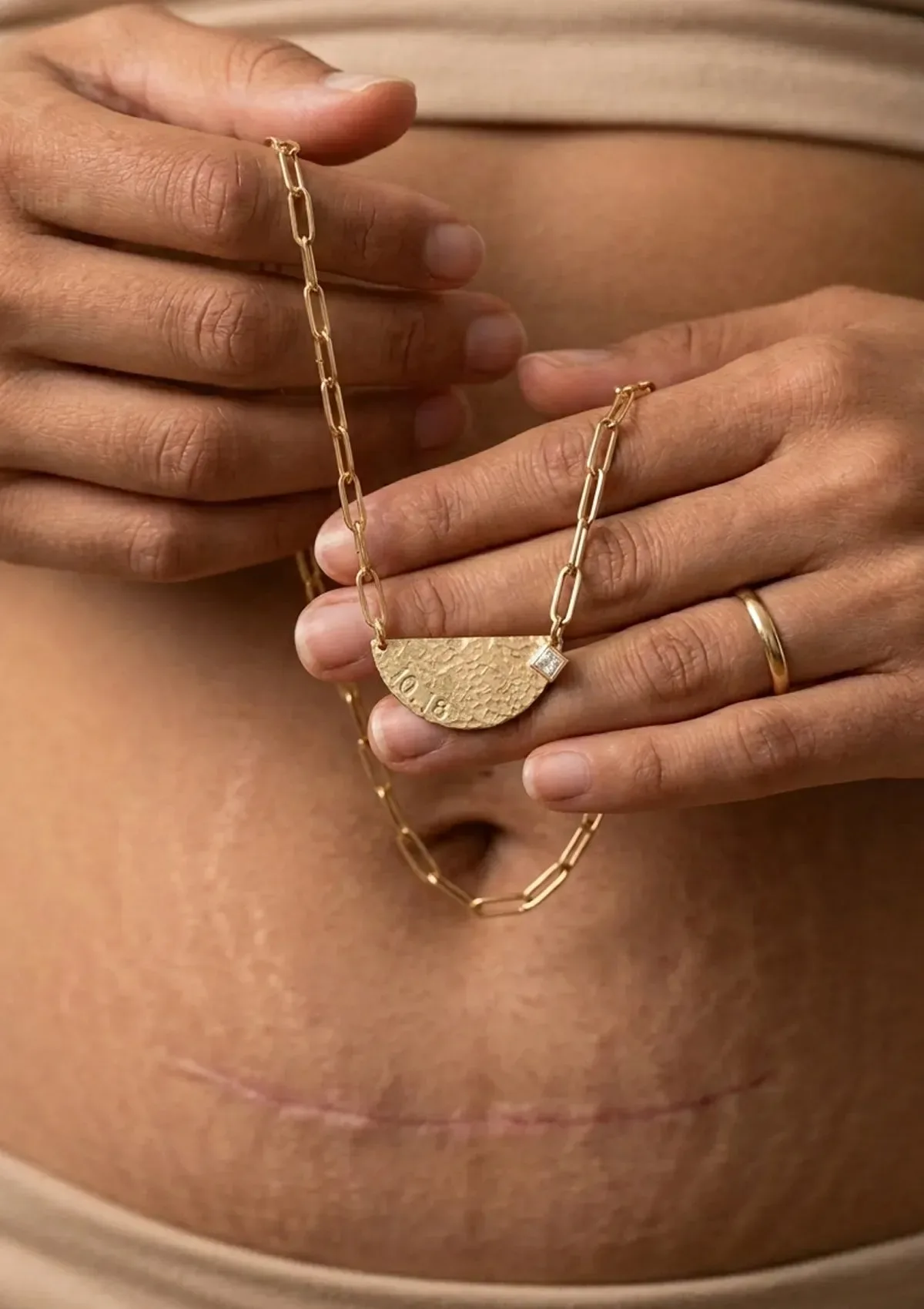
Layering works when the chains hang at visibly different heights. A 16-inch choker, an 18-inch princess length, and a 20-inch chain create three clear tiers; two 18-inch chains create one knot. Before adding a second necklace, put on the first and check where its pendant actually rests — pendants with a larger drop sit lower than the chain length alone suggests, so a 16-inch chain with a long pendant can land at the same point as an 18-inch chain with a small one.
If you want to wear two pendants together, separate them by at least two inches of drop. That is why a Demi Lune and Halo necklace pair well: the crescent and the halo are different silhouettes, so even when they sit near each other, they read as two pieces rather than a clump.
Fasten Shortest First, Then Work Down
Put on the shortest necklace first and let it settle. Add the next longest, then the longest. Working top-down means you can see each chain's position against the one above it, and you avoid dragging a finished clasp through the chains you already fastened. If you are layering three or more, pause after each addition and let the necklace hang for a few seconds — chains that look fine while held in your hand often shift once gravity takes over.
A common mistake is clasping everything at once while the chains are still bunched at your collarbone. The clasps end up stacked in one spot, which is where tangles start. Fasten each one individually, then rotate the clasp to the back of your neck.
Match Chain Weights So One Piece Doesn't Saw Through Another
A heavy pendant on a fine chain will rub against a lighter chain beside it and, over months of daily wear, wear down the thinner links. If you are stacking necklaces without damage in mind, pair similar chain weights or give a heavy pendant its own space at the bottom of the stack. Delicate chains belong next to other delicate chains; a chunky curb chain belongs at the longest layer, where it has room to move.
Check the clasp style too. Lobster clasps are bulkier than spring rings, and two bulky clasps sitting at the same point on your neck will catch on each other. If your necklaces have different clasp types, wear the bulkier one on the longest chain so it sits below the others.
Adjust Through the Day, Not Just in the Mirror
Layering fails most often after movement, not at the moment you put the necklaces on. Bending, turning your head, and taking a sweater on and off all shift chains sideways. Glance down once or twice during the day and separate any chains that have drifted into each other — a two-second fix now prevents a ten-minute untangling later.
If you wear a scarf, a high collar, or a hood, expect more movement than usual. On those days, either skip the third layer or keep the stack to two chains that already sit far apart.
Take Them Off and Store Them Separately
Remove necklaces before showering, swimming, or applying lotion and perfume, and wipe them with a soft dry cloth before putting them away. Store each chain flat or hanging on its own hook rather than dropping the stack into one pouch — chains that go into storage tangled tend to come out with kinks that no amount of gentle pulling fully removes.
If you only have one small travel pouch, fasten each necklace and lay it in its own small zip bag first, then put the bags side by side. The extra thirty seconds of packing keeps a layered set wearable for years.
Your Step-by-Step Layering Routine
- Step 1: Lay all necklaces flat and check the length gap: Line up each chain end to end on a flat surface and compare where the pendants fall. Aim for at least a 1–2 inch difference between tiers. Checkpoint: if two pendants land at the same point, swap one chain for a different length before you put anything on.
- Step 2: Put on the shortest necklace first: Fasten it, let it settle against your neck, and check the pendant's resting height in a mirror. Mistake to avoid: don't fasten all the clasps together at your collarbone — that is where tangles begin.
- Step 3: Add the next layer, then the next: Fasten one necklace at a time, working from shortest to longest, and pause after each so the chain can hang naturally. Checkpoint: rotate each clasp to the back of your neck so the clasps don't stack in one spot.
- Step 4: Separate chains that drifted during the day: After bending, dressing, or wearing a scarf, glance down and gently part any chains that have moved into each other. A two-second adjustment now saves a long untangling session later.
- Step 5: Remove and store each chain on its own: Take necklaces off before showering, swimming, or applying lotion and perfume. Wipe with a soft dry cloth, then store flat or hanging separately. Chains stored in one loose pouch come out kinked; separate storage keeps the stack wearable.
Products That Fit This Routine
- Yoni Oil: Yoni Oil is handmade with a blend of herbs, plant oils, and essential oils, and is used for perineal massage from 36 weeks and for soothing postpartum dryness. If your layered necklaces come off before a bath or body-care routine, this is the kind of product that belongs in that same wind-down slot — jewelry off, care products on, so chains never meet oil or moisture.