Quick Answer
Load CineStill 50Daylight into any 35mm camera like standard color negative film, but set your meter to ISO 50 and shoot in bright daylight for best results. Its fine grain and wide latitude forgive exposure errors, but the low speed means you'll need plenty of light.
Why CineStill 50Daylight Needs Bright Conditions
CineStill 50Daylight is rated at EI 50/18°, making it one of the slowest color negative films available. That means it requires abundant light—think sunny afternoons, open shade, or scenes with strong daylight—to get properly exposed negatives. Indoors or in overcast conditions, you'll likely need a tripod or a fast lens (f/1.4 or wider) to avoid camera shake.
The trade-off for the low speed is exceptional sharpness and very fine grain. If you're used to ISO 400 or 800 films, the grain reduction is immediately noticeable in 35mm scans and prints. Just don't expect to hand-hold it in dim interiors.
Daylight Balance and C-41 Processing
This film is balanced for 5500K daylight, so it renders colors naturally under sunlight or electronic flash. Under tungsten or warm household lights, you'll get a strong orange cast unless you use an 80A filter or correct in post. The film is safe for standard C-41 processing at any photo lab—no special ECN-2 chemistry needed. Just tell the lab it's a standard color negative film.
Step-by-Step: Loading and Shooting CineStill 50Daylight
- 1. Check your camera's ISO setting: Set your camera's ISO dial or DX-code reader to 50. If your camera only reads DX codes, the cassette's steel can will set it automatically. If your camera lacks DX reading, manually set ISO to 50. Common mistake: leaving the ISO at 200 or 400 will underexpose the film by 2-3 stops, resulting in thin, muddy negatives.
- 2. Load the film in subdued light: Open the camera back, pull the film leader across to the take-up spool, and ensure the sprocket holes engage with the camera's advance gear. Close the back and advance two blank frames to wind the leader fully onto the take-up spool. Common mistake: not advancing enough frames can leave the first shot partially fogged. Advance until the frame counter reads '1'.
- 3. Set exposure for bright daylight: Use a sunny-16 rule: at f/16, set shutter speed to 1/50 or 1/60 second. In open shade, open up to f/5.6 or f/4. For flash, use a standard hot-shoe flash at full power with the lens at f/5.6 for subjects 8-10 feet away. Common mistake: shooting in deep shade or overcast without opening the aperture enough—check your light meter and don't be afraid to overexpose by one stop for richer shadows.
- 4. Advance and shoot the full roll: Advance after each shot using the camera's film advance lever or motor drive. The 36-exposure cassette gives you about 37-38 frames if you load carefully. Rewind the film back into the cassette when finished—don't open the back mid-roll. Common mistake: rewinding too fast can create static marks on the film. Rewind slowly and steadily, then open the back only after the rewind crank stops turning.
- 5. Drop off for C-41 processing: Take the exposed cassette to any photo lab that processes C-41 color negative film. Tell them it's standard 35mm color negative film—no special instructions needed. Expect your negatives back in 1-3 hours at most labs. Common mistake: asking for 'ECN-2' processing—this film is already rem-jet free and safe for C-41, so standard lab processing is correct.
Product Details
-
CineStill 50Daylight Xpro Color Negative Film - 35mm Roll Film, 36 Exposures (ISO 50): CineStill 50Daylight is an EI 50/18° speed daylight balanced (5500K) color negative motion picture film stock for still photography, safe for C-41 processing at photo labs. You can drop it off at any lab that processes C-41 color negative film—no special handling or prepaid mailers required.
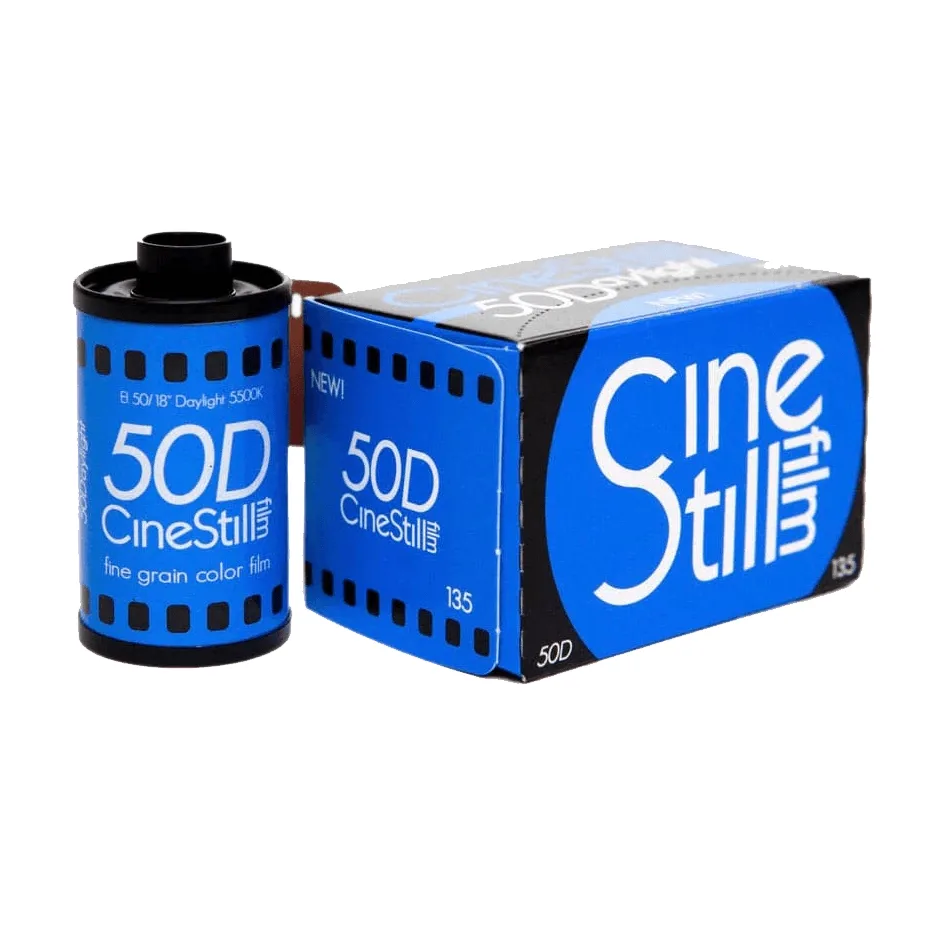
CineStill 50Daylight Xpro Color Negative Film - 35mm Roll Film, 36 Exposures (ISO 50)
-
CineStill 50Daylight Xpro Color Negative Film - 35mm Roll Film, 36 Exposures (ISO 50): Acetate base, factory spooled, 36 exposure DX-coded steel cassettes with unrivaled highlight and shadow latitude, high resolution, and fine grain. The DX coding lets many auto-loading cameras set the ISO automatically, and the wide latitude means you can overexpose by a stop or two without losing detail in highlights.