Quick answer
Measure your dog's length from nose to tail base and height from floor to top of head (or ears) while standing, then compare to GUNNER G1 kennel interior dimensions for a snug but comfortable fit.
Why accurate measurements matter for crash-tested crates
A properly sized kennel isn't just about comfort—it's critical for safety. In a crash-tested crate like the GUNNER G1, too much space can allow your dog to shift during impact, reducing the protective design's effectiveness. Too little space causes stress and discomfort. Measuring correctly ensures your dog can stand, turn around, and lie down naturally without excess room that compromises restraint.
Common sizing mistakes to avoid
Many owners rely on weight or breed alone, but body proportions vary widely. A Labrador may have the same weight as a Boxer but need a different kennel length. Always measure your specific dog. Also, don't confuse crate exterior dimensions with interior space—GUNNER provides interior specs for each G1 size, which is what you need to match.
Step-by-step measuring guide
- Step 1: Measure your dog's length: Have your dog stand on a flat surface with all four paws evenly placed. Use a flexible tape measure from the tip of the nose to the base of the tail (where the tail meets the body). Do not include the tail length. A common mistake is measuring to the end of the tail, which adds inches and leads to an oversized kennel. Use the tail base as the endpoint.
- Step 2: Measure your dog's height: While your dog is standing, measure from the floor to the top of the head (or the highest point of the ears if they stand erect). For floppy-eared dogs, measure to the top of the head. This ensures your dog can sit or stand without touching the crate ceiling. Don't measure to the shoulders—this underestimates height. Always go to the top of the head or ears.
- Step 3: Measure your dog's width: Measure the widest part of your dog's body, typically across the chest or shoulders. Have your dog stand naturally, then measure from one side to the other at the broadest point. If your dog is broad-chested, width is often the limiting factor. Add 2-3 inches for comfort when comparing to crate interior width.
- Step 4: Compare to GUNNER G1 interior dimensions: Check the GUNNER G1 size chart for interior length, height, and width. Add 2-4 inches to your dog's measurements for comfort. Your dog should be able to stand without head touching, lie down with legs extended, and turn around easily. If your dog's length is close to the interior length limit, consider the next size up—but avoid going more than 6 inches longer than your dog, as excess space reduces crash safety.
- Step 5: Test the fit before travel: Place your dog in the kennel with the door open. Observe if they can stand, turn, and lie down without forcing. If they seem cramped or have excess room, adjust your size choice. Use a bed or mat to fill extra space if needed, but ensure it doesn't block ventilation. A dog that refuses to enter the kennel may find it too small or too large. A properly sized crate should feel like a den—cozy but not tight.
Product note
-
G1™ KENNEL - Cheyenne Bottoms: Cheyenne Bottoms is the seventh Flyway Series release from GUNNER, featuring limited-edition colors inspired by legendary locales within the four North American flyways. If you're choosing a G1 kennel, the Flyway Series offers unique aesthetics while maintaining the same crash-tested safety and sizing as standard models.
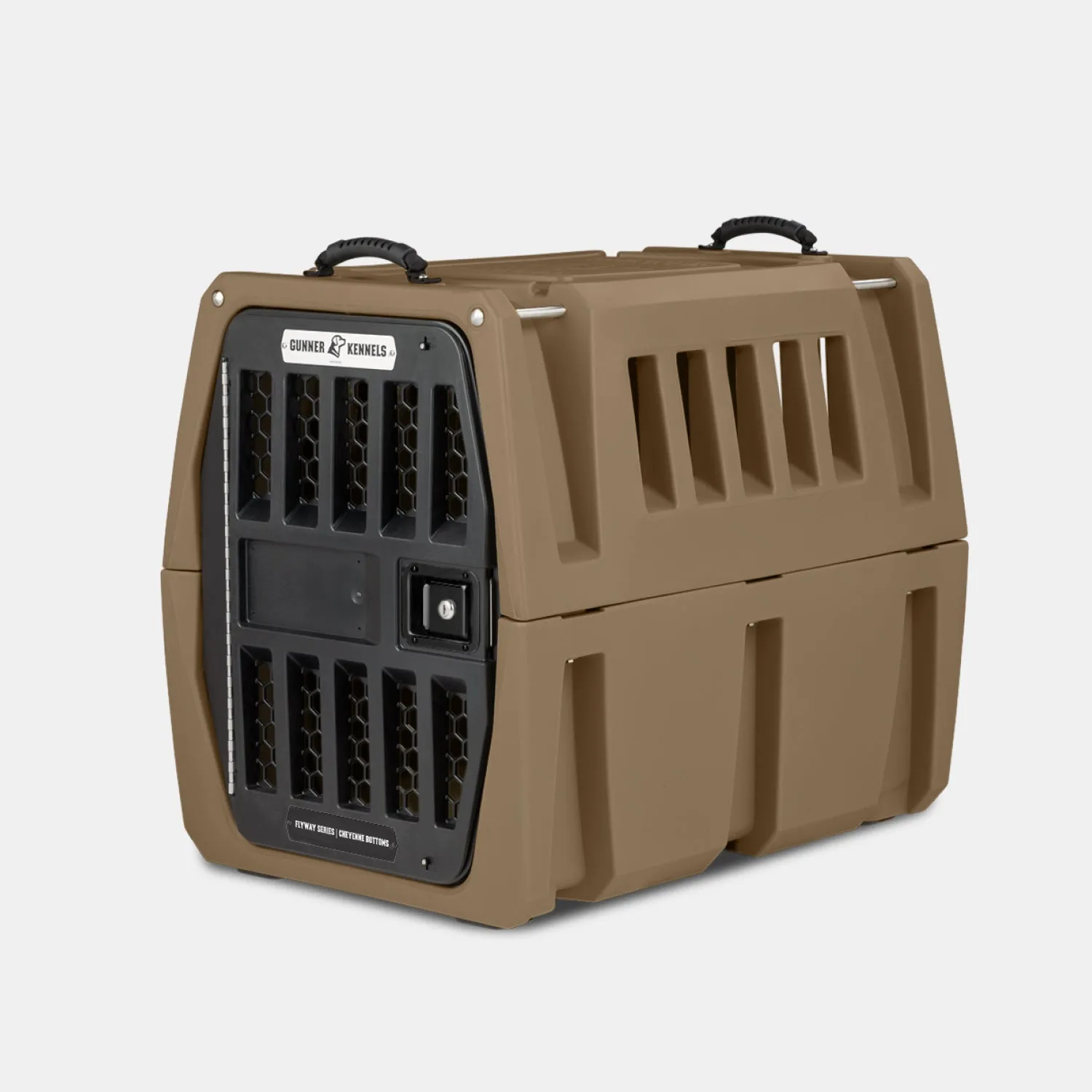
G1™ KENNEL - Cheyenne Bottoms