Quick answer
Measure your band size by wrapping a soft tape snugly around your ribcage directly under your bust, then round to the nearest even number. Measure your bust at the fullest point, and subtract the band measurement to get your cup size. Re-measure on a second day before you buy. This two-measurement method is the core of any reliable bra size calculator steps you'll find online.
What you need before you start
A soft measuring tape, a mirror, and a non-padded bra or no bra at all. Wear the non-padded bra if you have one because it keeps breast tissue in a natural position without adding volume that would inflate your bust measurement. If your current bra has an underwire that sits on breast tissue or a band that rides up, take it off for the measurement.
Stand in front of a mirror so you can check that the tape stays level around your back. A tape that dips or rises at the back will give you a band measurement that is too large or too small, which throws off the cup calculation that depends on it.
How to read the numbers without overthinking them
Band measurement: round to the nearest even whole number. If you measure 33 inches, your band size is 34. If you measure 34 inches, your band size is 34. Bust measurement: keep the number as-is. Cup size is the difference between bust and band, where roughly 1 inch equals an A cup, 2 inches a B, 3 inches a C, and so on. This is the same logic behind every bra fitting guide, and it gives you a starting point, not a final verdict.
Sister sizing matters here. If your calculated band feels too tight but the cup volume seems right, go up one band size and down one cup size. If the band feels too loose, go down one band size and up one cup size. That flexibility is why finding the right bra size often means trying two sizes, not one.
Five steps to measure band and cup size
- Step 1: Measure your band: Wrap the tape snugly around your ribcage directly under your bust, keeping it level all the way around. Exhale normally and read the number where the tape meets. Round to the nearest even whole number. Common mistake: measuring over a padded bra or letting the tape sag at the back. Checkpoint: the tape should feel snug but not leave a red mark after you remove it.
- Step 2: Measure your bust: Wrap the tape around the fullest part of your bust, usually across the nipple line, keeping it level and not compressing the tissue. Stand straight and relax your arms at your sides. Common mistake: pulling the tape tight enough to flatten the bust, which shrinks the measurement. Checkpoint: the tape should touch but not indent the skin.
- Step 3: Calculate your cup size: Subtract your band measurement from your bust measurement. Each inch of difference equals one cup size: 1 inch is roughly an A, 2 inches a B, 3 inches a C, 4 inches a D, and so on. Common mistake: rounding the bust measurement down to a whole number before subtracting. Checkpoint: write down both raw numbers and do the math once.
- Step 4: Test the band on the loosest hook: Put on a bra in your calculated size and fasten it on the loosest hook-and-eye setting. The band should stay level and not ride up when you raise your arms. You should be able to slide two fingers under the band at the back. Common mistake: fastening on the tightest hook to make a too-large band feel secure. Checkpoint: if the band rides up, go down a band size; if it digs in, go up a band size and down a cup size.
- Step 5: Check the underwire and cup: With the bra on, feel along the underwire. It should sit flat against your ribcage, not on breast tissue. The center front should lie against your sternum, and the cup should contain all breast tissue without gaping or spilling. Common mistake: accepting a cup that gapes at the top because the band feels right. Checkpoint: if the wire sits on tissue, go up a cup size; if the cup wrinkles, go down a cup size.
Fit details to check on real styles
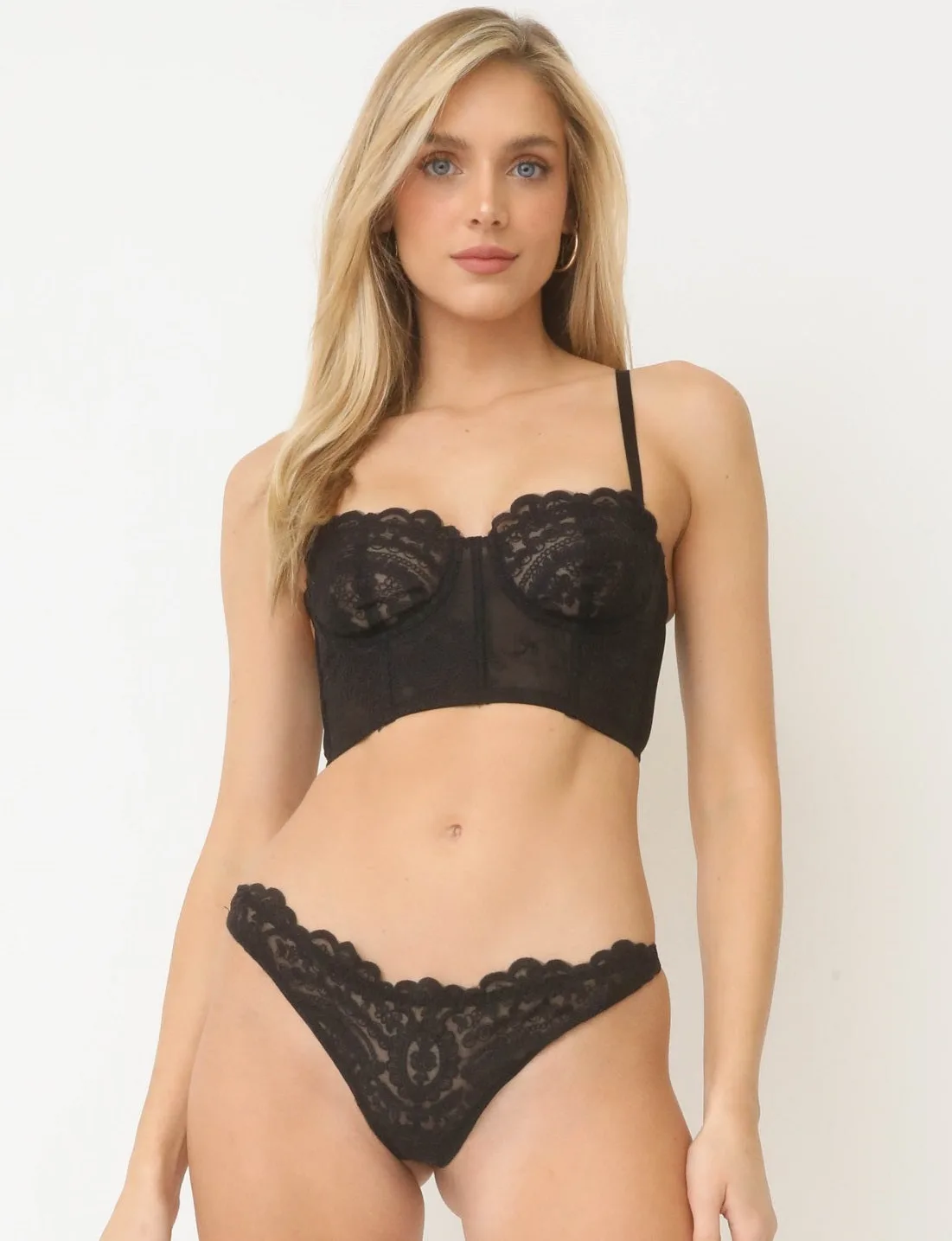
- Isabella Embroidered Bustier & Thong Set: The Isabella Embroidered Bustier & Thong Set has underwired, non-padded cups, boning throughout, and back hook-and-eye closures. Non-padded underwire cups show fit problems immediately: if the wire sits on breast tissue or the center does not lie flat, the cup size is wrong. Boning and hook-and-eye closures also mean the band does more structural work, so your band measurement needs to be accurate before you choose a size.
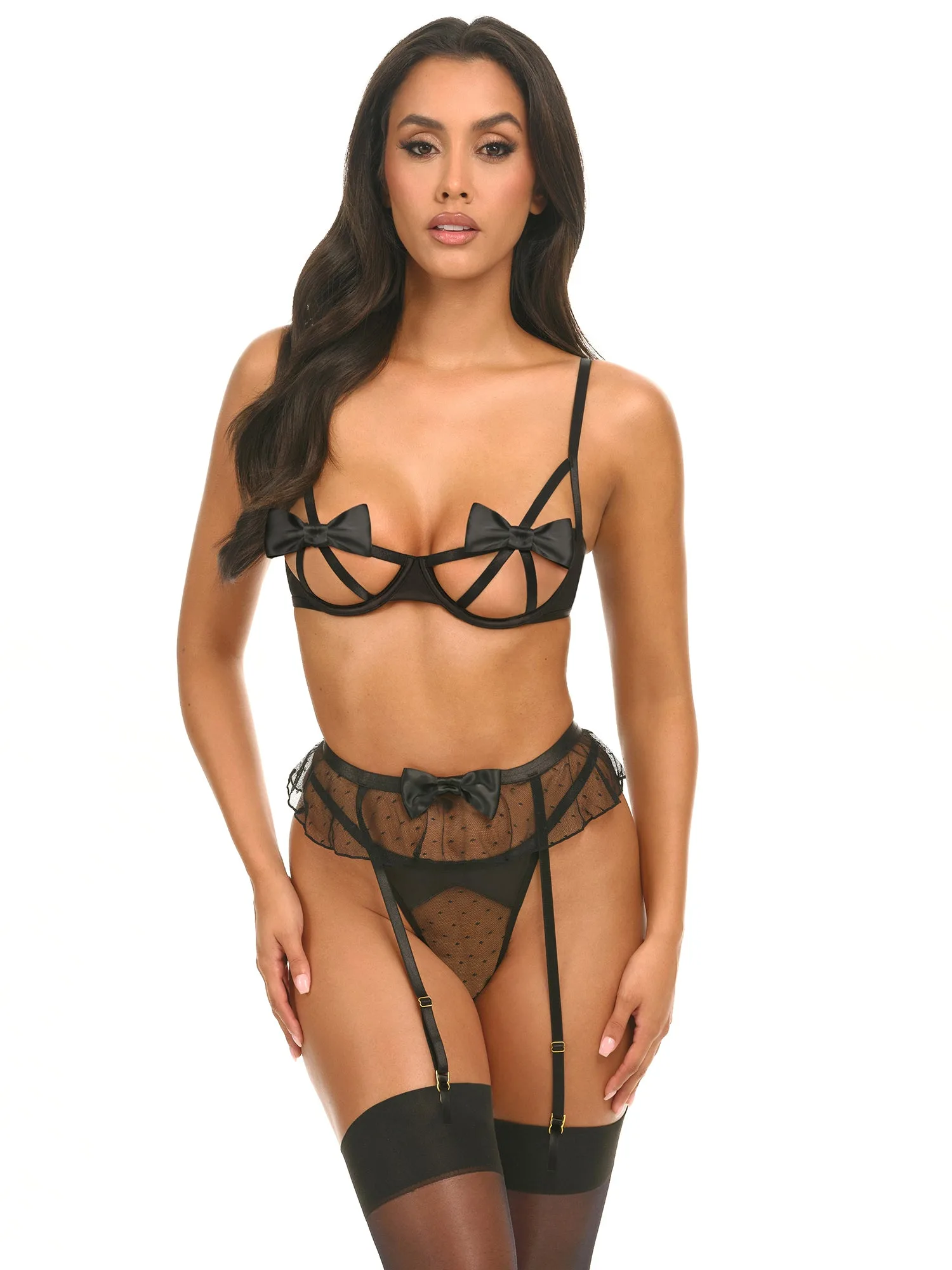
- Kimia Bow 3pc Bra Set: The Kimia Bow 3pc Bra Set includes an underwire bra with cage embellishments and a panty with an adjustable garter. Cage and strappy detailing sits close to the skin, so a band that is too tight will make those straps dig in. Getting your band and cup measurements right first makes decorative straps sit flat instead of pressing.
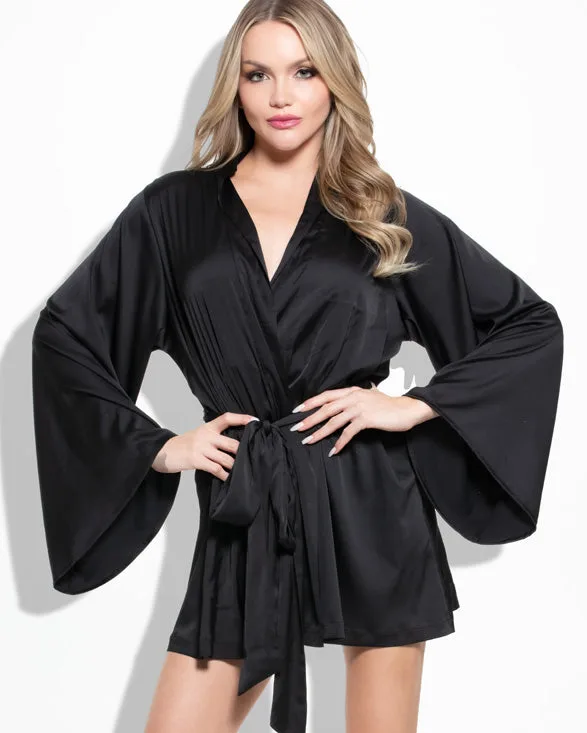
- Brigeta Satin Short Robe: The Brigeta Satin Short Robe has a tie waistband and an internal tie. A robe is not sized by cup or band, so it is a low-risk layer to wear while you re-measure or try sizes. The adjustable tie also means you can loosen or tighten it without affecting your bra fit underneath.