Quick answer
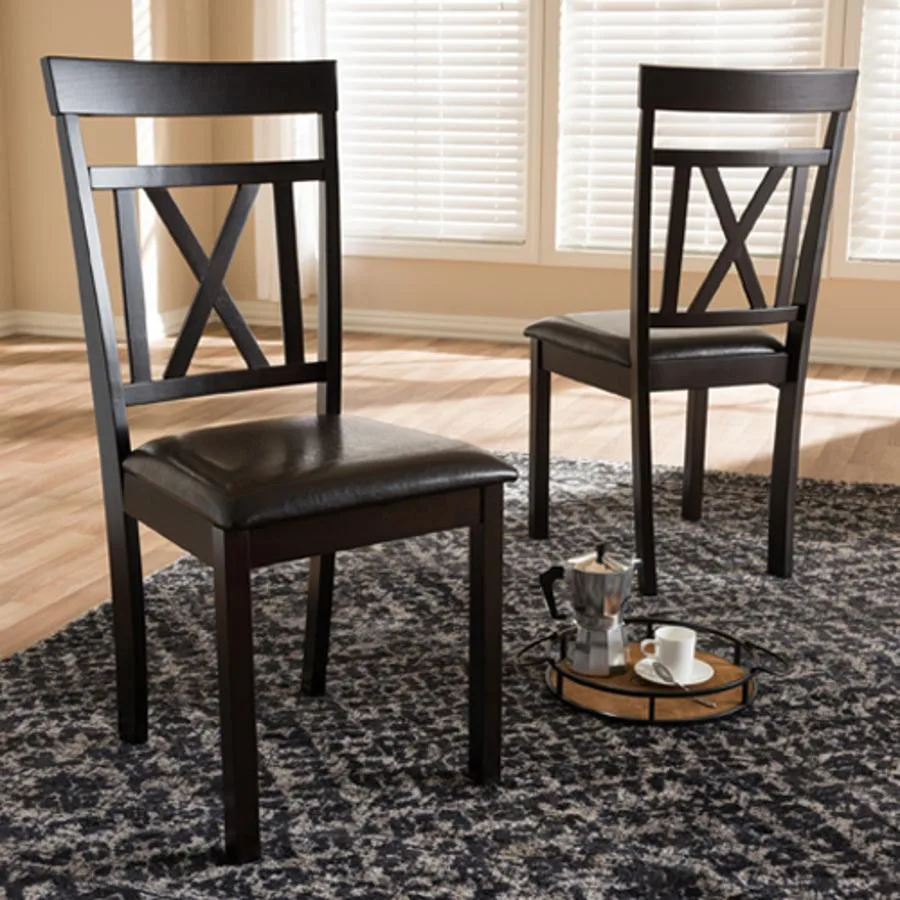
Choose one anchor element from your table—wood tone, finish, or silhouette—and repeat it in every chair you bring in. Then vary only two things across the set, such as seat material and back shape. A set of two Baxton Studio Rosie Dining Chairs paired with two upholstered host chairs is an easy starting point because the dark brown wenge-finished wood gives you a clear tone to coordinate around.
Mixing dining chairs looks effortless in photos and chaotic in real rooms when there is no rule holding the group together. The fix is not to buy six identical chairs or to collect randomly. It is to pick one anchor from your table, repeat it, and control what changes.
This guide walks through a five-step process you can use whether you are starting with a table you already own or shopping for both pieces at once. It also flags the mistakes that make mismatched dining chairs read as leftovers rather than a deliberate dining chair styling choice.
Step 1: Identify your table's anchor element
Before you shop, decide what your table contributes to the room. That could be a wood tone, a metal base, a glass top, or a strong silhouette. Write it down in one sentence. Every chair decision after this point either repeats or deliberately contrasts with that anchor.
If your table is dark brown wood, for example, you already have a tone to coordinate chairs and table around. If your table is glass or white, your anchor is more likely to be shape or material than color, so look at leg style and seat texture instead.
- Common mistake: choosing chairs you love individually before naming what your table brings to the pairing.
Step 2: Repeat the anchor in at least half the chairs
A mixed set needs a majority rule. Aim for at least half the chairs to share the table's anchor tone or material. The remaining chairs can differ, but they should still feel related through scale or finish.
This is why a set of two Baxton Studio Rosie Dining Chairs works well as the repeating half of a six-chair room. Their dark brown wenge-finished wood and dark brown faux leather padded seats give you two consistent elements to build around, while the high X-back design adds visual interest without competing with the table.
- Checkpoint: stand back and squint. If you cannot tell which chairs are the majority, you have varied too much.
Step 3: Vary only two features across the set
Mismatched dining chairs go wrong when everything changes at once. Limit yourself to two variables: seat material and back shape are the easiest to control. Keep leg finish, seat height, and overall scale consistent so the group still functions as one set.
For instance, pair wood chairs with upholstered ones, or pair a high X-back with a lower rounded back. Do not change wood tone, seat material, back shape, and leg style all in the same room unless you are working with a designer's eye and a very large space.
- Common mistake: mixing three or more wood tones in a small dining room, which makes the space feel unfinished rather than collected.
Step 4: Match seat height and clearance, not just looks
Comfort and proportion matter more than color matching. Before buying any chair, measure your table's height and check that the seat sits at a workable level for your table. Chairs that are too low make the table feel tall; chairs that are too high crowd the underside.
Also check that the chair width fits your table's seating count. A table that seats six with narrow chairs may only seat four with wide host chairs. If a product listing does not state a seat height or width, treat that as a decision limitation and measure a similar chair you already own before ordering.
- Checkpoint: tape the chair footprint on the floor with painter's tape to confirm you can still walk around the table.
Step 5: Place the odd chairs where they read as intentional
Where you put the mismatched chairs changes how the room reads. Put the repeating chairs on the long sides and the contrasting chairs at the heads of the table, or alternate them symmetrically. Symmetry signals intention; randomness signals accident.
If you have only two contrasting chairs, use them as a pair at opposite ends rather than splitting them across the room. If you have one statement chair, place it where it is visible from the main entry point so it reads as a deliberate focal point.
- Common mistake: scattering one odd chair per side, which makes the set look like a collection of leftovers.
Your 5-step chair pairing checklist
- Name your table's anchor: Write down one element from your table—wood tone, finish, metal, or silhouette—that every chair decision will reference. Checkpoint: if you cannot name the anchor in one sentence, you are not ready to shop.
- Keep the anchor in at least half the chairs: Choose a repeating chair, such as the Baxton Studio Rosie Dining Chairs, so the room has a clear majority tone or material. Checkpoint: squint test—the majority chairs should be obvious at a glance.
- Change only two features: Vary seat material and back shape, and keep leg finish, seat height, and scale consistent across the set. Common mistake: changing wood tone, material, shape, and legs all at once.
- Measure seat height and width: Confirm the seat height works with your table and that the chair footprint still lets you seat the number of people you need. If a listing does not state a measurement, treat that as a limitation and measure a similar chair you own.
- Place contrasting chairs symmetrically: Put repeating chairs on the long sides and contrasting chairs at the heads or in a balanced pair. Checkpoint: symmetry reads as intentional; scattering reads as leftovers.
Product facts that help with pairing
- Baxton Studio Rosie Dining Chairs - Set of 2: Set of 2 modern contemporary chairs with a high X-back design, dark brown wenge-finished wood, dark brown faux leather padded seats, and tapered legs. This item requires oversize delivery. The dark brown wood and dark brown faux leather give you two repeatable anchor elements, so you can add contrasting chairs without losing cohesion. The oversize delivery note is worth checking before you order, since it can affect timing.
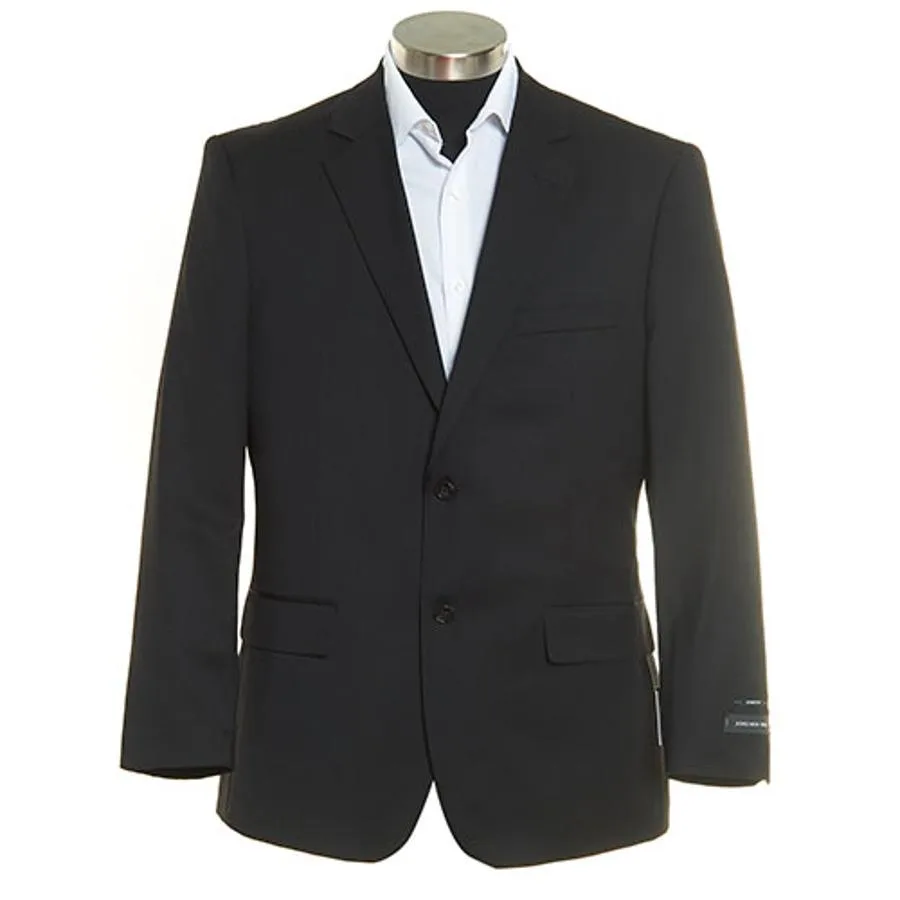
- Mens Jones New York Suit Solid Stretch Jacket: Stretch texture woven jacket with lapel collar, long sleeves, 3 exterior pockets, 2 button closure, smooth lining, and 3 interior pockets. 52% Wool, 44% Polyester, 4% Spandex. Dry clean only. If you are hosting a dinner or holiday meal, this jacket gives you a polished option that moves with you while you set the table and serve. Dry clean only is a real care tradeoff to plan for.
Mix and match dining chairs successfully by choosing one anchor from your table, repeating it in at least half the chairs, and varying only two features. Measure before you buy, and place the contrasting chairs where symmetry makes them look deliberate. Done this way, a mixed set looks collected on purpose rather than assembled by accident.