Quick Answer
Start with a clear theme and a list of everyday items or attributes for kids to find. Use a ready-made game like eeBoo's Indoor Scavenger Hunt to skip prep time and get playing fast.
Why Indoor Scavenger Hunts Work for All Ages
A scavenger hunt turns a rainy afternoon into an adventure without needing a lot of space or equipment. Kids practice observation, categorization, and flexible thinking as they search for objects based on color, texture, shape, or sound. The game adapts naturally to different ages: younger children can look for simple colors or shapes, while older kids can follow multi-step clues or find items that match a specific pattern or material.
The key is to keep the hunt about finding, not gathering. That way nothing gets damaged or lost, and every child can participate without competition over who collects the most items.
Step-by-Step Guide to Organizing an Indoor Scavenger Hunt
- Choose a Theme or Focus: Decide whether the hunt will be based on colors, shapes, textures, sounds, or a story (e.g., pirates looking for treasure). A clear theme helps you write clues that are specific enough to be fun but not too hard. Common mistake: making the theme too vague. Stick to one or two attributes per round so kids don't get overwhelmed.
- Make a List of Items or Attributes: Write down 8–12 objects or characteristics for kids to find. Use things already in your home: a red toy, something soft, a round object, an item that makes a crinkly sound. If using a game like eeBoo's Indoor Scavenger Hunt, the cards already have these prompts, so you can skip this step entirely. Checkpoint: read through the list aloud and make sure every item is available in the rooms you'll use. Remove anything that could break or be unsafe.
- Set Boundaries and Rules: Tell kids which rooms are included and which are off-limits. Explain that they are finding, not collecting—they just point, describe, or bring you to the object. Set a time limit (10–20 minutes works well) and decide whether they work alone or in teams. Common mistake: forgetting to set clear boundaries. Kids may wander into unsafe areas or disturb items you didn't want moved.
- Prepare Clues or Cards: Write each clue on a separate slip of paper or index card. For younger kids, use pictures or single words. For older kids, use riddles or multi-step instructions. If you have a game set, shuffle the cards and hand each child or team a stack. Checkpoint: test one or two clues yourself to confirm they lead to something that actually exists in the room.
- Start the Hunt and Celebrate: Give the signal and let kids explore. Walk around to help if someone gets stuck, but let them figure out most clues on their own. When time is up, gather together and have each child share their favorite find. No need for prizes—the fun of discovery is usually enough. Common mistake: overcomplicating the end. A simple high-five or round of applause works better than a complex scoring system.
Product That Helps
-
Scavenger Hunt Game - Indoors: eeBoo’s Indoor Scavenger Hunt is a finding game, not a gathering game, inspiring flexible, cross-categorical thinking while developing observational and analytical skills. You don't need to create clues from scratch—the cards prompt kids to find objects by attributes like pattern, sound, or smell, making each round different and challenging.
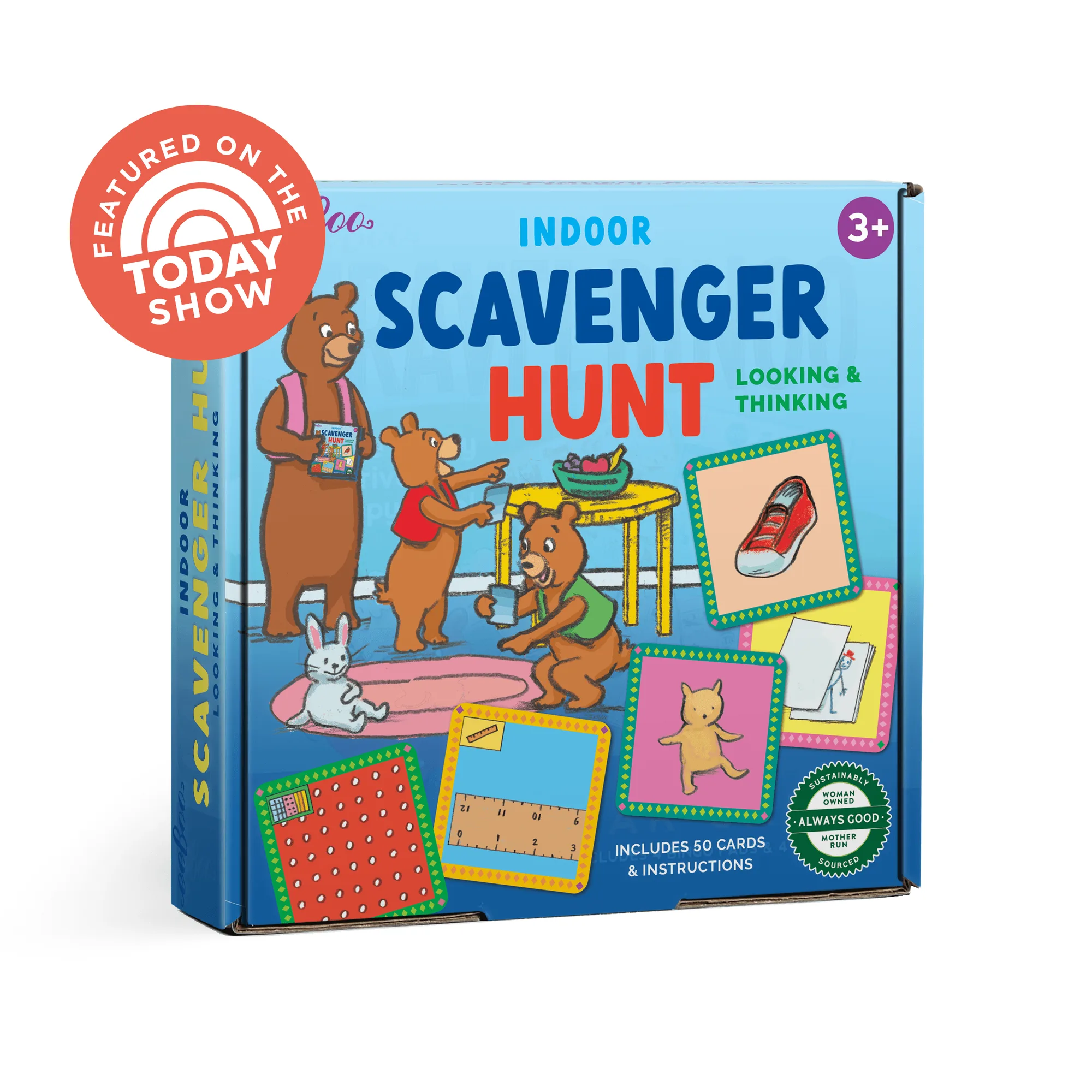
Scavenger Hunt Game - Indoors