Quick answer
Pack your junior backpack by placing heavy items closest to the back panel, then layering lighter items on top. Keep small essentials in easy-to-reach pockets so your child can grab them without unpacking everything.
Why packing order matters
How you load a backpack affects how it feels on your child's shoulders. Heavy items like books or a lunch box should sit against the back panel, not at the front. This keeps the center of gravity close to the body and reduces strain.
A 20L backpack gives enough room for a full school day, but it can still get messy without a system. Using separate zones for heavy, light, and small items helps your child find things quickly and keeps the bag from becoming a jumbled pile.
Step-by-step packing guide
- Empty the backpack: Start by taking everything out of the backpack. Check all pockets for leftover snacks, papers, or small toys. This gives you a clean base and prevents you from packing around clutter. Do this at the end of each school week so nothing gets forgotten or crushed.
- Pack heavy items first: Place heavy items like textbooks, binders, and a filled lunch box at the bottom of the main compartment, right against the back panel. This keeps the weight close to your child's back and prevents the bag from pulling backward. If the backpack has a separate laptop or tablet sleeve, use it for heavier tech items instead of stacking them loose.
- Layer medium-weight items in the middle: Put pencil cases, folders, and smaller workbooks on top of the heavy layer. Arrange them so the tallest items stand upright and the flatter ones lie flat. This stops papers from bending and keeps the contents stable. Use a flat pencil case rather than a bulky one to leave more room for folders and books.
- Store small essentials in front pockets: Keep items your child needs during the day—like a water bottle, snack, or bus pass—in the front or side pockets. This way they can reach them without opening the main compartment and disturbing the packed layers. Check that the water bottle is leak-proof before placing it in a side pocket.
- Adjust the straps and check the fit: After packing, put the backpack on your child and tighten the shoulder straps so the bag sits snugly against the upper back. The bottom should rest at the waistline, not sag below it. If the bag feels too heavy, remove non-essential items. The backpack should not sway when your child walks. If it does, tighten the straps or redistribute weight.
Product spotlight
-
Navy Diamonds Junior Backpack - Medium 20L: The Navy Diamonds Junior Backpack - Medium 20L has a super spacious interior and is designed for toddlers and school-aged kids. The 20L capacity gives you enough room to organize daily school items without being too bulky for a young child to carry.
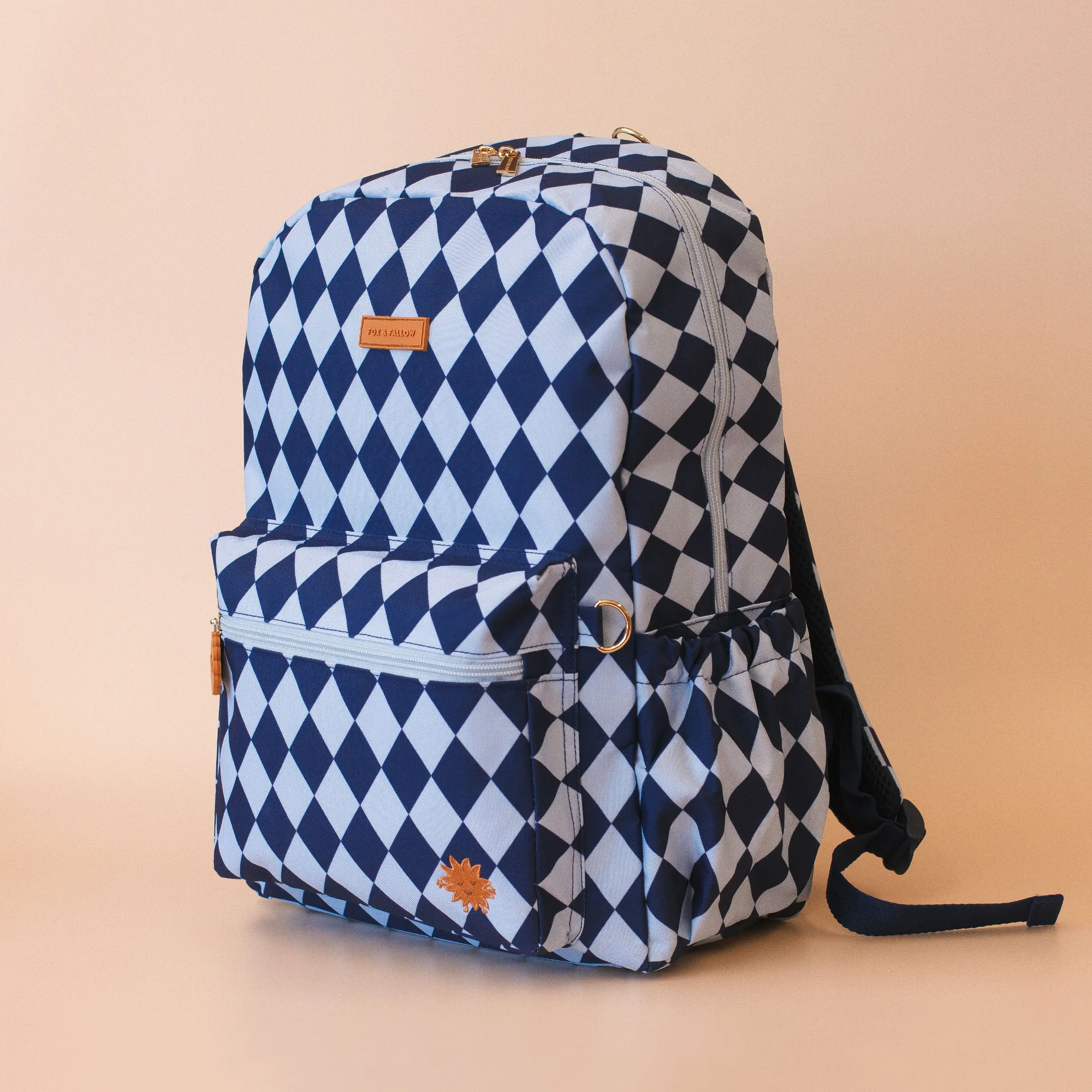
Navy Diamonds Junior Backpack - Medium 20L