Quick answer
If The Worst Comes To The Worst is a simple, conversation-driven card game: take turns drawing a card, reading the fear it describes, and discussing it with your group. There are no winners or losers—the goal is to build resilience by talking openly about our worries.
Why this game is different from a typical party game
Most party games focus on competition, speed, or humor. This one flips that idea: instead of avoiding uncomfortable topics, it invites you to sit with them. The School of Life designed it as a desktop flip book of consolations, meaning the cards are meant to be read slowly and reflected upon, not rushed through.
The game works best with 2-6 players, but it can also be played solo. If you're using it at a party, keep the tone supportive—this is about sharing fears, not mocking them. A good rule of thumb: let each person speak without interruption, and avoid giving unsolicited advice unless asked.
What you need to get started
All you need is the If The Worst Comes To The Worst card deck and a quiet space where everyone feels comfortable. No scorepad, timer, or tokens required. Because the game is about conversation, a cozy setting with minimal distractions helps everyone engage more deeply.
If you're playing with a larger group, you can split into pairs or small circles so everyone gets a chance to share. The cards are compact, making them easy to bring to a dinner party or a weekend getaway.
How to play: step-by-step
- Set the mood: Gather your group in a comfortable, quiet space. Explain that this is a reflective game, not a competitive one, and encourage everyone to listen without judgment. If you're playing with new friends, you might start with a lighter card to warm up. A common mistake is treating this like a typical party game—remind everyone that the goal is connection, not winning.
- Shuffle and draw: Shuffle the deck and place it face down in the center. Take turns drawing a card and reading the fear or scenario aloud. If you're playing solo, simply flip to the next page. Don't skip cards that feel uncomfortable—those often lead to the most meaningful discussions.
- Share your reaction: After reading the card, the person who drew it shares their honest thoughts: Does this fear resonate? How do they usually cope with it? Others can then offer their own perspectives or ask gentle follow-up questions. A common mistake is jumping to solutions—resist the urge to 'fix' someone's fear. Just listen.
- Use the consolations: Turn the card over (or read the accompanying text) to see the consolation offered by The School of Life. Discuss whether it feels helpful and why. This is where the resilience-building happens. If a consolation doesn't land, that's okay—the discussion itself is the point.
- Continue or wrap up: Play as many rounds as feels right. You can stop after everyone has had a turn or keep going if the conversation is flowing. There's no time limit, so let the group's energy guide you. A good checkpoint: end on a positive note, perhaps by sharing one thing you're grateful for, to leave everyone feeling uplifted.
The product at a glance
-
If The Worst Comes To The Worst: If The Worst Comes To The Worst is a desktop flip book of consolations designed to help build resilience and defeat nagging fears about disgrace, illness, unemployment, mortality, and the suffering of loved ones. Knowing the game's purpose helps you frame the conversation: it's not about doom-scrolling, but about facing fears constructively so they lose their power over you.
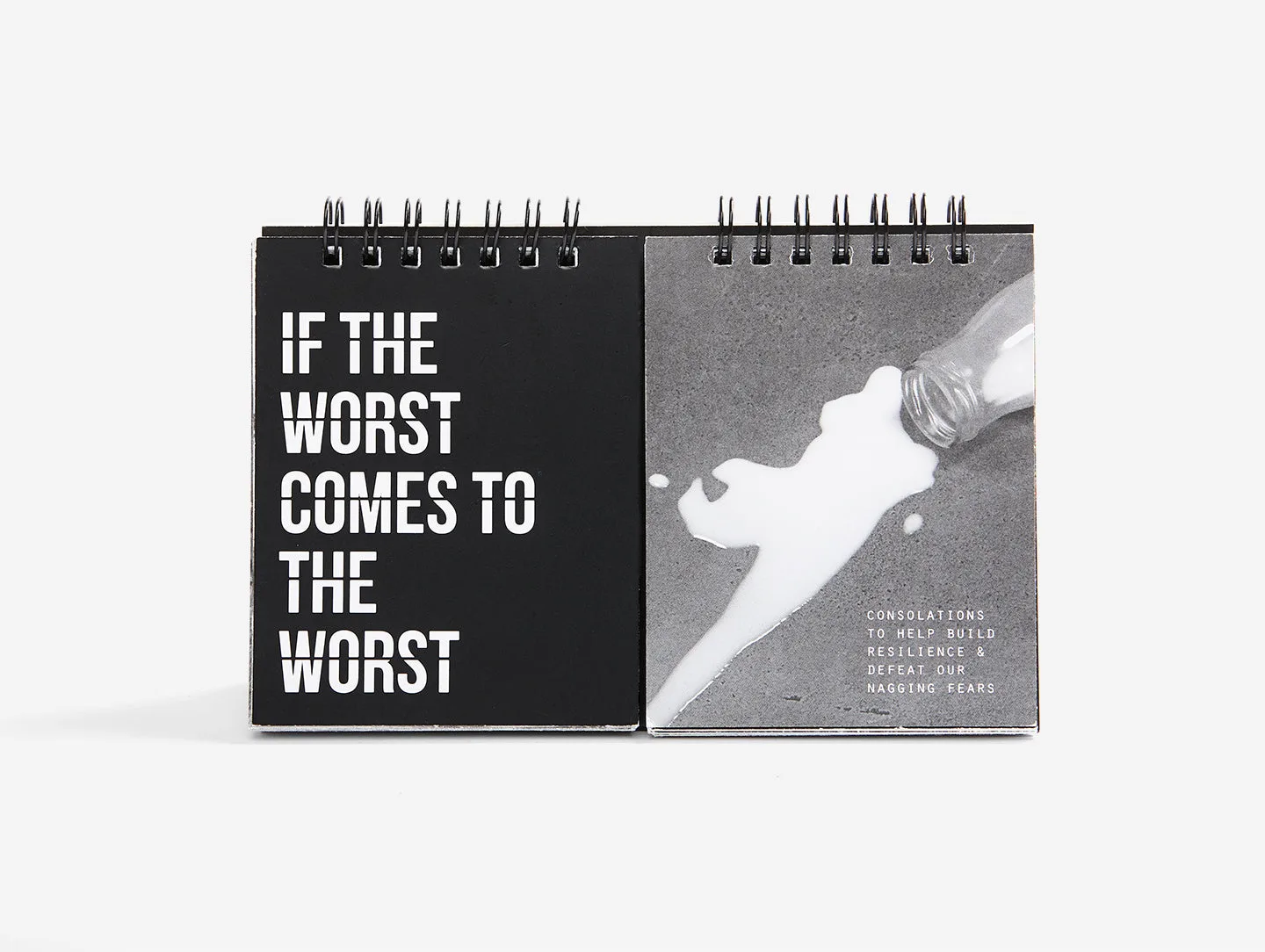
If The Worst Comes To The Worst