Quick answer
Start with the guaranteed analysis, then check the ingredient list for named protein sources and any by-products. Compare foods on a dry matter basis so moisture content does not mislead you. If a label lists "chicken" or "salmon" first and names the organs, it is giving you more useful information than a vague "meat meal."
Start with the guaranteed analysis, not the front of the bag
The guaranteed analysis is the legal minimum and maximum percentages for protein, fat, fiber, and moisture. It is the fastest way to compare two foods, but the numbers are as-fed, meaning they include the water in the product. A canned food might list 10% protein while a dry food lists 34%, yet the canned food can deliver more protein per calorie once you remove the water. Always convert to dry matter before judging protein quality or quantity.
Decode protein sources: named meats vs. vague meals
Ingredients are listed by weight before processing. "Chicken," "turkey," and "salmon" are specific and traceable. "Poultry meal" or "meat meal" is not. Named meals like "chicken meal" are concentrated protein sources and can be excellent, but they should still tell you which animal they came from. Look for the word "named" in your head: if you cannot picture the animal, the label is not helping you. Plant proteins like pea protein or potato protein can inflate the protein percentage without adding the amino acid profile a cat needs, so check whether animal sources dominate the list.
Understand by-products and what they actually mean
By-products are the non-muscle parts of an animal, such as organs and bones. They are not inherently bad; in fact, organs like liver and heart provide nutrients cats would eat in the wild. The problem is transparency. "Chicken by-product meal" tells you the species, while "meat by-products" does not. If a label names the organ and the animal, it is a quality signal. If it hides behind a generic term, you cannot evaluate it. Some cats do well on foods with named by-products, and some owners prefer to avoid them entirely. The label should give you enough information to make that choice.
Use moisture content to compare wet and dry food fairly
Moisture content is the percentage of water in the food. Dry food is typically 10-12% moisture, while canned food can be 75-80%. That difference makes as-fed protein percentages misleading. To compare, subtract the moisture percentage from 100 to get dry matter, then divide the protein percentage by the dry matter and multiply by 100. For example, a canned food with 10% protein and 78% moisture has 22% dry matter, so its protein is about 45% on a dry matter basis. That is higher than many dry foods. This step is essential for cats, who often need higher moisture in their diet.
Step-by-step: reading a cat food label
- Find the guaranteed analysis: Locate the protein, fat, fiber, and moisture percentages. Write them down so you can compare later. Checkpoint: if moisture is missing, you cannot compare this food fairly to others.
- Convert protein to dry matter: Subtract moisture from 100 to get dry matter. Divide protein by dry matter and multiply by 100. Do this for every food you compare. Common mistake: comparing as-fed protein percentages between wet and dry food, which makes dry food look higher in protein than it is.
- Scan the first five ingredients: Look for named animal proteins like chicken, turkey, or salmon. Note whether they are fresh or meal, and whether plant proteins appear early. Checkpoint: if the first ingredient is a grain or a vague "meat meal," the food may not be protein-forward.
- Check for by-products and named organs: See if the label says "chicken liver" or "chicken by-product meal" versus "meat by-products." Named sources are more transparent. Common mistake: assuming all by-products are bad. Some are nutritious, but unnamed ones are a transparency red flag.
- Look for a nutritional adequacy statement: Find the AAFCO statement that says the food is complete and balanced for a specific life stage, such as growth or adult maintenance. Checkpoint: if the statement says "for intermittent or supplemental feeding only," it is not a complete meal.
Label details in practice
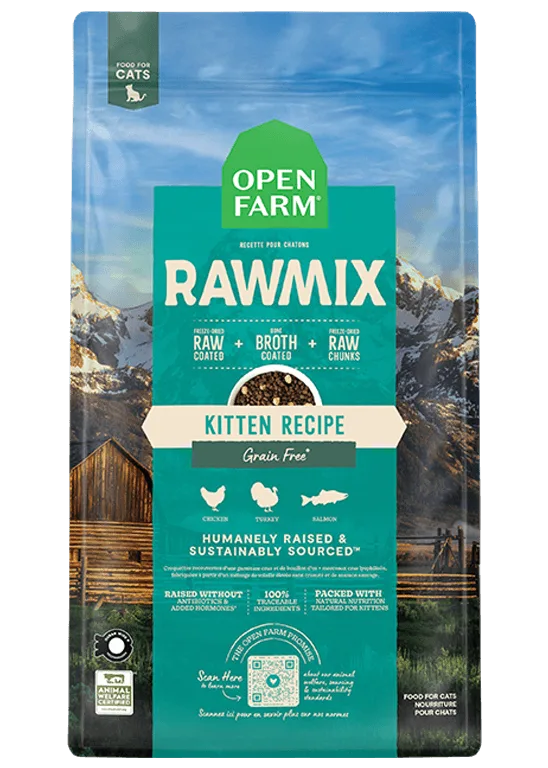
- RawMix Grain-Free Kitten Kibble: RawMix Grain-Free Kitten Kibble is crafted with a blend of 100% animal welfare certified chicken, turkey, and wild-caught salmon, and includes nutrient-dense meat, organ, and bone. Named proteins and organs tell you exactly what is in the food, which is the transparency you want when reading a label.
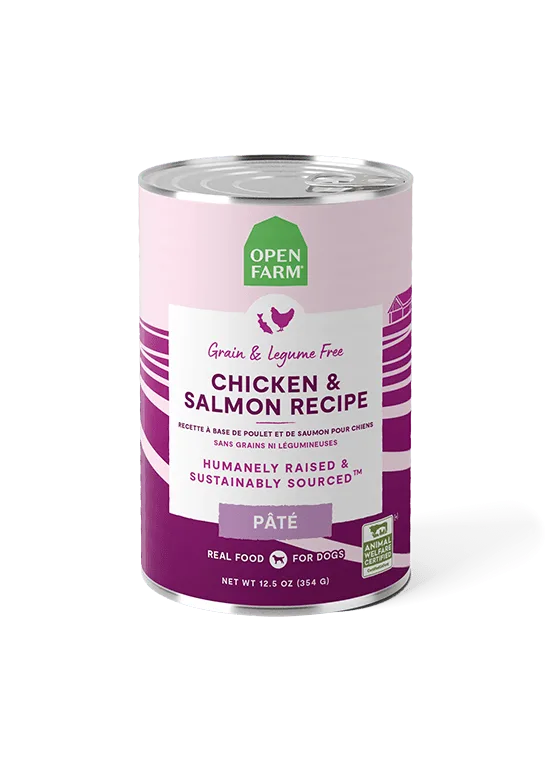
- Chicken & Salmon Pâté for Dogs: Chicken & Salmon Pâté for Dogs is grain- and legume-free and formulated without carrageenan, corn, or other unspecified ingredients. For cats, a similar pâté-style food would show high moisture and named proteins, making dry matter conversion necessary to compare protein levels.