Quick answer
Read the sachet's ingredient list from highest to lowest concentration, then patch test on your inner forearm or behind your ear for 24 hours before applying it to your face. Start with a pea-sized amount, especially for actives like retinol. If you see redness, itching, or swelling, stop and do not use the product.
Why sachets are the smartest way to test before you commit
Sachets let you try a formula without buying a full-size product. They are also useful for travel or for testing how your skin reacts to a new active. But a sachet's small size means you get one or two uses, so you need to read the label carefully before you open it. Once a sachet is opened, it can dry out or become contaminated, so plan your patch test for the same day you open it.
Unlike a full-size bottle, a sachet often has limited space for instructions. You may need to check the brand's website or the full-size product page for the complete ingredient list and usage directions. Do not assume the sachet contains the same concentration as the full size without checking.
How to decode the ingredient list on a sachet
Ingredients are listed in descending order of concentration until you reach 1%, after which they can be listed in any order. The first five ingredients usually make up the bulk of the formula. If you see a key active like retinol or vitamin C far down the list, it is likely present at a low concentration. That can still be effective, but it tells you the product is not a high-potency treatment.
Look for potential irritants or allergens you already know you react to. Common ones include fragrance, essential oils, alcohol denat, and certain preservatives. If you have sensitive skin, patch test even if the ingredient list looks gentle. Also check for conflicts: if you use a prescription retinoid, adding an over-the-counter retinol sachet may cause irritation.
Your step-by-step sachet patch test
- Read the ingredient list before opening: Check the order of ingredients and note any actives or potential allergens. If the sachet does not list ingredients, look up the full-size product online. Common mistake: assuming all sachets are gentle. Some contain retinol or acids that require caution.
- Choose a test spot: Cleanse a small area on your inner forearm or behind your ear. These areas are sensitive and easy to observe. Checkpoint: avoid testing on your face first, especially if you have never used the ingredients before.
- Apply a small amount: Squeeze a pea-sized amount from the sachet and dab it onto the test spot. Do not rub it in vigorously. Common mistake: using too much product. A little goes a long way, and you want to save the rest for a second test if needed.
- Wait 24 hours and check for reactions: Leave the product on the skin and avoid washing the area. After 24 hours, look for redness, itching, swelling, or bumps. If you see any reaction, do not use the product on your face. If there is no reaction, you can proceed with a facial patch test on a small area like the jawline.
- Introduce one new product at a time: If you are testing multiple sachets, wait at least a few days between each new product. This helps you identify which one caused a reaction if one occurs. Common mistake: testing several new products at once, making it impossible to pinpoint the culprit.
Sachets you can patch test today
- Cloudberry Bright Moisture Cream Sachet: Cloudberry Bright Moisture Cream Sachet is formulated with cloudberry to help brighten skin tone and provides rich moisture for a healthy-looking complexion. A good candidate for a first patch test if you want to try a brightening moisturizer without committing to a full size.
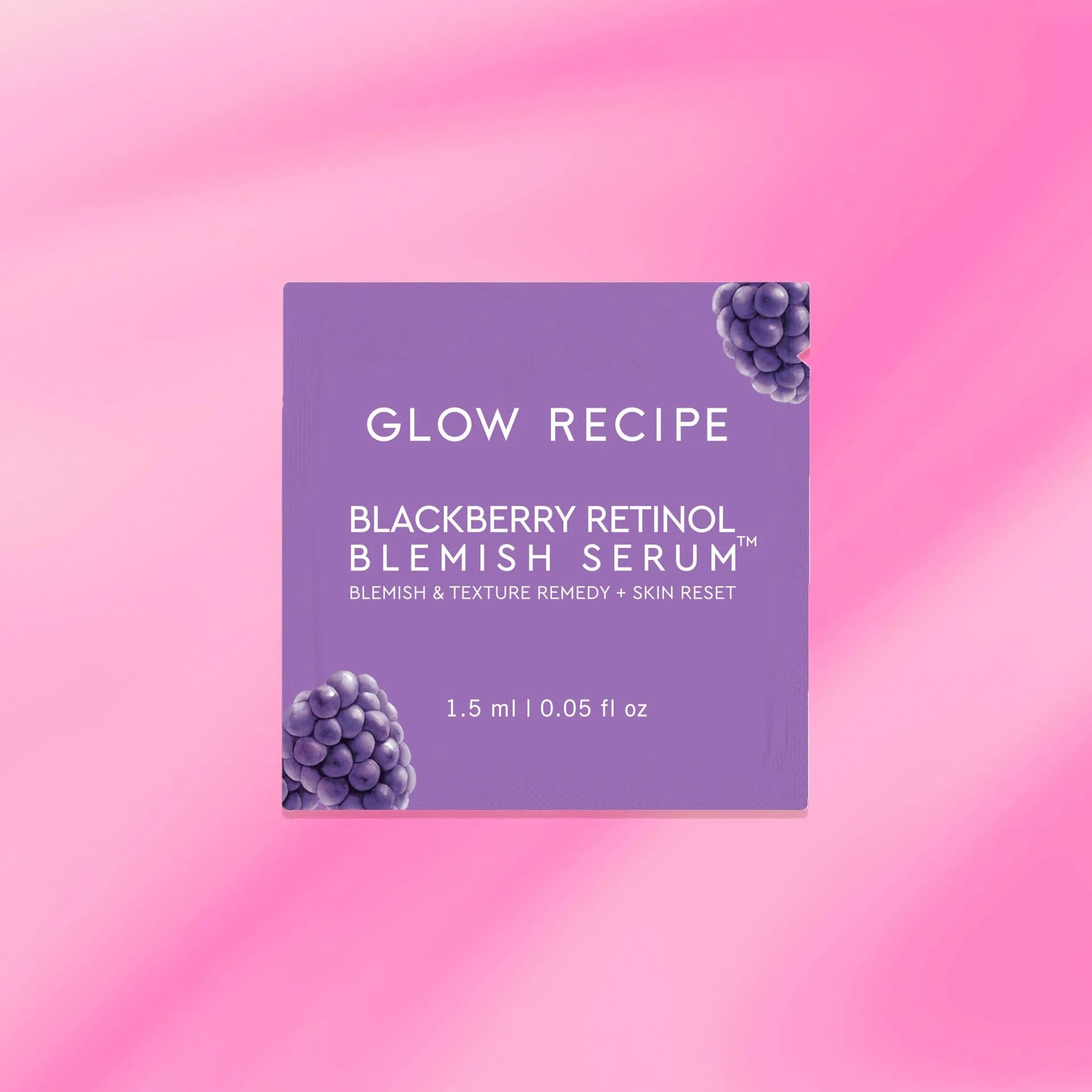
- Blackberry Retinol Blemish Serum Sachet: Blackberry Retinol Blemish Serum Sachet is formulated with blackberry and retinol to support a clearer, smoother complexion. Because it contains retinol, patch testing is especially important to gauge tolerance and avoid irritation.