Quick answer
Your contact lens prescription includes key numbers: base curve (BC), diameter (DIA), and power (sphere). To understand it, match these parameters to the lenses you buy, especially when ordering colored contacts online. Always use the values from your eye care professional, not your glasses prescription.
If you've ever looked at your contact lens prescription and felt like it was written in code, you're not alone. Terms like BC, DIA, and power can be confusing, especially when you're trying to order colored contacts online. But understanding these numbers is crucial for both comfort and eye health.
This guide breaks down each part of a contact lens prescription in plain language. You'll learn what each abbreviation means, how to read the numbers, and why they matter when choosing colored contacts. By the end, you'll be able to confidently order lenses that fit well and look great.
What Do the Abbreviations Mean?
Contact lens prescriptions typically include abbreviations like BC (base curve), DIA (diameter), and sphere (power). The base curve is the curvature of the lens's back surface, measured in millimeters. It should match the curvature of your cornea for a comfortable fit. The diameter is the overall width of the lens, also in millimeters, ensuring it covers your iris properly.
The power, often listed as sphere or SPH, is the lens's refractive strength in diopters. A negative number indicates nearsightedness (myopia), while a positive number indicates farsightedness (hyperopia). For colored contacts, you may also see 'Plano' or '0.00' for non-prescription lenses.
- BC: Base curve (e.g., 8.6 mm) – how steep or flat the lens is.
- DIA: Diameter (e.g., 14.2 mm) – how wide the lens is.
- Power: Sphere (e.g., -3.00) – correction strength, or 0.00 for non-prescription.
How to Read Your Prescription Numbers
Your prescription might look like: BC 8.6, DIA 14.2, SPH -3.00. The BC and DIA are usually the same for both eyes, but the power can differ. For example, you might have -2.50 in the right eye and -3.00 in the left. Always check each eye separately.
If you have astigmatism, your prescription may include additional numbers like cylinder (CYL) and axis. Toric lenses are designed for this. However, many colored contacts are spherical, so you may need to look for toric options if you have astigmatism.
- Check that the BC and DIA on the lens packaging match your prescription.
- Power values may be in steps of 0.25 diopters; choose the closest available.
Why This Matters for Colored Contacts
When buying colored contacts, you need the same parameters as your regular contacts for a safe fit. A lens with the wrong base curve or diameter can move around on your eye, causing discomfort or even damage. The power must also match your correction needs.
For example, if you have a prescription for -3.00, you need colored lenses with that power. Many colored contact brands offer a range of powers, and some offer non-prescription (0.00) options. Always verify the parameters before ordering.
- Never order colored contacts without knowing your BC and DIA.
- If you have astigmatism, look for toric colored contacts.
Steps to Read Your Prescription
- Find the BC and DIA: Look for the base curve (BC) and diameter (DIA) on your prescription or contact lens box. These are usually the first numbers listed. They ensure the lens fits your eye's shape and size. Checkpoint: If the BC or DIA of colored contacts doesn't match, don't buy them.
- Identify the power (SPH): Locate the sphere (SPH) value, which indicates your prescription strength. It will be a negative number for myopia or positive for hyperopia. If you don't need correction, it might say 'Plano' or '0.00'. Checkpoint: Make sure the power is the same as your regular contacts.
- Check for additional parameters: If you have astigmatism, you'll see cylinder (CYL) and axis numbers. These are essential for toric lenses. Without them, standard spherical lenses won't correct your vision properly. Checkpoint: If you have astigmatism, consider toric colored contacts.
- Apply to your colored contact order: When ordering colored contacts, match the BC, DIA, and power to your prescription. If you have different powers for each eye, you may need to order separate boxes or pairs. Next step: Double-check your order before checkout to avoid mistakes.
Colored Contacts with Clear Parameters
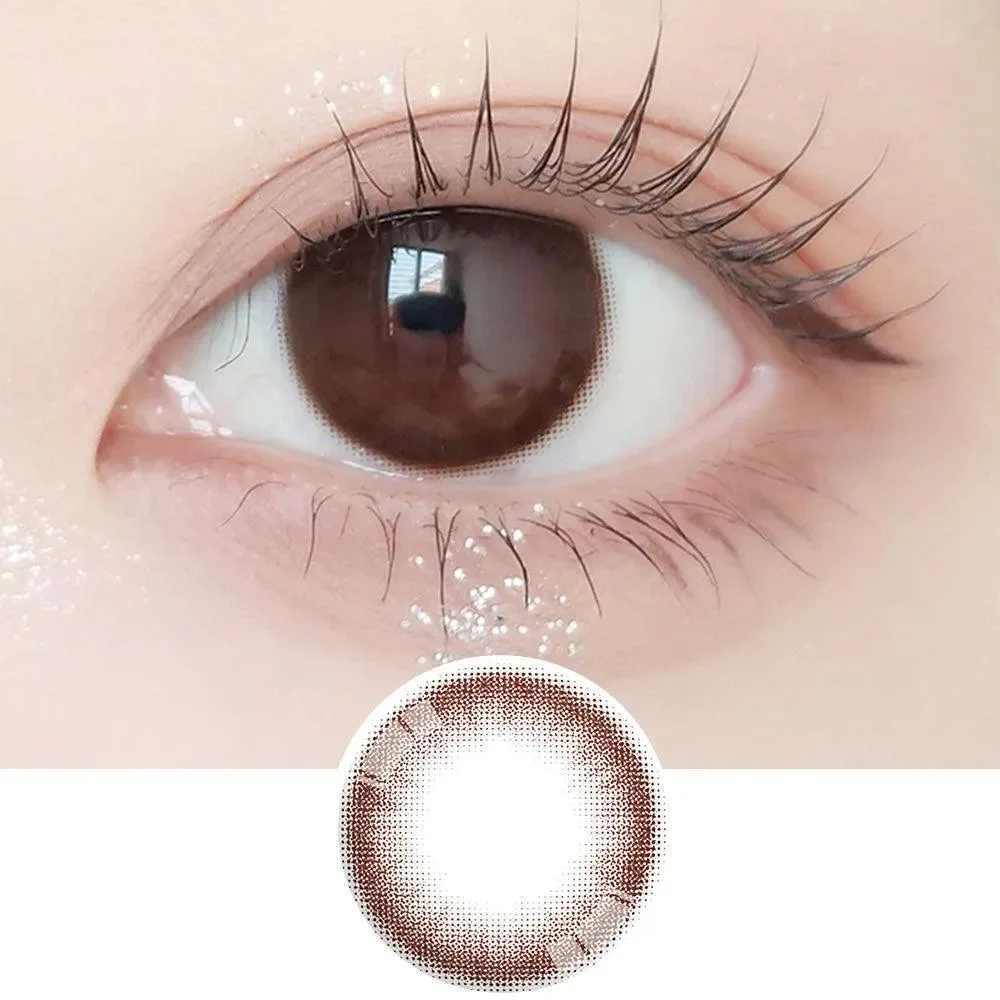
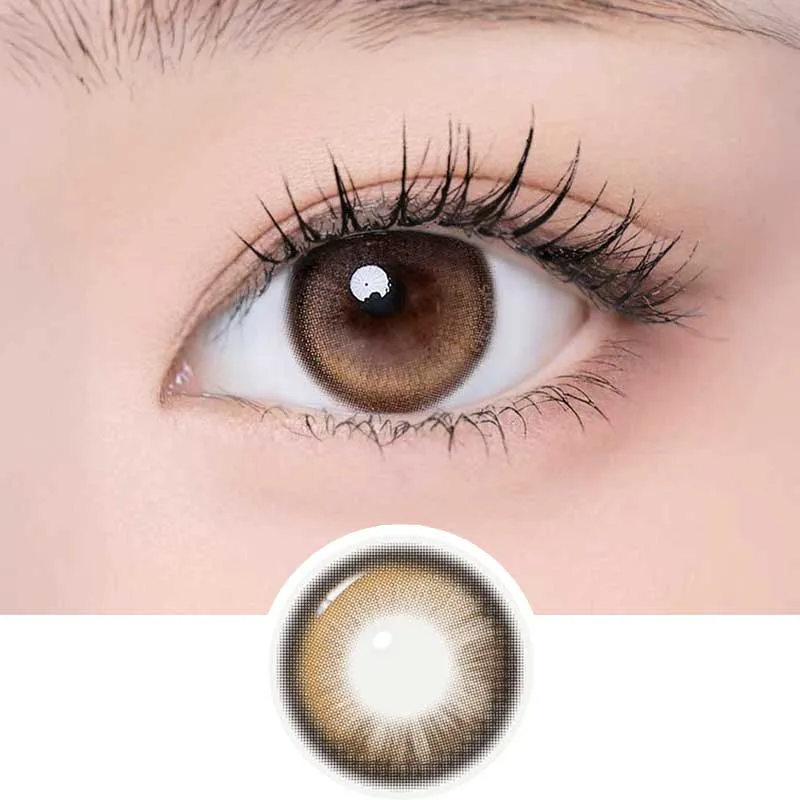
- Gemhour Dione 1-Day Soft Brown (10pk): Available in both non prescription and myopia prescription (power 0.00 ~ -8.00) Sold as a box containing 10 lenses of the same power. Please order 2 boxes if you have a different power for each eye. This daily lens offers a wide power range, making it easy to match your prescription. The 10-pack format is convenient for daily wear, and you can order separate boxes for each eye if needed.
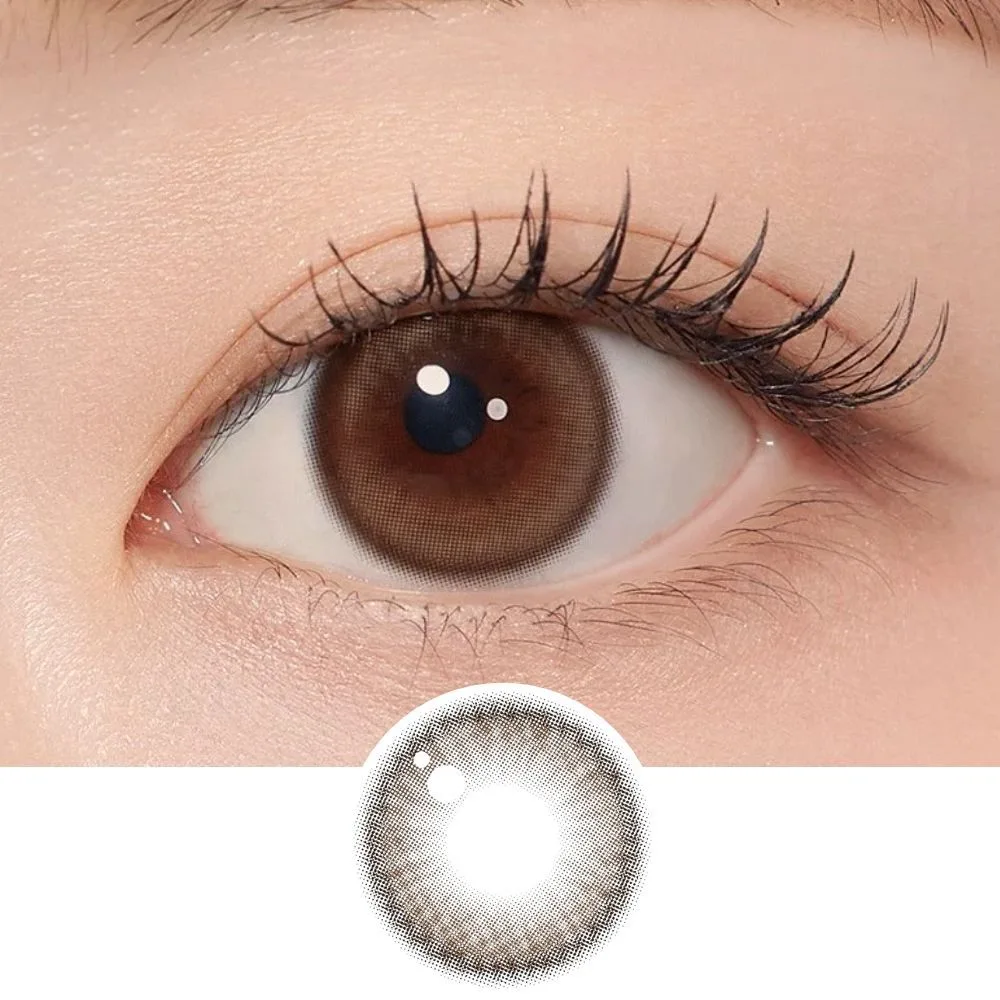
- Ann365 JUST Choco: Available in both non prescription and myopia prescription (power 0.00 ~ -8.00) Sold as a box containing 10 lenses of the same power. Please order 2 boxes if you have a different power for each eye. With a natural 1-tone design, these lenses are a good choice for everyday wear. The availability of prescription powers ensures you can get the correction you need without sacrificing style.
Understanding your contact lens prescription is key to buying colored contacts that are both comfortable and safe. Always use the parameters provided by your eye care professional, and never share lenses with others. With this knowledge, you can confidently explore the wide range of colored contacts available and find the perfect pair for your eyes.