Quick answer
Run Zombicide solo by controlling four to six survivors yourself, using the standard spawn rules and mission setup rather than halving the zombie count. Choose a box with a strong solo reputation, such as Zombicide: Black Plague or the newer White Death line, then set up one survivor card per figure and play the mission as written. The real work is bookkeeping and threat management, not a special one-player ruleset.
Pick a Zombicide box that works alone
Most Zombicide core boxes and expansions support one to six players, so solo is a supported mode rather than a workaround. The practical difference is how much table space and bookkeeping a box demands. Black Plague and its expansions use a single survivor dashboard per character and a compact spawn deck, which keeps a solo game moving. Later boxes with more tokens, abominations, and special rules ask more of one person managing every survivor.
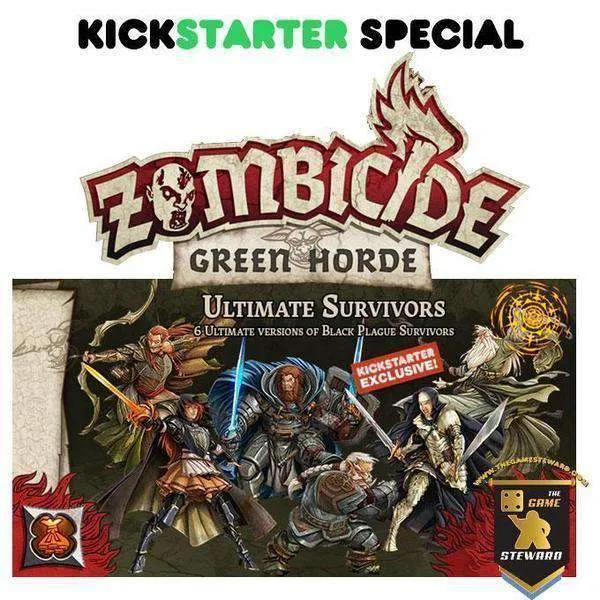
If you already own Zombicide: Black Plague, the Ultimate Survivors expansion adds six Kickstarter-exclusive ultimate versions of Black Horde survivors. Those alternate survivor cards give you more solo variety without changing the core rules, which matters when you are playing the same missions repeatedly.
- Start with a core box before adding expansions; solo play is easier to learn on one ruleset.
- Check the player count on the box or product page; most Zombicide titles list 1 to 6.
- Avoid starting with a box that needs a second player to manage hidden information.
Set up survivors for one player
Choose four survivors for your first solo game. Four is enough to cover melee, ranged, and support roles without turning every turn into a spreadsheet. Deal one survivor dashboard and figure to each, then place them in the starting zone exactly as the mission instructs. Keep the survivor cards in a row in front of you so you can see every action pool at a glance.
A common mistake is picking four damage-dealers and no survivor who can open doors or search efficiently. Balance your starting four so at least one can fight at range and one can take a hit. If a mission starts with fewer survivors, follow the mission card rather than adding extras.
- Four survivors is the practical solo default; three is harder, five or six is slower.
- Assign each survivor a role before the first turn: shooter, bruiser, searcher, support.
- Keep wound and experience tokens on the dashboard, not loose on the table.
Run the turn order cleanly
Zombicide turns follow a fixed sequence: survivors act, then zombies spawn, then zombies activate. In solo play you are every survivor, so announce each survivor's actions out loud or move a marker along the dashboard. This small habit prevents the most common solo error, which is skipping a survivor or giving one survivor two turns in a row.
Resolve all survivors in a consistent order, such as clockwise from the starting player, and stick to it for the whole session. When a survivor levels up, apply the new skill immediately and note it on the dashboard so you do not forget it next turn.
- Say the survivor's name before spending actions; it keeps the sequence honest.
- Finish all survivor actions before touching the spawn deck.
- Level-up skills apply at once; mark them so they are not forgotten.
Scale spawns and difficulty for one player
The standard Zombicide spawn rules already account for player count through the spawn cards and the number of survivors in play. If you run four survivors, use the normal spawn deck and normal mission objectives. Halving spawns is the most common solo house rule, and it usually makes the game too easy and removes the pressure that makes Zombicide tense.
If a mission feels unwinnable after two attempts, adjust one variable at a time: add a fifth survivor, allow a free search action in the starting zone, or reduce the mission's turn limit. Change only one thing per attempt so you can tell what actually fixed the balance.
- Use the printed spawn rules first; only house-rule after a genuine loss.
- Adjust one variable per retry, not three at once.
- Record what you changed so future solo sessions start from a known baseline.
Handle noise, targeting, and zombie AI alone
Zombie activation is where solo play gets fiddly. Zombies move toward the noisiest zone, and when targets are tied you choose the path. In a group, other players police that choice; alone, you have to be strict. Resolve ties by the shortest path, then by the lowest-numbered zone, and say the choice out loud before moving the figures.
Keep the noise trackers visible. A single survivor firing a ranged weapon can pull an entire street, and in solo play it is easy to forget which zone is loudest when you are managing four dashboards. Re-check noise at the end of every survivor phase, not just when a shot is fired.
- Announce tie-break choices before moving any zombie.
- Re-check noise after every survivor phase, not only after ranged attacks.
- Move zombies in one batch per zone to avoid double-moving a group.
Use house rules that add tension, not ease
The best solo house rules make the game harder or more thematic rather than softer. Two that work well: give each survivor one free re-roll per mission, and require a survivor to spend an action to trade items instead of trading freely. Both add decisions without changing the core rules.
Avoid rules that let you peek at the spawn deck or undo a bad activation. Those remove the risk that makes a solo win feel earned. If you want a shorter session, play a smaller mission rather than weakening the zombies.
- One free re-roll per survivor per mission adds drama without breaking balance.
- Charging an action for trades makes item management a real decision.
- Never let yourself look at the next spawn card; it kills the tension.
Solo Zombicide setup steps
- Choose your box and mission: Pick a Zombicide core box you can set up and teach yourself in one sitting, then select a mission card that lists the player count you plan to run. For a first solo game, use a mission designed for the survivors you have. Checkpoint: you can state the mission's objective and turn limit before placing a single figure.
- Select and seat four survivors: Deal four survivor dashboards and figures, assign each a role, and place them in the starting zone exactly as the mission shows. Keep the dashboards in a fixed row so turn order is visible. Checkpoint: every survivor has a dashboard, a figure, and a stated role.
- Run the first round slowly: Announce each survivor by name, spend actions, then resolve spawns, then activate zombies. Re-check noise at the end of the survivor phase before moving anything. Checkpoint: you completed one full round without skipping a survivor or a spawn step.
- Apply one house rule only after a real loss: If the mission ends in defeat, change one variable, such as adding a fifth survivor or one free re-roll, and replay the same mission. Do not stack multiple changes. Next step: log the change so your next solo session starts from a known difficulty.
Products that support solo play
- Zombicide: Black Plague Ultimate Survivors (Kickstarter Special): Zombicide: Black Plague Ultimate Survivors is a Kickstarter-exclusive expansion with six ultimate versions of Black Horde survivors, rated 7.02 on Board Game Geek and playable with 1 to 6 players. If you already run Black Plague solo, these alternate survivor cards add replay variety without changing the rules you have learned.
- The Dutch Resistance Orange Shall Overcome: All-In Pledge (Kickstarter Pre-Order Special): The Dutch Resistance: Orange Shall Overcome All-In Pledge is a pre-order with an expected delivery of 2026-10-31, supports 1 to 5 players, and includes the core game, the Dare to Strike! expansion, upgraded wood meeples, and 24 extra Halt! cards. This is a pre-order, so it will not be on your table for a solo session until late 2026; plan it as a future solo project rather than an immediate purchase.
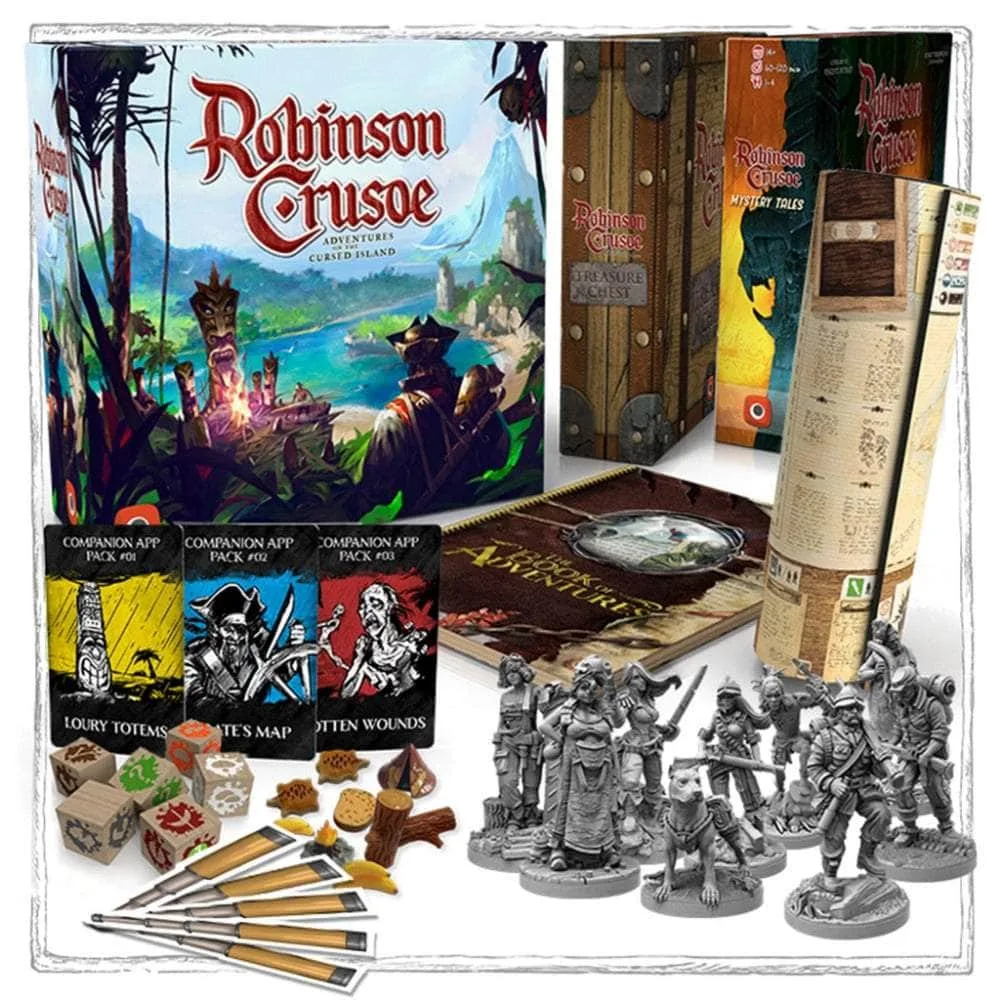
- Robinson Crusoe: Adventures on the Cursed Island Collector’s Edition All-In Bundle (Kickstarter Special): Robinson Crusoe: Adventures on the Cursed Island Collector's Edition All-In Bundle is a Gamefound-exclusive all-in pledge rated 9.50 on Board Game Geek and supports 1 to 4 players. It is a fully solo-friendly cooperative game, but it is a different system from Zombicide; use it as a change of pace, not a substitute for Zombicide's spawn-and-survive loop.