Quick answer
Mount the follow focus on your 15mm rods after the lens is locked in place, set the rod height so the gear sits at the lens gear ring's centre line, and mesh the drive gear with light contact rather than pressing it hard against the ring. Do the alignment with the lens at its widest aperture and focus at infinity, then check for backlash before you shoot.
Why 15mm LWS spacing decides everything downstream
A follow focus is only as stable as the rod it clamps to. Standard 15mm LWS rods sit 60mm apart centre-to-centre and 85mm below the lens centre, and every follow focus, matte box, and rod bracket assumes that geometry. If your rods are bowed, undersized, or clamped at the wrong height, the follow focus will either bind or slip no matter how carefully you adjust the gear.
Before you touch the follow focus, check that both rod ends are fully seated in the baseplate and that the rods are parallel. A 1mm sag at the front of a long rod pair becomes visible backlash at the gear. If your rig uses a rod bracket to add accessories, mount it after the follow focus so it does not fight for the same rod real estate.
Order of operations: lens first, follow focus second
Lock the lens into the mount, attach the lens support if the lens is long, and set the gear ring on the barrel. Only then slide the follow focus onto the rods. If you mount the follow focus first, you will almost certainly have to slide it again once the lens position changes, and every reposition risks disturbing the gear mesh you just set.
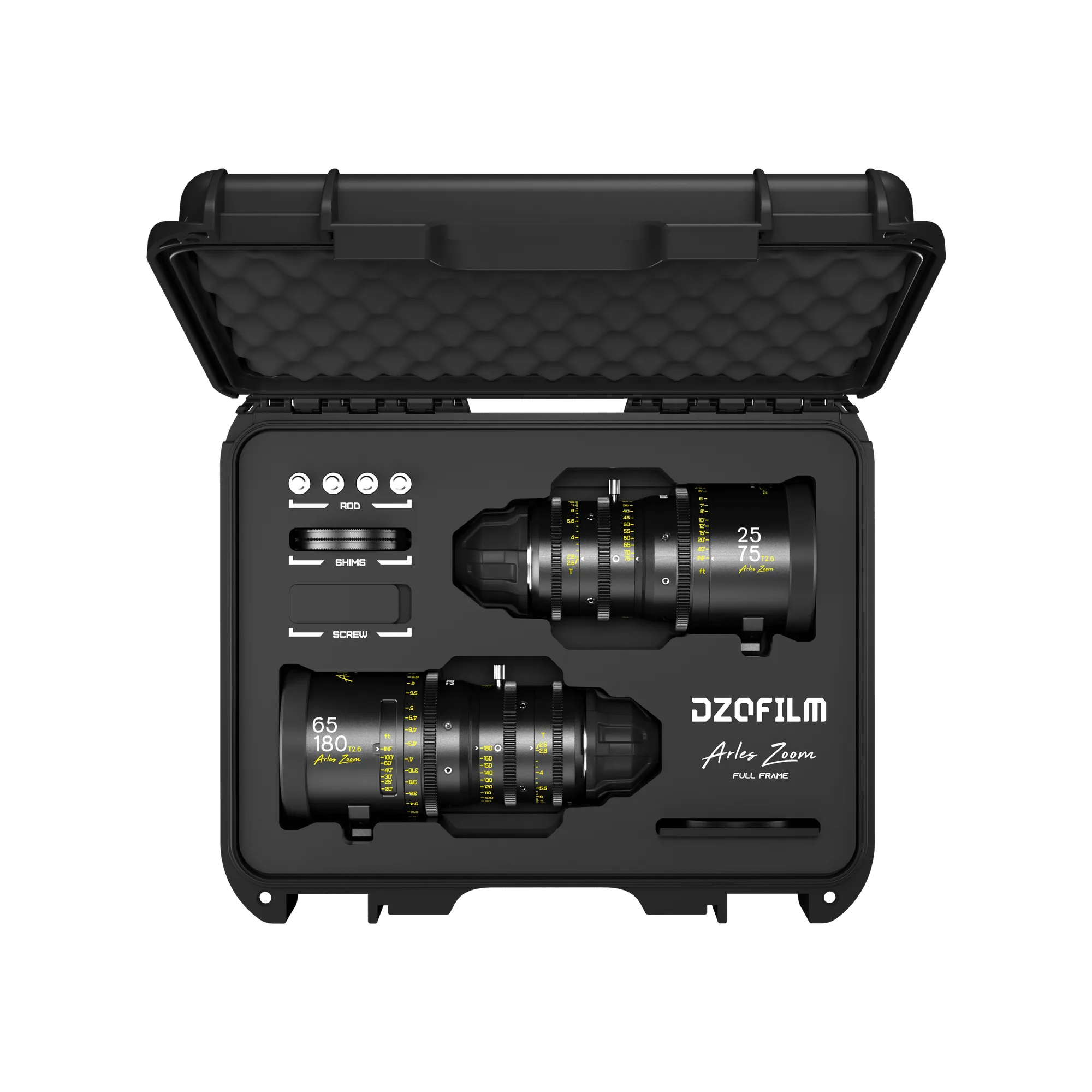
On PL-mount zoom sets like the DZOFILM Arles 2-Lens Set, the gear ring position differs between the 25-75mm and the 65-180mm. Mark the ring position on each lens with a piece of tape so you can swap lenses without re-measuring from scratch. The Arles set uses a parfocal design, so once the follow focus is meshed correctly, zooming should not pull focus.
Setting gear mesh without crushing the lens ring
The drive gear should touch the lens gear ring with just enough pressure to turn it, not so much that it deforms the ring or adds drag to the focus barrel. A useful test: rotate the follow focus knob through its full travel and watch the lens focus scale. If the scale moves smoothly and returns to the same mark when you reverse direction, the mesh is right. If there is a dead band before the lens moves, the gear is too loose or the rod is flexing.
Gear alignment is not just left-to-right. The gear must also sit at the correct height on the ring. If it rides on the edge of the ring, you will get uneven wear and a pulsing feel. Loosen the rod clamp, slide the follow focus up or down, and re-tighten while keeping the unit square to the lens axis.
Follow focus setup steps
- Lock the lens and fit the gear ring: Seat the lens in the mount, support long lenses, and slide the gear ring onto the barrel. Set the ring where the follow focus body will sit without hitting the matte box or lens support. Checkpoint: the ring should not overlap the focus scale markings you need to read.
- Mount the follow focus on the rods: Slide the follow focus onto the 15mm rods from the front, with the drive gear facing the lens. Keep the rod clamp loose enough to slide but tight enough that the unit does not tilt. Common mistake: mounting the follow focus before the lens is locked, which forces a second alignment later.
- Set rod height and gear mesh: Adjust the follow focus height so the drive gear meets the centre of the lens gear ring. Bring the gear into light contact, then tighten the rod clamp. Rotate the knob through the full focus travel and reverse direction to check for backlash. Checkpoint: if the lens scale moves immediately in both directions with no dead band, the mesh is correct.
- Mark and test the focus throw: Set hard stops or mark the follow focus disc at your near and far focus points. Run a full rack from minimum to infinity and back, watching for any slip or drag. Common mistake: leaving the gear too tight, which adds drag and can make the lens barrel feel notchy.
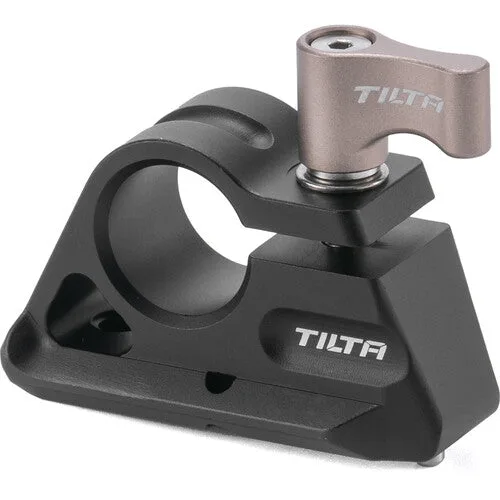
- Add accessories without disturbing the mesh: If you need a monitor or handle near the follow focus, use a rod bracket that adds a NATO rail rather than clamping more gear onto the same rod section. Re-check the gear mesh after adding weight. Checkpoint: after any accessory change, repeat the backlash test before rolling.
Product facts
- Tilta 15mm Rod Bracket with NATO Rail (Black): Tilta 15mm Rod Bracket with NATO Rail (Black) clamps onto standard 15mm LWS rods and adds a NATO rail in line, so NATO-compatible accessories such as top handles, side handles, monitor mounts, and EVF mounts can be quick-released without re-rigging. If you need to add a monitor or handle near the follow focus, this bracket gives you a NATO mounting point without removing the follow focus or disturbing its gear mesh.
- DZOFILM Arles Zoom Lens 2-Lens Set 25-75mm + 65-180mm T2.6 (PL, Metric): DZOFILM Arles Zoom Lens 2-Lens Set 25-75mm + 65-180mm T2.6 (PL, Metric) combines two parfocal zooms covering a 43.5mm full-frame image circle in a hard case. Because both lenses are parfocal, a correctly aligned follow focus stays in calibration through the zoom range, which makes this set a practical choice for solo operators who need to change focal length without pulling focus.