Quick Answer
To keep your meat knife sharp, hone it regularly with a honing steel and sharpen it with a whetstone when it dulls. Pair that with hand washing and proper storage to extend its life.
Why Sharpness Matters for Meat Preparation
A sharp meat knife makes slicing safer and cleaner. Dull blades require more pressure, increasing the risk of slips and uneven cuts. The Westmark meat knife with an 18 cm blade is designed for precise cutting and slicing of meat, so keeping it sharp ensures you get the most from its performance.
Honing and sharpening serve different purposes. Honing realigns the blade's edge between uses, while sharpening removes metal to create a new edge when the blade becomes dull. You need both for proper maintenance.
Choosing the Right Sharpening Method
Whetstones offer the most control and are ideal for restoring a dull edge, but they require practice and time. Electric sharpeners are faster but remove more metal, shortening the blade's lifespan. Honing steels are for quick touch-ups, not for sharpening a truly dull blade.
For most home cooks, a combination of honing steel and whetstone covers all needs. If you're unsure, start with a whetstone and practice on a less expensive knife first.
Step-by-Step Meat Knife Care
- Hone the blade before each use: Hold the honing steel vertically with the tip on a cutting board. Place the heel of the blade against the steel at a 15-20 degree angle. Draw the blade down and across the steel, from heel to tip, alternating sides. Repeat 5-10 times per side. If the blade feels smooth and cuts effortlessly, you're done. If it still feels dull, move to sharpening.
- Sharpen with a whetstone when dull: Soak the whetstone in water for 10-15 minutes. Place it on a damp cloth. Hold the knife at a 15-20 degree angle and slide the blade across the stone in a sweeping motion, from heel to tip. Repeat on both sides, starting with the coarse side and finishing with the fine side. Count your strokes: aim for the same number on each side to keep the edge symmetrical.
- Wash and dry by hand: After each use, wash the knife with warm soapy water and a soft sponge. Rinse thoroughly and dry immediately with a towel. Never soak the knife or put it in the dishwasher, as this can damage the blade and handle. Check for any food residue stuck near the handle; it can harbor bacteria if left unnoticed.
- Store safely: Store the knife in a knife block, on a magnetic strip, or with a blade guard. Avoid tossing it loose in a drawer where it can bump against other utensils and dull the edge. If you don't have a storage solution, use a blade guard as a simple, affordable option.
Product Spotlight
-
Meat knife »Domesticus«, blade 18 cm: This Westmark meat knife features an 18 cm blade, designed for precise cutting and slicing of meat. A well-maintained blade ensures the knife's precision cutting performance remains reliable for everyday meat preparation.
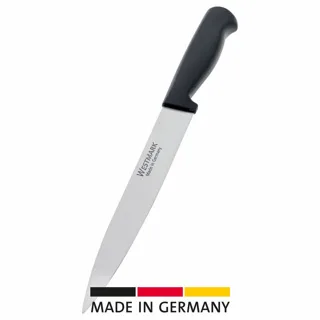
Meat knife »Domesticus«, blade 18 cm