Quick answer
Store autograph books and team card sets in acid-free sleeves or binders, keep them upright in a cool, dry spot away from direct sun, and handle pages only with clean, dry hands. For display, rotate a few favorite items in UV-filtering frames or a closed case instead of leaving everything exposed year-round.
Why storage and display need different rules
Autograph books and team card sets are made of paper, ink, and sometimes adhesive or plastic — all of which react to light, moisture, and physical pressure. Storage is about minimizing those reactions over months or years; display is about controlled exposure. Treating them the same is the most common mistake: a signed page left in a sunny frame fades faster than one kept in a dark binder, and a card set stacked loosely in a shoebox can bend corners that never recover.
The practical split is simple. Keep the bulk of a collection in archival storage and rotate only a small number of pieces into display. That way you enjoy the collection without sacrificing the condition of the rest.
Materials that actually protect paper and ink
Look for the words acid-free and lignin-free on sleeves, pages, and boxes. Polypropylene or polyethylene sleeves are generally safe for cards; PVC sleeves are not, because they can release plasticizers that damage card surfaces over time. For autograph books, a rigid acid-free box or a slipcase keeps pages flat and blocks dust.
Humidity is the quiet enemy. A stable indoor space — not a basement, attic, or garage — avoids the swelling and sticking that come with damp air. If you live in a humid climate, a small silica gel packet inside a closed storage box helps, but replace it periodically rather than leaving it indefinitely.
How to organize a card binder without damaging cards
Sort first, then load. Decide on an order — by year, team, or set number — before you put anything into pages, because re-sorting later means handling every card again. Use nine-pocket pages for standard cards and load them from the top with two hands, supporting the back of the page so it does not flex.
Do not overfill a binder. When pages bulge, the rings press into the cards nearest the spine. A binder that closes flat with a little room to spare is the right size. Store binders upright on a shelf rather than stacked, so the pages hang instead of compressing each other.
Displaying signed pieces without fading them
For a signed book page or a favorite card, a frame with UV-filtering glass or acrylic slows fading but does not stop it. Keep displayed items out of rooms with strong afternoon sun and away from heat sources. If you want to show a full set, consider a rotating display: one page or a small group of cards at a time, swapped every few months.
For casual, playful display — a shelf, a desk, or a game-day table — a small squishy or plush item can sit alongside your binder without competing for the same protective conditions. It is a low-stakes way to keep team spirit visible while the paper collection stays protected.
Handling and cleaning rules that prevent most damage
Wash and dry your hands before touching autograph pages or card faces. Oils and lotion residue transfer to paper and can stain or attract dust. Avoid eating or drinking near an open binder, and never use tape, rubber bands, or adhesive notes on pages — the adhesive migrates and leaves a mark.
If a page or card gets dusty, use a soft dry brush or a microfiber cloth with no liquid. Do not rub ink. For a smudge, leave it alone; most attempts to fix it make it worse. When in doubt, do less.
Step-by-step storage and display routine
- Sort and separate before storing anything: Divide autograph books from loose cards and decide the order you want — by year, team, or set. Do not store first and sort later; every extra handling pass adds wear. Checkpoint: if you have to reopen a box to re-sort, you skipped this step.
- Move everything into acid-free sleeves or pages: Use acid-free, lignin-free sleeves for cards and an acid-free box or slipcase for autograph books. Avoid PVC sleeves and any page that smells like plastic. Checkpoint: if a sleeve feels stiff or sticky, replace it.
- Load binders loosely and store them upright: Fill nine-pocket pages from the top, support the back of the page, and leave a little slack so the binder closes flat. Stand binders on a shelf instead of stacking them. Checkpoint: a binder that bulges at the spine is overfilled.
- Choose a cool, dry, dark storage spot: Keep boxes and binders indoors, away from basements, attics, garages, and direct sun. Add a replaceable silica gel packet in humid climates. Checkpoint: if the storage spot feels damp or hot to the touch, move the collection.
- Rotate display items instead of leaving them out: Frame only a few signed pieces at a time with UV-filtering glazing, and swap them every few months. Keep displayed items away from heat and afternoon sun. Checkpoint: if a displayed page has been out for a full season, rotate it back into storage.
- Handle with clean, dry hands and skip the quick fixes: Wash and dry hands before touching pages or card faces. Never use tape, rubber bands, or liquid cleaners on paper or ink. Checkpoint: if you are about to rub a smudge, stop — most smudges are better left alone.
Team items that fit a display shelf
- Phillie Phanatic Phillies 4" Squishy Baseball: The Phillie Phanatic Phillies 4" Squishy Baseball is a squishy baseball featuring the Phillie Phanatic mascot, priced at USD 6.80 with a catalog comparison price of USD 10.00. It is a small, low-cost item you can place on a shelf or desk near your binder, so you get visible team spirit without exposing signed paper to light or handling.
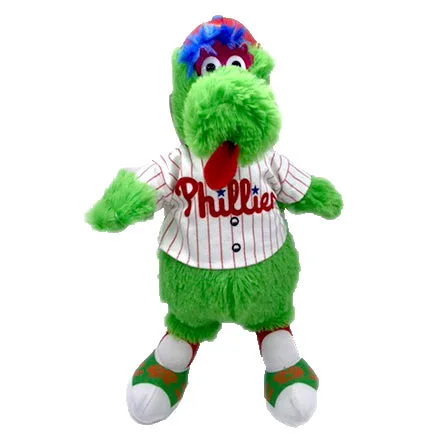
- FOCO 14” Phillie Phanatic Plush Toy: The FOCO 14” Phillie Phanatic Plush Toy is officially licensed, measures approximately 14 inches tall, and is made of polyester and polyethylene. At 14 inches it is a display piece rather than a pocket item, so give it shelf space away from direct sun and keep it out of the same box as flat paper items to avoid pressure creases.