Quick answer
Teach the goal first, then the turn structure, then only the rules players need for their first turn. Run one practice round with open information before playing for real. This keeps new players oriented and gives experienced players something concrete to do instead of waiting through a full rules dump.
A mixed table is the hardest teaching room you will ever run. One player has never seen a modern board game, another has played it twice, and a third is already reading the rulebook over your shoulder. If you explain everything to everyone, you lose the new players and bore the veterans.
The fix is not a shorter explanation. It is a sequenced one. You teach in layers, check understanding at each layer, and use the experienced players as anchors rather than an audience. The steps below work for lightweight fillers and heavier strategy games alike.
Set up the table before anyone sits down
Lay out the board, shuffle decks, and place starting components before you call people over. A table that already looks like a game in progress is easier to read than a pile of punchboard and baggies. If the game has player boards, set one up as a reference station and leave the rest face down.
This is also when you decide what to leave in the box. Expansions, promo cards, and optional modules add teaching surface area. Save them for game two. The first play should be the cleanest version of the game you can put on the table.
- Pre-sort tokens by type so you can point instead of dig.
- Keep the rulebook open to the turn summary page, not page one.
Explain the goal in one sentence
Before any mechanics, tell the table what winning looks like. “You are gathering books into rooms and scoring the best-organized apartment” is a goal. “You take three actions, then resolve upkeep” is not. New players hold onto the goal when the details get fuzzy.
Then give the shape of the game: how many rounds, whether it is cooperative or competitive, and roughly how long it takes. A cooperative game changes how players listen, so say that out loud early. In TESSERACT: a cooperative, puzzle strategy game, for example, the table is working together to contain an extra-dimensional avatar, so players should be listening for shared problems, not secret plans.
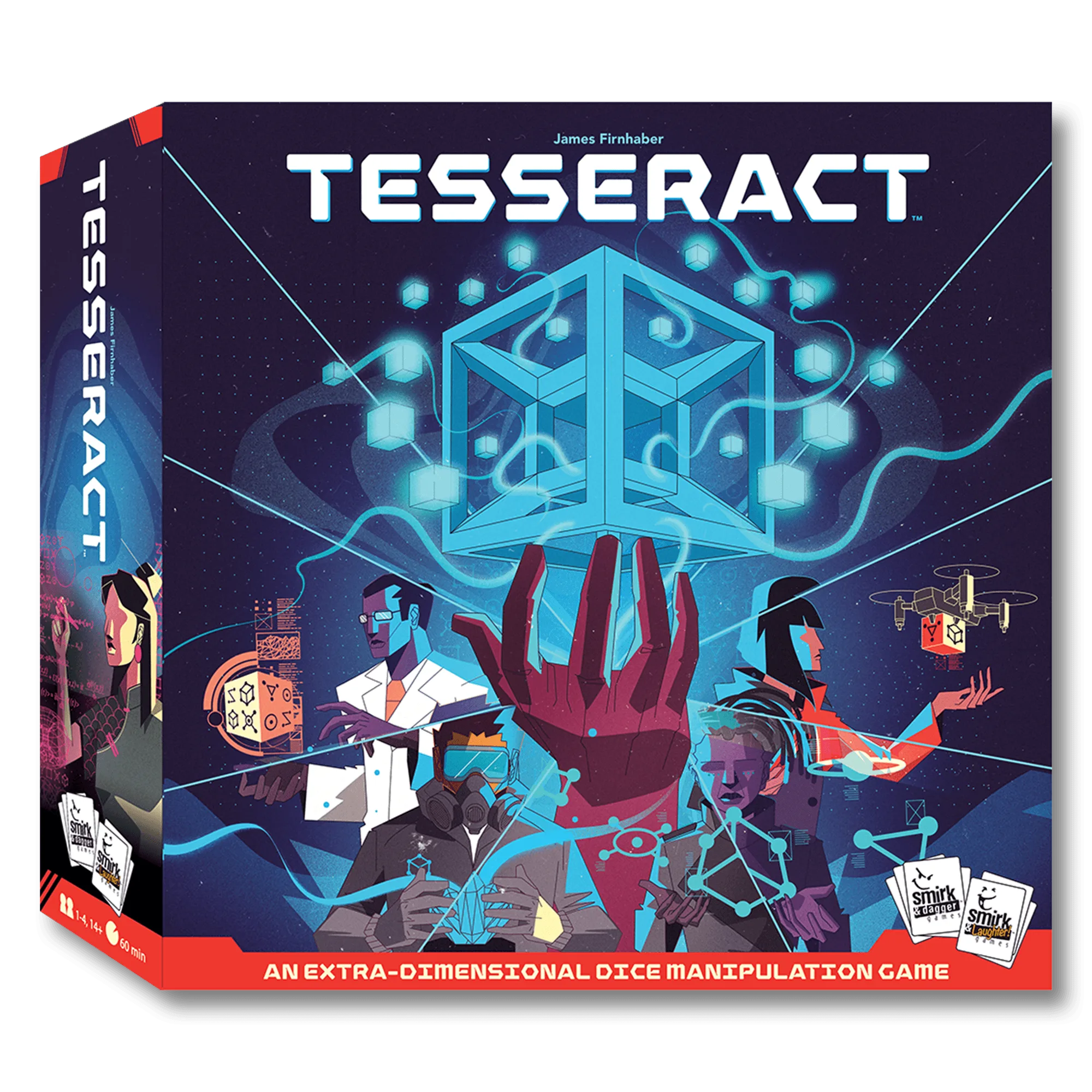
TESSERACT: a cooperative, puzzle strategy game
- One sentence for the goal, one for the format, one for the length.
- If you cannot state the goal in a sentence, you do not understand the game well enough to teach it yet.
Teach the turn structure before the exceptions
Walk through a single turn out loud, in order, using your own player board as the demo. Most games have a rhythm: do a thing, resolve a thing, pass. Give players that rhythm before you explain any card that breaks it.
Resist the urge to front-load edge cases. If a rule only matters in round five, it can wait until round five. New players remember what they use. Veterans will ask about the exceptions anyway, and you can answer them in one line without derailing the table.
- Use the same three words for each phase every time you say them.
- Write the phase order on a scrap of paper if the game does not include a player aid.
Run one open practice round
Play a single round with all hands and hidden information face up. Let the experienced players talk through their choices and let the new players copy the logic. You are not playing to win. You are building a shared mental model of what a turn feels like.
This is also where you catch the quiet confusion. Someone who nods through the rules will often freeze on their first real decision. An open round surfaces that before it costs them the game.
- Announce that the practice round does not count and mean it.
- Ask each new player to narrate their turn out loud once.
Give experienced players a job
Veterans get restless when they are told to wait. Give them a specific role: they can manage the token supply, read card text aloud, or act as a rules reference for the player to their left. This keeps them engaged and takes pressure off you as the only source of answers.
Be clear that helping is not the same as deciding. An experienced player who plays someone else's turn for them is worse than one who stays quiet. Set that expectation before the first turn, not after the first argument.
- Pair each new player with a veteran for the first round only.
- Tell veterans to answer questions with questions when they can.
Check understanding with a real decision
Do not ask “does everyone get it?” Nobody says no. Instead, ask a concrete question: “If you want to score this room, what do you do first?” A correct answer means move on. A blank stare means re-teach that one piece, not the whole game.
Keep the check short. One question per player is enough. The point is to find the gap, not to quiz the table.
- Ask about the next decision, not the last rule you explained.
- If two players miss the same thing, the explanation was the problem, not the players.
The seven-step teach, in order
- 1. Set the table first: Unbox, sort, and lay out starting components before anyone sits down. Leave expansions in the box. Checkpoint: if setup takes longer than the explanation, you have over-prepared.
- 2. State the goal in one sentence: Say what winning looks like, then the format (co-op or competitive), then the length. Checkpoint: ask a new player to repeat the goal back to you.
- 3. Walk one turn out loud: Demo a full turn on your own board, in order, using the same words each time. Checkpoint: no edge cases until someone actually hits one.
- 4. Play one open round: Hands face up, choices narrated, no scoring. Let new players copy the veterans' logic. Checkpoint: anyone who freezes here needs a re-teach, not a restart.
- 5. Assign veteran roles: Give experienced players token duty, card reading, or rules-reference duty for one player. Checkpoint: helping is allowed, deciding for someone else is not.
- 6. Ask one concrete question: Instead of “does everyone get it?”, ask what a player would do to score or advance right now. Checkpoint: two wrong answers means re-teach that piece, not the whole game.
- 7. Start the real game and stay quiet: Deal, play, and answer only what you are asked. Let the first round be slightly slow. Checkpoint: if you are still narrating turns in round three, you taught too much too late.
Games that teach well at a mixed table
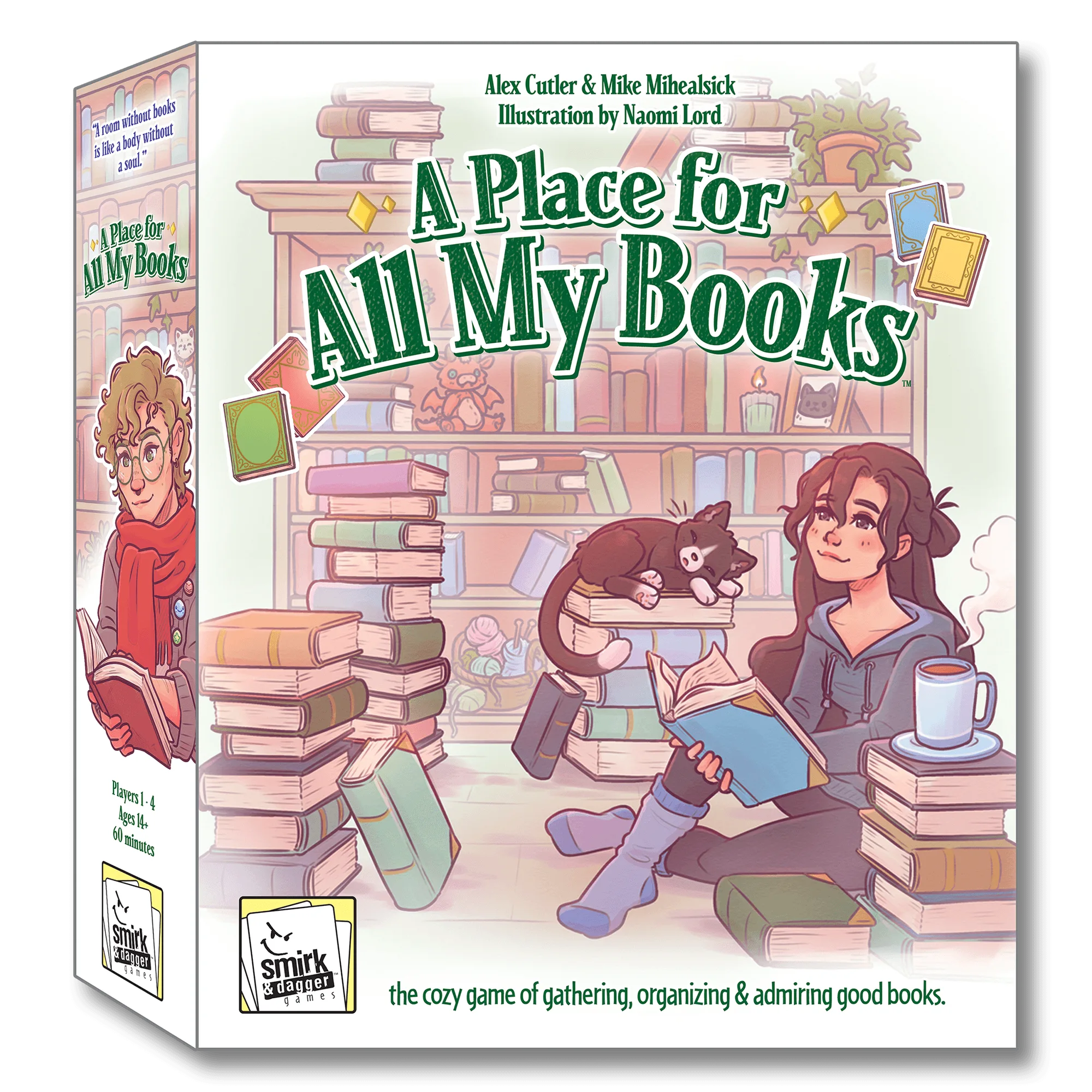
- https://smirkanddaggerern.com/products/a-place-for-all-my-books-deluxe-edition-20411a7751f56f281f3759f5-1623105A Place for All My Books: DELUXE Edition: A puzzley book gathering, sorting and organizing strategy game where players arrange stacks of books in different rooms of their apartment as personal projects. The theme is legible from the table, so new players can guess what a turn is for before you explain it. That shortens the goal sentence and gives veterans something to optimize immediately.
- TESSERACT: a cooperative, puzzle strategy game: The game features a cube of 64 dice, sitting on a rotating platform to examine all angles. A single shared object in the middle of the table gives you a natural teaching prop. You can point at the cube instead of describing it, which keeps mixed groups oriented during the rules explanation.
- ROLL for your Life, Candyman!: a speed dice game of cookie combat: 2 to 4 players face off in arena-style free-for-all battles, rolling their dice furiously. When a player gets all four of their dice to match, they grab the plastic candy cane at the center of the table. Real-time games teach by doing rather than explaining. If your group is losing patience with a rules walkthrough, a speed game resets the room because the first turn is the lesson.
Teaching a mixed group is a sequencing problem, not a knowledge problem. Set the table, state the goal, demo one turn, play one open round, then get out of the way. Do that and the new players learn the game while the veterans still get to play it.