Quick answer
Teach Devious in about 15 minutes by explaining the anti-set goal first, then the face-down hand placement, then playing two guided rounds with open hands. Keep the first game light on strategy talk so the sabotage and bluffing stay fun.
What to say before anyone touches a card
Start with the goal, not the components. In Devious, you want one high-ranking faerie from each of the six tribes. Two or more of the same faerie ruins your score. That single rule explains why the game feels like a trap: collecting more can hurt you.
Then explain the twist that makes Devious a deduction game rather than a simple set collection game. Each round you play a single card, but your three-card hand is arranged and placed face-down by your opponent. You are not choosing which card leaves your hand; you are choosing how to arrange the cards your opponent will play. That is the core of the teach.
- Say the anti-set rule out loud before showing any cards.
- Demonstrate the face-down hand placement with two cards, not three, so it looks simple.
- Ask one player to explain the goal back to you before you deal.
Set up the first game for teaching, not for competition
Use the standard setup from the rulebook, but deal fewer rounds than a full game if your group is new to deduction games. The first game of Devious is about understanding the bluffing rhythm, not about winning. Seat players so everyone can reach the center of the table and see the face-down hands.
Keep the rulebook open to the scoring page. When someone asks what counts as a high-ranking faerie, point to the reference instead of paraphrasing. This avoids invented house rules on the first play.
- Shuffle thoroughly; clumped tribes make the anti-set rule feel random.
- Give each player a clear space for their face-down hand.
- Announce that the first game will be a learning round and scores do not carry over.
Teach Devious in six steps
- State the anti-set goal: Tell players they want one high-ranking faerie from each of the six tribes, and that two or more of the same faerie ruins the score. Do not explain rankings yet. Checkpoint: ask a player to say the goal back to you in one sentence.
- Demonstrate the face-down hand placement: Take three cards, arrange them face-down, and have the player to your left place them for you. Then reveal the order and show how the played card was determined by your opponent, not by you. Common mistake: letting new players think they choose which card to play. Correct this before the first real round.
- Play one open round: Deal a round with all hands face-up. Walk through the placement and the single card play slowly. Ask the group what each player is trying to avoid. Checkpoint: everyone can point to the card they would least want their opponent to place on top.
- Play one closed round with coaching: Deal normally, but pause before each play to ask the active player what they are arranging for and what they fear. Keep advice short. Common mistake: over-coaching and revealing hidden information. Let the bluff happen.
- Score the round out loud: Reveal all hands and score together, naming each tribe and whether the player has one or more of a faerie. Show how a big win can collapse into a ruined score. Checkpoint: players can explain why two of the same faerie is worse than one.
- Start the real game and step back: Deal a fresh game, say the first game is for learning, and stop narrating. Only answer rules questions, not strategy questions. Next step: after the game, ask which round felt most devious and why.
The game you are teaching
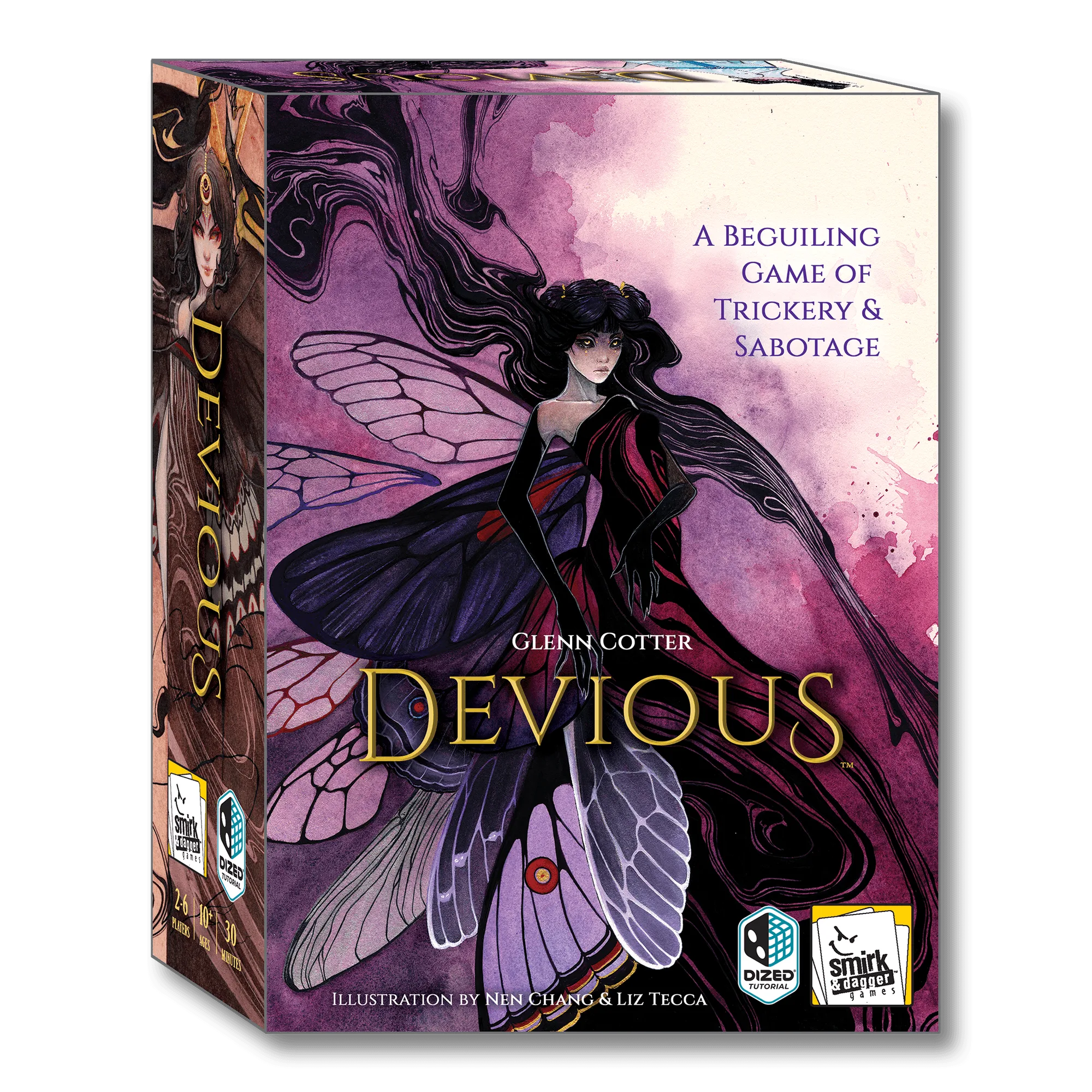
- Devious: Devious is a beautifully twisted anti-set collection card game full of bluffing, sabotage, and shifting fortunes. The teach should frame the game as a bluffing game from the first sentence, not as a matching game, so new players do not expect to collect as many cards as possible.
- Devious: Having a single high-ranking faerie from each of the 6 tribes may earn you a big win, but having two or more of a faerie will ruin your score. This is the one rule that must be understood before the first card is played; if players miss it, the first game feels arbitrary.
- Devious: Each round you will play a single card, but your 3-card hand is arranged and placed face-down by your opponent. Explaining this before the first round prevents the most common new-player mistake: trying to choose which card to play instead of how to arrange the hand.