Quick Answer
Use Genotype: A Mendelian Genetics Game as the centerpiece of a heredity lesson: teach the vocabulary first, play one guided round, then debrief with Punnett square problems. It fits 1-5 players, ages 14+, and plays in 45-75 minutes. If you want the upgraded components for repeated classroom use, the Genotype bundle with the Collector's Edition Components Pack is the more durable option.
Why Genotype Works for a Genetics Lesson
Genotype is a worker placement and resource management game set at St. Thomas' Abbey, where Gregor Mendel performed his experiments. Players draft pea plant traits, manage resources, and score based on genetic outcomes. Because the game is built around heredity and Punnett squares, the mechanics themselves teach the concept rather than decorating it.
The game is designed for ages 14+ and 1-5 players, so it works for high school biology, homeschool co-ops, and even a single student working through a unit independently. A full session runs 45-75 minutes, which fits a standard class period with time for setup and debrief.
Before You Play: Set Up the Vocabulary
Spend 10-15 minutes front-loading the terms students will see during play: allele, dominant, recessive, genotype, phenotype, and Punnett square. Genotype uses these concepts directly, so students who do not know the words will struggle to make strategic decisions.
A quick pre-teach is more effective than explaining rules and genetics at the same time. Give students a simple Punnett square worksheet to complete before the game, then tell them they will use those same squares to plan their moves.
How to Run the Lesson in One Class Period
Plan for a 60-75 minute block: 10 minutes for vocabulary, 10 minutes for rules, 30-40 minutes for play, and 10 minutes for debrief. If your class period is shorter, play only a few rounds rather than rushing the full game.
Assign roles during the first game. One student can track the trait pool, another can manage the Punnett square predictions, and a third can handle resource tokens. Rotating roles keeps everyone engaged and gives you a chance to check understanding without stopping the game.
Debrief: Turn Game Moves into Genetics Understanding
After the game, ask students to explain one decision they made using genetic vocabulary. For example: "I chose this trait because the dominant allele gave me a higher chance of the phenotype I needed." This connects the strategy to the science.
Then have students write a Punnett square for one cross they attempted during the game and compare the predicted ratio to what actually happened. The gap between prediction and outcome is a natural opening to discuss probability and sample size.
Adaptations for Different Settings
In a homeschool setting, play cooperatively or with a parent as a second player. The 1-player mode also works well for independent study. For larger classes, set up multiple copies and run a tournament-style rotation.
If you teach younger students, preview the reading level. The game is listed for ages 14+, so younger learners may need simplified rule cards or a teacher-led demonstration round. Do not assume the game will hold their attention without scaffolding.
Step-by-Step Genetics Lesson with Genotype
- Step 1: Pre-teach the vocabulary: Introduce allele, dominant, recessive, genotype, phenotype, and Punnett square before opening the box. Use a short worksheet or whiteboard examples. Checkpoint: Students can define each term in their own words before you move on.
- Step 2: Demonstrate one round: Play a single round as a class, projecting the board or walking through a turn step by step. Focus on how trait selection connects to Punnett square outcomes. Common mistake: Explaining every rule before students have seen a turn. Show first, then clarify.
- Step 3: Play in small groups: Divide students into groups of 2-5 and let them play for 30-40 minutes. Circulate and ask students to justify decisions using genetics terms. Checkpoint: Each group should be able to explain at least one move using the word 'allele' or 'phenotype'.
- Step 4: Debrief with Punnett squares: Have each student write a Punnett square for one cross they attempted and compare the predicted ratio to the game outcome. Discuss why results vary. Common mistake: Skipping the debrief. The game is the hook; the discussion is where learning solidifies.
- Step 5: Assess with a short written task: Ask students to design a pea plant cross that would produce a specific phenotype and explain the probability. Use the game's trait examples as a reference. Next step: If students need more practice, replay with a focus on probability before moving to a new topic.
Product Facts for Your Lesson Plan
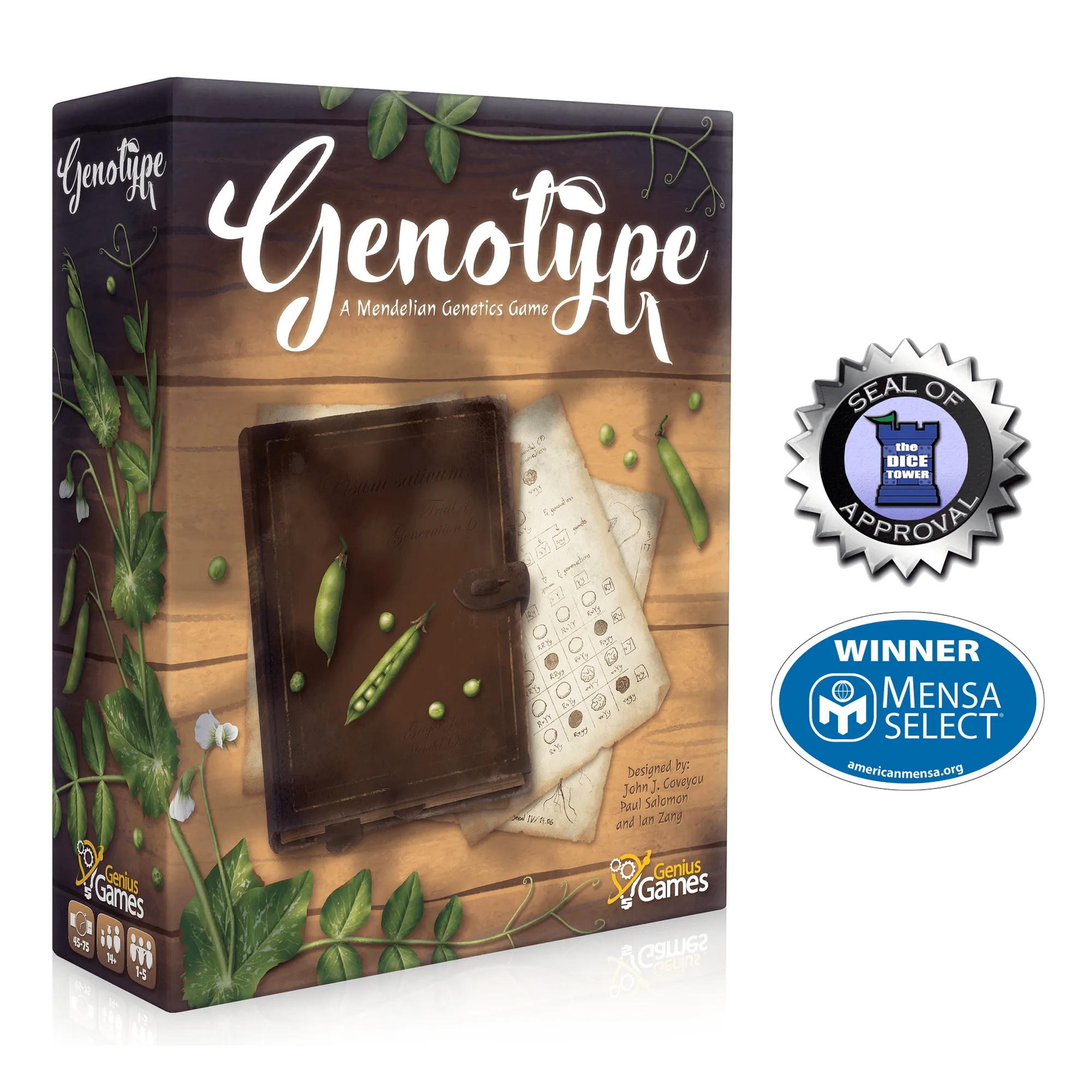
- Genotype: A Mendelian Genetics Game | 2022 MENSA Select Award Winner | Dice Tower Seal of Approval | Strategy Board Game: Genotype: A Mendelian Genetics Game is a 2022 MENSA Select Award Winner and recipient of The Dice Tower Seal of Approval. It is a worker placement and resource management game for ages 14+, 1-5 players, 45-75 minutes, covering genetics, heredity, and Punnett squares. The award recognition and player count make it easy to justify for a classroom or homeschool purchase, and the 45-75 minute runtime fits a single lesson block.
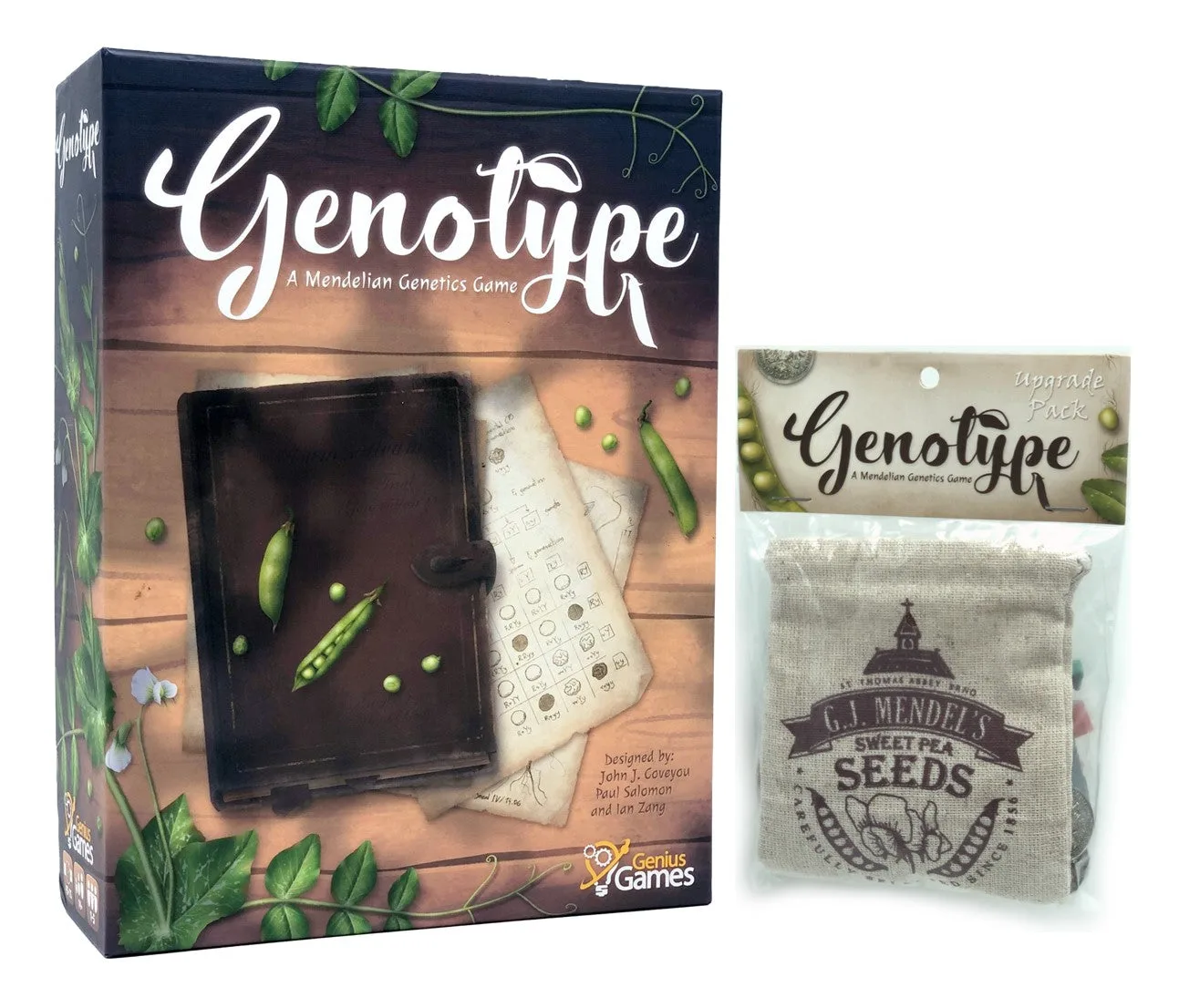
- Bundle - Genotype: A Mendelian Genetics Game w/ Collector's Edition Components Pack: The bundle includes Genotype: A Mendelian Genetics Game and the Collector's Edition Components Pack. It supports ages 14+, 1-5 players, and 45-75 minutes. If you plan to use the game repeatedly with multiple classes, the upgraded components are worth considering for durability and table presence.