Quick answer
Start with an empty, well-fitted pack, then gradually add weight over several sessions, always using positive reinforcement to build your dog's comfort and confidence.
Why a proper fit matters before training
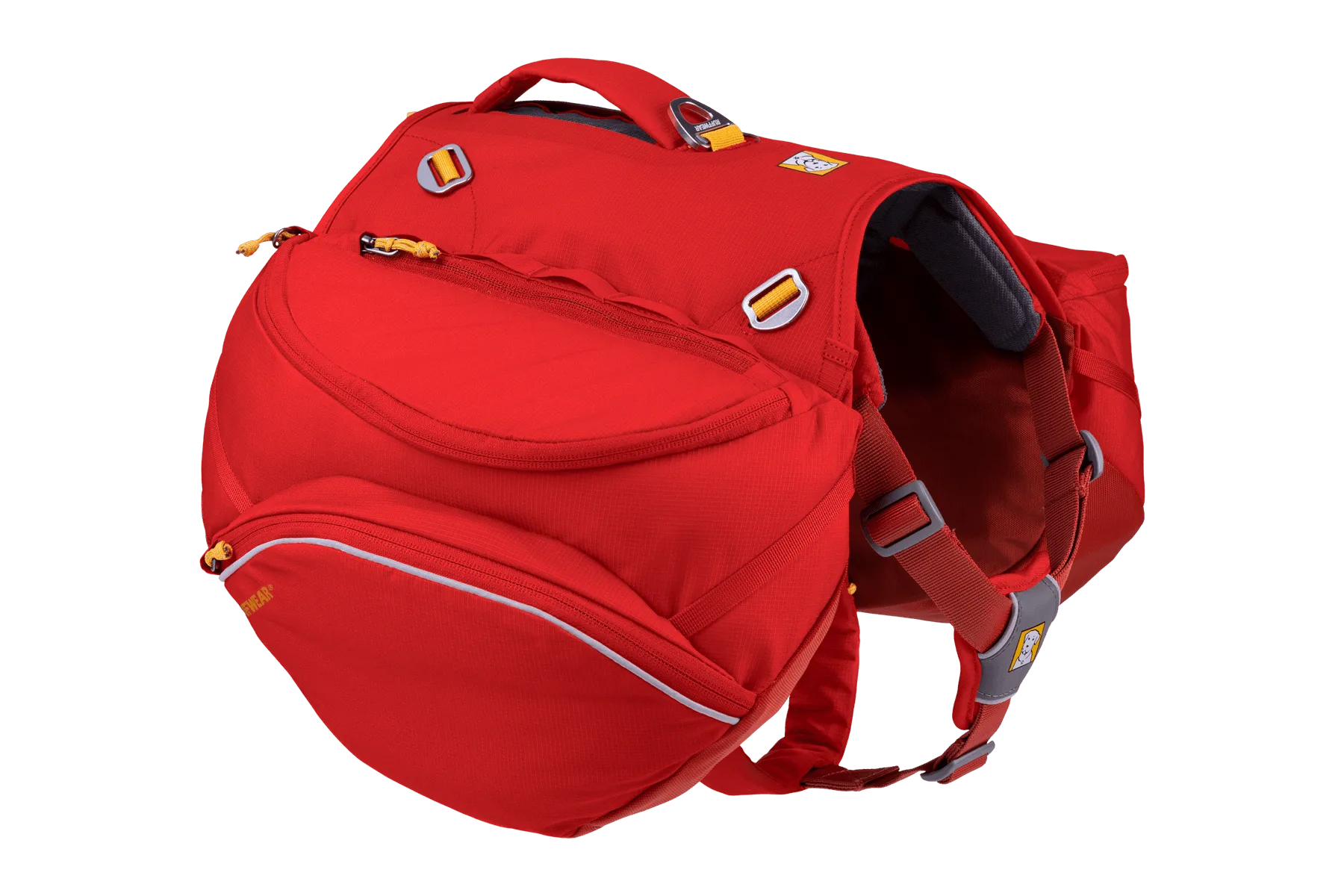
A backpack that fits poorly can rub, chafe, or shift during movement, making your dog reluctant to wear it. Measure your dog's girth and back length against the pack's sizing chart, and adjust the straps so the saddlebags sit high and snug behind the shoulders. The Palisades™ Dog Backpack, for example, uses a breathable harness chassis and cross-load compression to keep gear stable, but only when sized correctly.
The weight progression rule
Never load a dog backpack to its full capacity on the first outing. Start with the pack empty, then add lightweight items like a collapsible bowl or a few treats. Increase weight by a few ounces each session, watching for signs of fatigue or reluctance. A good rule of thumb is that a dog should carry no more than 20-25% of its body weight, and even less for puppies or breeds with short legs.
Step-by-step training plan
- Introduce the pack indoors: Place the empty pack on the floor and let your dog sniff it. Reward calm interest. Then drape it over your dog's back for a few seconds, offering treats. Repeat until your dog shows no tension. Common mistake: rushing this step. If your dog tries to remove the pack, go back to letting it sniff the pack on the floor.
- Fit the pack empty and adjust straps: Put the empty pack on your dog and adjust all straps so the saddlebags sit high behind the shoulders and the chest strap lies flat. Let your dog walk around indoors for 5-10 minutes, then remove and reward. Checkpoint: The pack should not slide side to side when your dog trots. If it shifts, tighten the girth strap.
- Add very light weight: Place a few ounces of soft, quiet items (like a small towel or a collapsible bowl) in each saddlebag to balance the load. Walk your dog on a leash for 10-15 minutes, praising calm behavior. Common mistake: adding too much weight too soon. If your dog stops or lies down, remove the pack and try again with less weight next session.
- Short outdoor walks with weight: Gradually increase the weight to 5-10% of your dog's body weight over several sessions. Take short, easy walks on flat terrain, and always check for rubbing or chafing after removing the pack. Checkpoint: Watch for excessive panting, drooping tail, or refusal to move. These are signs the pack is too heavy or the fit is off.
- Build up to full hikes: Once your dog is comfortable with a loaded pack on short walks, extend the distance and add gentle inclines. Continue to monitor fit and weight, and never exceed 20-25% of body weight. Common mistake: assuming your dog is ready for a long hike after only a few short sessions. Increase duration gradually over 2-3 weeks.
Product facts
-
Palisades™ Dog Backpack: The Palisades Pack is our highest-volume pack, designed for multi-day treks with roomy saddlebags and a cross-load compression system for stable gear carry. The removable saddlebags let you lighten the load at camp for side-excursions, making it versatile for both full-day hikes and base-camp adventures.
Palisades™ Dog Backpack