Quick Answer
Transition your cat to a new pâté food over 7-10 days by gradually increasing the ratio of new to old food. Start with 25% new pâté mixed with 75% current food, then slowly shift the proportions. This slow change helps prevent digestive upset and gives your cat time to accept the new texture and taste.
Why Gradual Transitions Matter for Cats
Cats have sensitive digestive systems that react poorly to sudden food changes. A quick switch can cause vomiting, diarrhea, or refusal to eat. A slow transition—over at least a week—allows your cat's gut bacteria to adjust and reduces the risk of food aversion, especially when moving to a different texture like pâté.
What to Expect When Switching to Pâté
Pâté has a smooth, uniform texture that differs from chunks in gravy or shredded styles. Some cats may be hesitant at first. Mixing pâté with their current food and warming it slightly can help. Canned pâté also provides extra moisture, which is beneficial for cats that don't drink enough water.
Step-by-Step Transition Plan
- Days 1-3: Start with 75% Old Food + 25% New Pâté: Mix one part new pâté with three parts of your cat's current food. Stir well so the textures blend. Serve at room temperature—cold food can be less appealing. Common mistake: Starting with too much new food. Stick to 25% to avoid digestive upset.
- Days 4-6: Increase to 50% Old + 50% New: Equal parts of old and new food. If your cat seems hesitant, warm the pâté slightly (place the sealed can in warm water for a few minutes) to enhance aroma. Checkpoint: Watch for loose stools or reduced appetite. If either occurs, go back to the previous ratio for a few more days.
- Days 7-9: Shift to 25% Old + 75% New: Now the new pâté should be the main component. Continue mixing thoroughly. For picky cats, try offering a small amount of new pâté alone as a treat before meals. Common mistake: Rushing this step. If your cat refuses, add a tiny bit of a favorite topper (like a few pieces of the old food) to encourage eating.
- Day 10: Serve 100% New Pâté: Your cat should now be eating the new pâté exclusively. Continue to monitor their stool and appetite for a few more days. If all is well, the transition is complete. Verdict: A successful transition means your cat is eating well with normal digestion. If issues persist, consult your veterinarian.
Pâté Products That Make Transitioning Easier
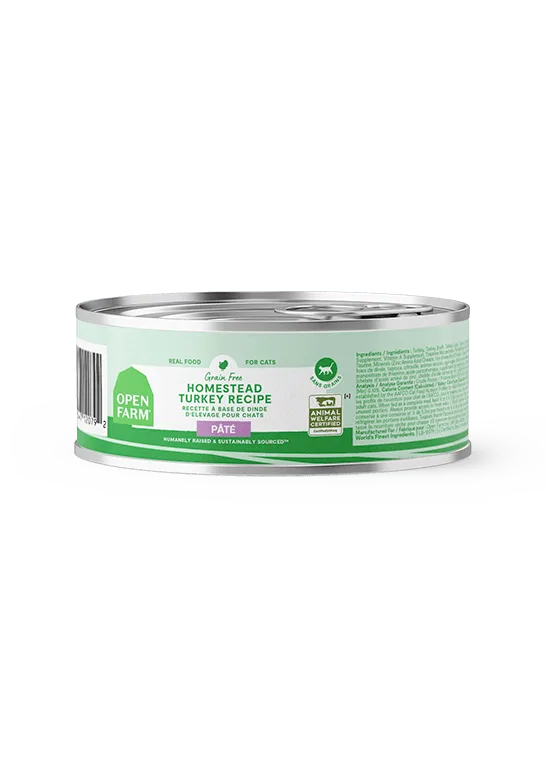
- Homestead Turkey Pâté for Cats: This velvety smooth pâté is crafted with a protein-packed blend of humanely-raised turkey and turkey liver. Grain- and legume-free and formulated without carrageenan, corn, or soy. A simple ingredient list with a single protein source reduces the chance of food sensitivities during the transition, and the smooth texture is easy to mix with your cat's current food.
- Pâté Variety Pack for Cats: This irresistible pâté pack features our favorite silky smooth recipes, made with humanely raised and sustainably sourced proteins. This bundle includes Harvest Chicken Pâté, Chicken and Salmon Pâté, and Wild Caught Salmon Pâté. If your cat is picky, this variety pack lets you try different proteins without committing to a full case, helping you find a flavor your cat will accept during the transition.