Quick answer
To support healthy hip development, always position your baby in a carrier with their knees higher than their bottom (the M-shape), and ensure their spine is in a gentle C-curve.
Why hip positioning matters in a baby carrier
Babies' hip joints are naturally loose and flexible. In the first few months, the hip socket is still forming around the ball of the femur. If a baby's legs are held together with straight, dangling legs for long periods, it can put stress on the hip joint and potentially lead to hip dysplasia or other developmental issues.
The International Hip Dysplasia Institute recommends carriers that support the thigh and keep the hips in a spread-squat position, often called the M-shape. This position allows the femoral head to sit deeply in the hip socket, promoting natural, healthy development.
Key features to look for in a carrier
Not all carriers support the M-shape equally. Look for a carrier with a wide, supportive seat that extends from knee to knee. Adjustable seat widths are especially helpful because they allow you to widen the seat as your baby grows. A carrier that lets you adjust leg openings and the height of the back panel also helps you maintain proper positioning at every stage.
Carriers that offer multiple carrying positions (front facing in, front facing out, back carry) give you flexibility, but the M-shape principle applies to every position. Always check that your baby's thighs are supported and their knees are above their hips, regardless of which carry you use.
Trade-offs and limitations
Some carriers marketed as "hip healthy" may still need careful adjustment to achieve the M-shape, especially for newborns or very small babies. If the seat is too wide, the baby's legs may not reach the edges, causing the knees to drop below the hips. If the seat is too narrow, the legs may be forced together. Neither position is ideal.
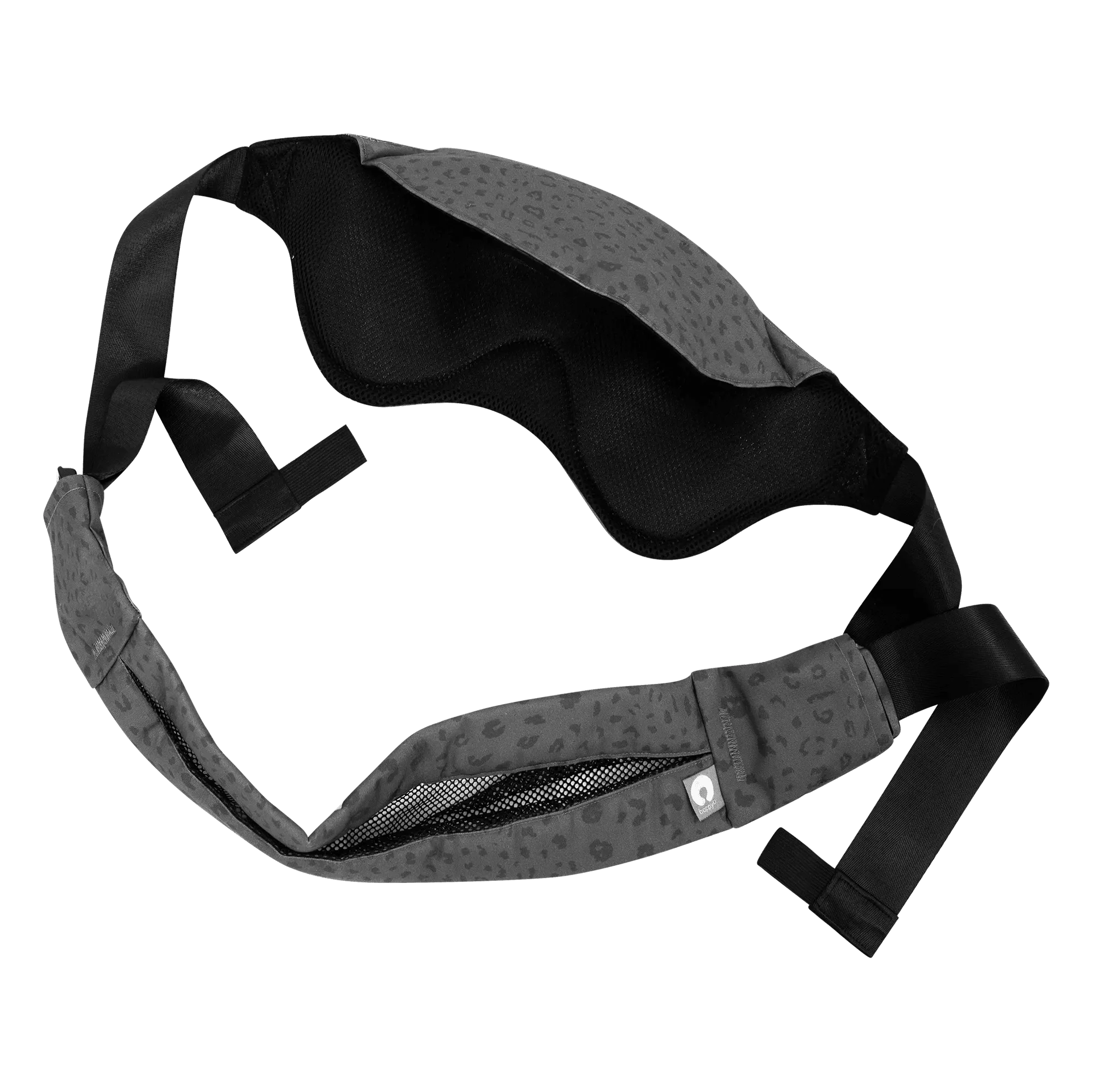
Cross-body hip carriers are convenient for quick ups and downs, but they typically offer less seat support than a full hybrid baby carrier. They work best for older babies and toddlers who already have stable hips, but they may not provide the same level of hip support for younger infants.
How to position your baby for healthy hips
- 1. Check the seat width: Before placing your baby in the carrier, adjust the seat width so it supports your baby from the back of one knee to the back of the other knee. The seat should not press into the back of the knees or leave the legs dangling unsupported. If the seat is too wide for your baby, wait until they grow into it or use a carrier with adjustable seat positions.
- 2. Achieve the M-shape: Once your baby is in the carrier, gently lift their legs so their knees are higher than their bottom. Their thighs should be spread apart in a natural squat position, forming an "M" shape when viewed from above. Their hips should be flexed at about 90 to 110 degrees. If your baby's legs hang straight down, the seat is too narrow or the carrier is too loose. Tighten the straps and re-adjust.
- 3. Support the spine's natural C-curve: Your baby's spine should form a gentle C-curve, not be forced straight. The carrier's back panel should support the full length of the back, from the base of the neck to the top of the hips. The fabric should be snug enough to prevent slouching but not so tight that it flattens the natural curve. A newborn's spine is naturally C-shaped. Do not try to straighten it; the carrier should support this curve.
- 4. Check the knee position: After adjusting the seat and straps, look at your baby's knees from the side. They should be at or above the level of their bottom. If the knees are lower, the carrier is not providing enough thigh support. Re-adjust the seat width or the carrier's height. For front carries, your baby's knees should be visible above the carrier's edge, not hidden inside.
- 5. Verify the fit for your body: A carrier that is too loose or too tight on your body will affect your baby's position. Tighten the shoulder straps and waist belt so the carrier is snug against your torso. Your baby should be close enough to kiss, and the carrier should not sag or shift as you move. If you feel back or shoulder strain, the carrier may be too loose. Re-adjust before continuing to use it.
Carriers that support healthy hip positioning
-
ComfyGrow Hybrid Baby Carrier: Supports babies 7-35 lbs with three seat positions and multiple head support adjustments. The adjustable seat positions let you widen the seat as your baby grows, helping maintain the M-shape from newborn to toddler.
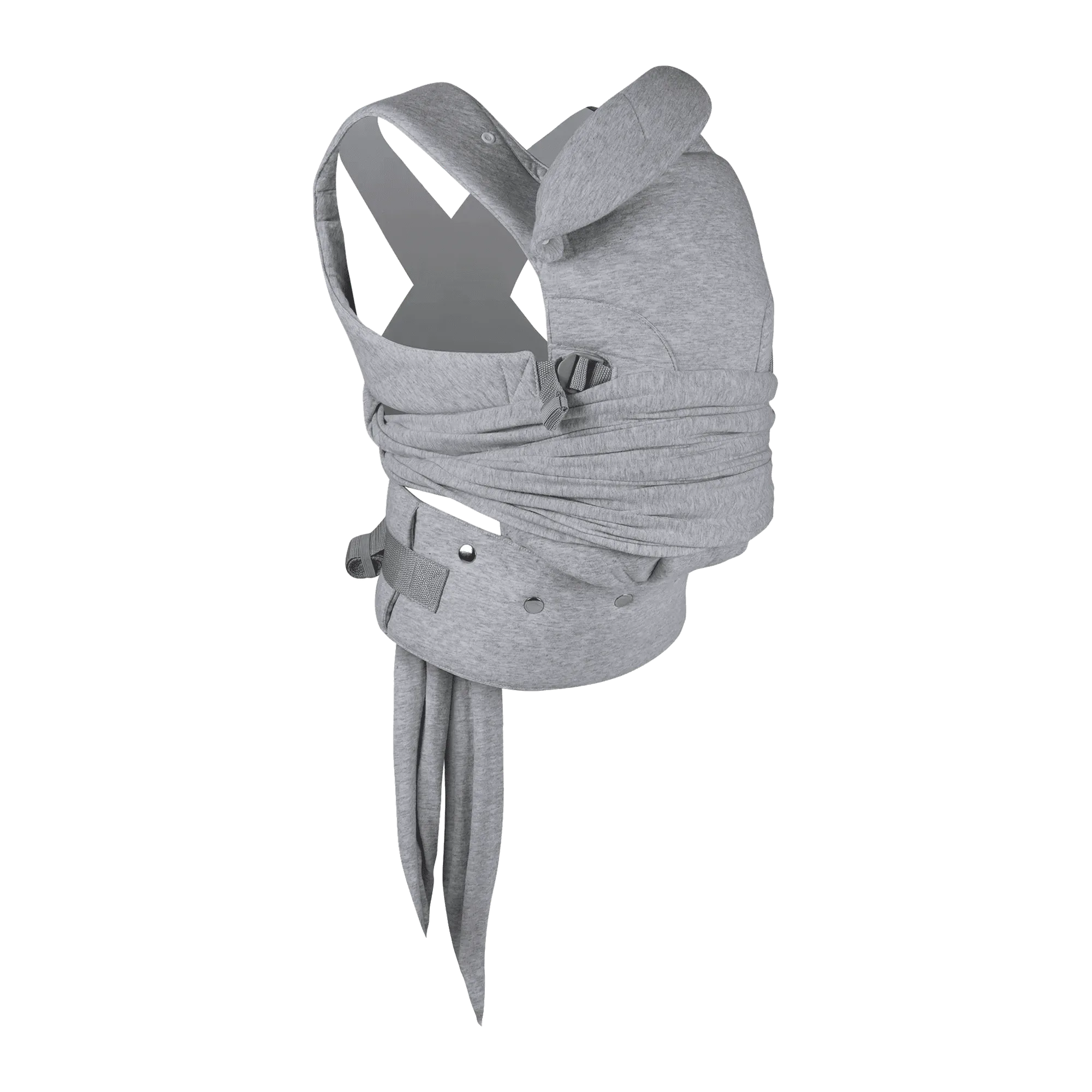
ComfyGrow Hybrid Baby Carrier
-
ComfyFit® Adjust Hybrid Baby Carrier: Offers 3 carrying positions for babies 8-35 lbs with adjustable arm straps. The adjustable arm straps help you achieve a snug fit, which is essential for keeping your baby's hips in the correct position against your body.
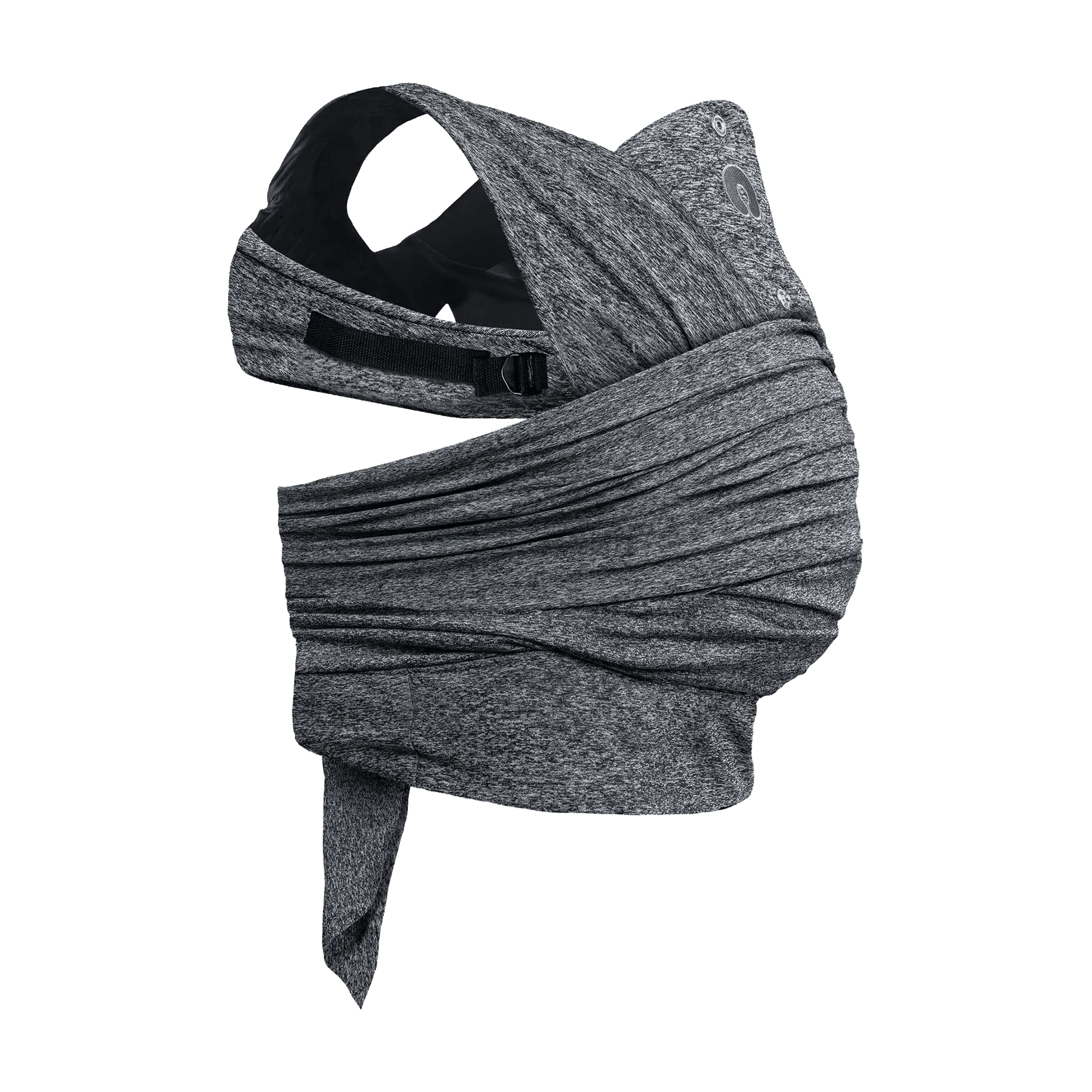
ComfyFit® Adjust Hybrid Baby Carrier
-
ComfyHold Cross-Body Hip Carrier: Designed for older babies and toddlers, it distributes weight across the torso to reduce arm strain. While convenient for side carrying, this cross-body hip carrier has a narrower seat, so it's best for toddlers with established hip health rather than young infants.