Quick answer
Start by letting your child choose their own locked diary, then introduce simple writing prompts and a regular journaling time. The lock gives them privacy and ownership, which makes writing feel like a special activity rather than a chore.
Why a locked diary works for reluctant writers
A locked diary turns writing into a secret project. Kids who resist worksheets or assigned topics often enjoy the control a locked diary gives them. The physical lock and keys create a sense of importance and privacy that a plain notebook or digital app cannot match.
The key is to treat the diary as their private space. Do not ask to read it. Instead, show interest by asking if they enjoyed writing or if they decorated any pages. This builds trust and keeps the habit going.
Choosing the right locked diary for your child
Pick a diary with a design your child loves. Mudpuppy offers options like the T-Rex Locked Diary for dinosaur fans and the Solar System Locked Diary for space enthusiasts. Both have 192 lined pages, a lock with two keys, and a compact 6.5 x 5.5 inch size that fits in a backpack or bedside drawer.
Consider the age range. Both diaries are recommended for ages 4 and up, but younger children may need help with the lock at first. The key thing is that the child feels the diary belongs to them.
Steps to start using a locked diary for kids' writing
- Let your child choose their diary: Take your child to browse the options or show them pictures online. Let them pick the design they like best. Ownership starts with choice. A diary they chose themselves is more likely to be used. Avoid buying a design you like but they don't.
- Introduce the lock and keys together: Show your child how the lock works. Let them lock and unlock the diary a few times. Explain that the two keys are backups in case one gets lost. Hand over both keys to your child. Do not keep a spare key yourself. The child needs to feel the diary is completely private. If they lose both keys, a small padlock cutter can remove the lock without damaging the diary.
- Set a regular journaling time: Pick a consistent time, such as after dinner or before bed. Start with 5–10 minutes. Let your child decide whether to write, draw, or do both. The goal is the habit, not the content. Do not force writing if they only want to draw. Drawing still builds the habit of using the diary. Over time, they may add words naturally.
- Offer writing prompts, not assignments: Suggest open-ended prompts like 'What made you laugh today?' or 'If you could go anywhere, where would it be?' Write the prompt on a sticky note and let them choose to use it or not. Avoid correcting spelling or grammar in the diary. The diary is a judgment-free zone. If they ask for help, keep it brief and encouraging.
- Respect the privacy completely: Never read the diary without your child's explicit permission. If they offer to show you something, read only what they point to. Praise the effort, not the content. If you break the trust, the diary will likely be abandoned. The lock exists to protect their privacy, and respecting that is the most powerful motivator.
Product facts
-
T-Rex Locked Diary: The T-Rex Locked Diary from Mudpuppy features a Tyrannosaurus rex on the covers and includes a lock with 2 keys. It has 192 lined pages and is sized 6.5 x 5.5 inches. The dinosaur design appeals to kids who love prehistoric creatures, and the lock gives them the privacy to write freely without worry.
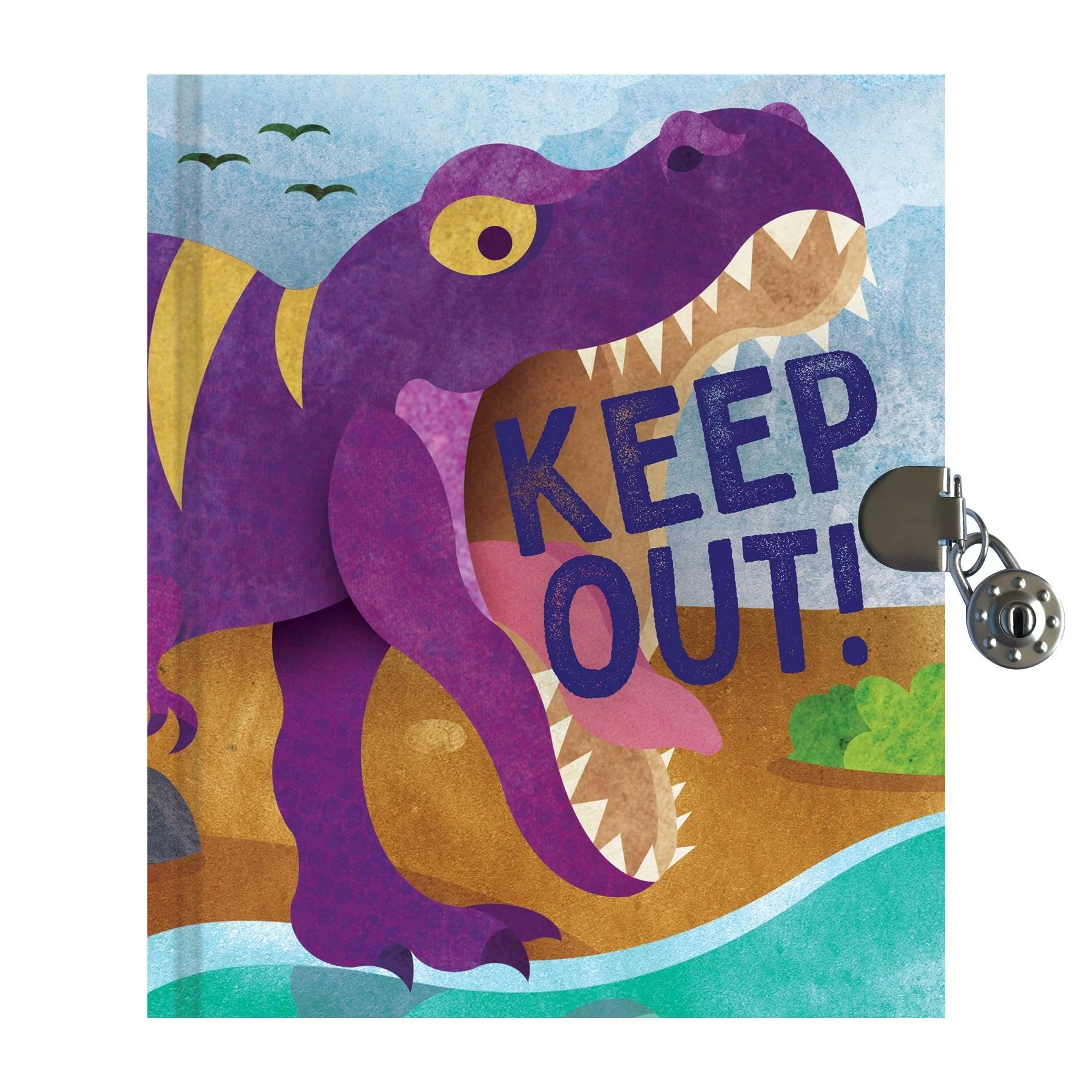
T-Rex Locked Diary
-
Solar System Locked Diary: The Solar System Locked Diary by Mudpuppy has a friendly sun and planets on the cover, a silver padlock with 2 keys, and 192 lined pages with illustrated icons throughout. The space theme and fun icons on each page make journaling feel like an adventure, which can motivate kids who are curious about the universe.
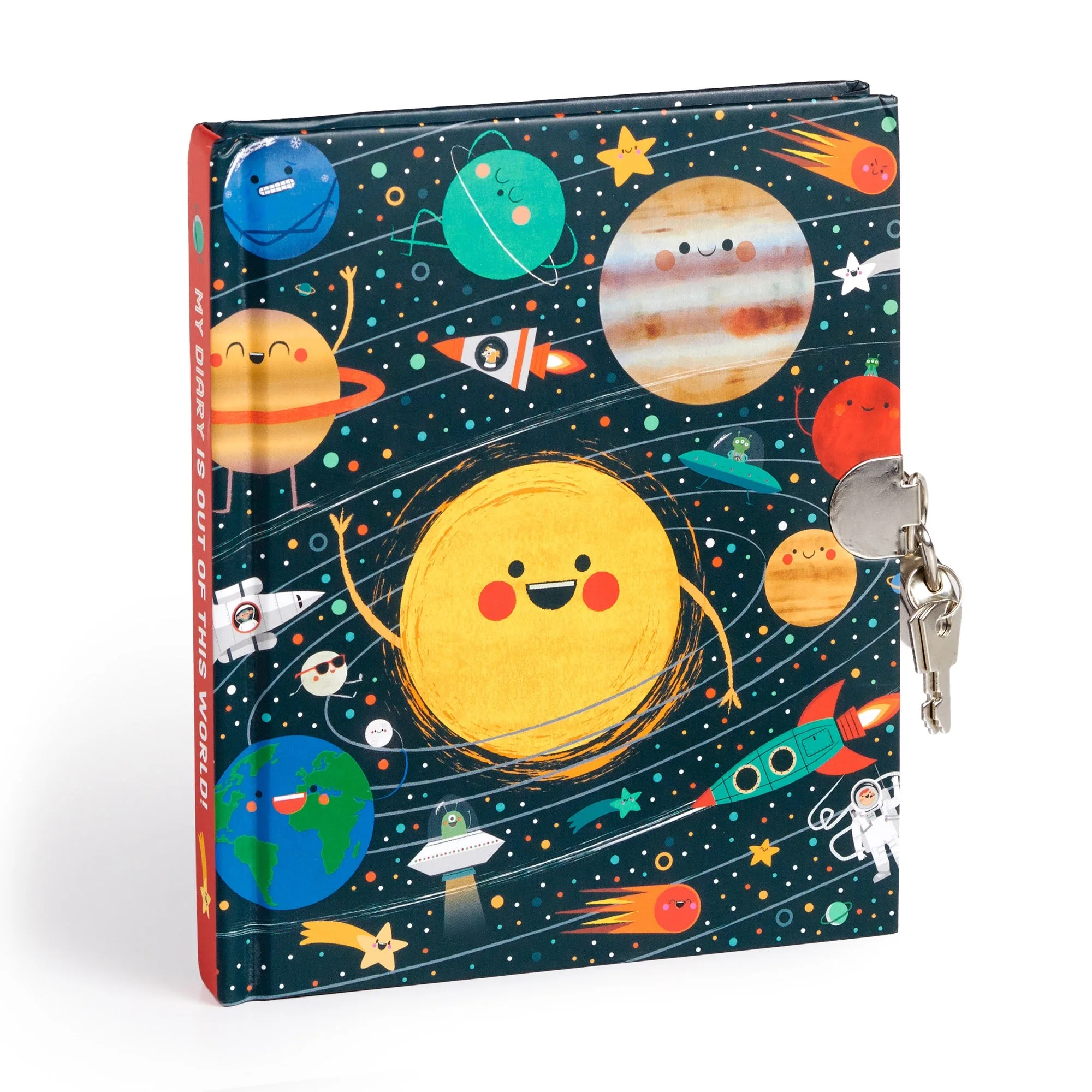
Solar System Locked Diary