Quick answer
Use a nipple shield by centering it over your nipple, pulling your breast tissue slightly back, and aiming your baby's nose toward the shield tip. Start with a 24 mm shield if you are unsure, then size up or down based on how much of your nipple fills the tip. Use it for the feeding, then remove it and try without it once your baby latches well.
Why the shield's shape matters more than you think
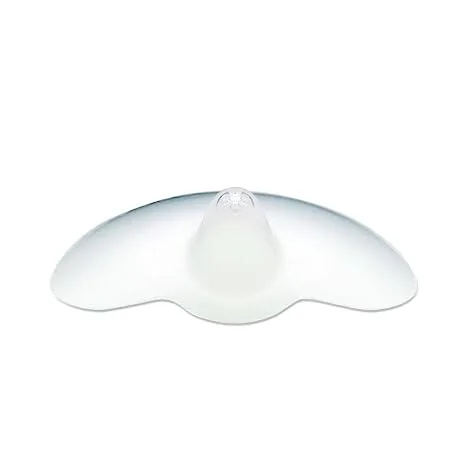
A shield with a cut-out area, like the Ameda Washable Skin-to-Skin Nipple Shield, leaves more of your breast exposed so your baby's chin and cheeks can touch your skin. That contact supports the same reflexes that help a baby latch without a shield. The shield also has a firmer nipple center for grip and a softer surround that flexes with your baby's mouth, so it moves with the feeding instead of staying rigid.
Sizing without a fitting room
Nipple shield sizing is based on the width of your nipple base, not your bra size. If the shield feels like it is pinching or your baby keeps slipping off, try a different size before deciding the shield does not work. A shield that is too small can rub; one that is too large lets your nipple slide around and your baby may take in air. Because the Ameda shield is sold by size, check the size option before ordering and recheck after a week, since nipple size can change as milk supply settles.
What to do if your baby refuses the shield
Some babies need a few tries. Warm the shield in warm water for a minute so it feels less like cold silicone, then express a drop of milk into the tip. If your baby still turns away, try when they are calm but alert, not ravenous. You can also start the feeding on the side that latches more easily, then switch once milk is flowing.
When to stop using a nipple shield
Plan to stop when your baby latches and transfers milk without it. A common approach is to offer the shield at the start of a feeding, then slip it off mid-feed once your nipple is drawn out and your baby is actively sucking. If your baby fusses, put it back and try again next feeding. If you have been using a shield for more than a few weeks, ask a lactation consultant to watch a full feeding, because a shield that stays too long can affect milk transfer for some dyads.
Steps to use a nipple shield correctly
- Wash and warm the shield: Rinse the shield with warm water and mild soap, then warm it in a cup of warm water for about a minute. A warm shield feels more like skin and is less likely to startle your baby. Checkpoint: the shield should feel warm, not hot, before it touches your breast.
- Center the shield over your nipple: Hold the shield by the edges and place the tip over your nipple. Pull your breast tissue back slightly with your other hand so the shield sits flat and your nipple fills the tip without folding. Common mistake: letting the shield wrinkle at the base, which breaks the seal and lets air in.
- Aim your baby's nose toward the tip: Hold your baby so their nose lines up with the shield tip, then brush the shield against their lower lip. Wait for a wide open mouth, then bring your baby onto the shield chin first, not lip first. Checkpoint: your baby's chin should touch your breast below the shield, and their lips should flange outward.
- Check the seal and suction: Once your baby is latched, look at the shield tip. Your nipple should move in and out with each suck, and the shield should stay snug against your breast. If you hear clicking or your baby keeps losing the shield, break suction with a clean finger and start again. Common mistake: pushing the shield onto the breast after your baby is already latched, which traps air.
- Feed, then remove the shield: Leave the shield on for the feeding. When your baby slows down or falls asleep, break suction with a finger, remove the shield, and burp your baby. If you want to try without the shield, offer the bare breast at the next feeding when your baby is calm. Checkpoint: if your nipple looks pinched or blanched after feeding, the shield size may be wrong.
- Clean and store the shield: Wash the shield in warm soapy water after each use, rinse well, and air dry on a clean towel. Store it in a clean, dry container. Replace it if the silicone tears, becomes sticky, or stops sealing. Next step: keep a spare shield in your bag so you are not caught without one.
Product facts
- Ameda Washable Skin-to-Skin Nipple Shield for Breastfeeding, Ultra-Thin Flexible Silicone, Cut-Out: Ameda Cut Out nipple shields feature a unique cut-out design which allows for increased skin-to-skin contact between mother and baby. More skin contact can help your baby use the same latch reflexes they would use on your bare breast, which may make weaning off the shield easier.
- Ameda Washable Skin-to-Skin Nipple Shield for Breastfeeding, Ultra-Thin Flexible Silicone, Cut-Out: Made of ultra-thin, flexible silicone, the design has a firmer nipple center to allow for a better grip and softer surround for breast stimulation by the baby. The firmer tip helps your baby stay on, while the soft edges let your breast tissue move naturally during sucking.
- Ameda Washable Skin-to-Skin Nipple Shield for Breastfeeding, Ultra-Thin Flexible Silicone, Cut-Out: Washable and Reusable. You can keep one shield in your diaper bag and one at home, and wash them daily instead of buying disposables.