Quick answer
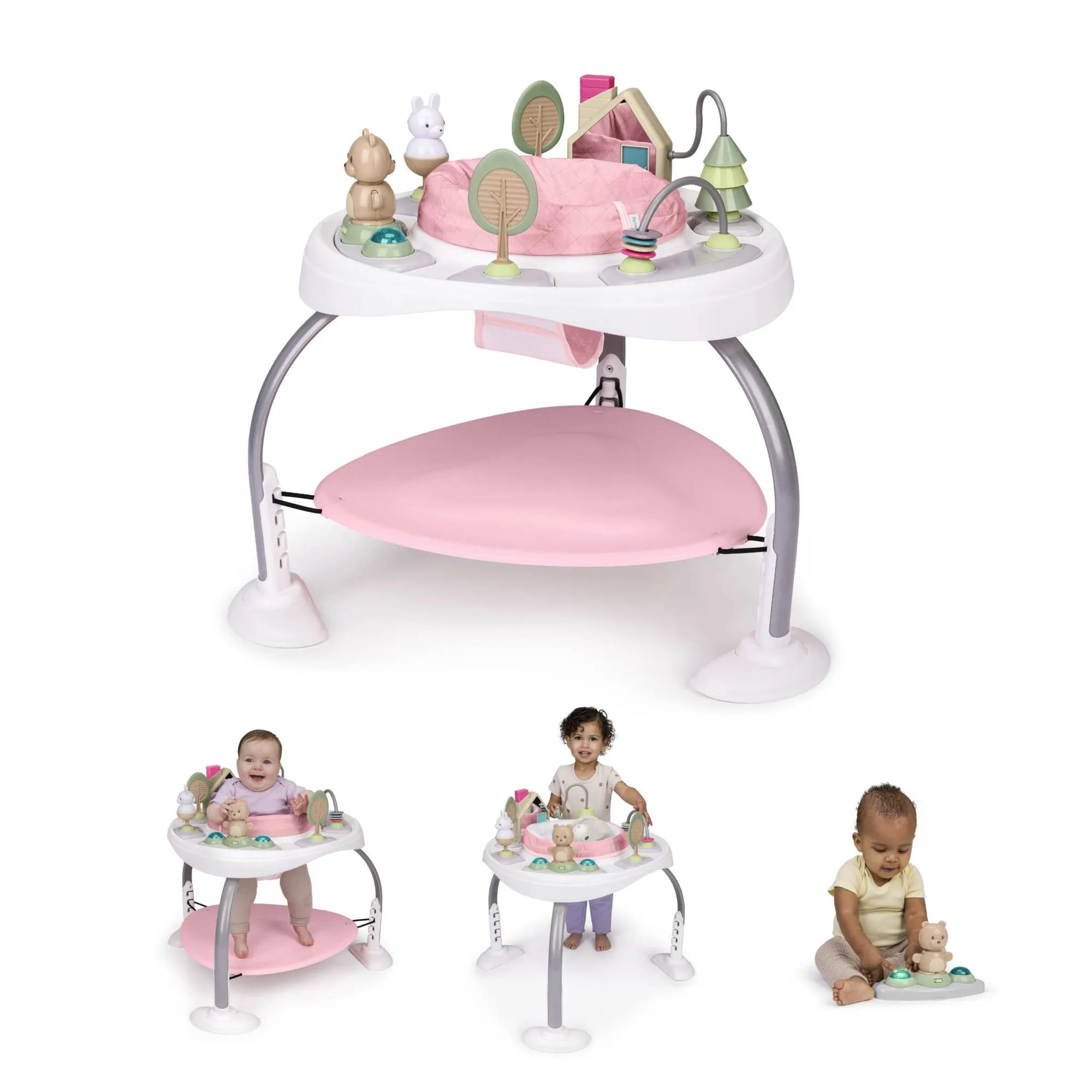
Wait until your baby can hold their head upright and has strong neck control, usually around 6 months, before using an activity center or door jumper. Clamp the jumper securely over a doorway with a solid frame, keep sessions to 15-20 minutes, and stay within arm's reach the entire time. If your baby slumps, fusses, or tries to climb out, stop and try again another day.
Readiness signs to check before the first bounce
Age alone is not enough. Your baby needs to hold their head steady without support, sit with minimal help, and push down with their legs when their feet touch a surface. These signs usually appear between 6 and 9 months, but every baby is different. If your baby was born prematurely, ask your pediatrician for adjusted guidance before you start.
Skip the jumper entirely if your baby has hip, leg, or muscle tone concerns unless a doctor approves it. A jumper supports weight differently than floor play, so it should complement tummy time and crawling practice, not replace them.
Choose a doorway that passes the safety check
For door jumpers, the doorway frame must be solid wood or metal and at least as wide as the clamp's opening. Avoid hollow-core door frames, glass doors, and doorways with decorative trim that can crack under bouncing weight. Measure the doorway width and compare it to the jumper's clamp range before buying, since not every jumper fits every door.
The floor underneath should be flat and clear of rugs that can slide, toys, or furniture corners. A door jumper hangs the baby in the air, so a clear landing zone matters if the clamp ever loosens.
Install the jumper step by step
Open the clamp fully, seat it over the top of the door frame, and close it until it locks. Tug down firmly on the strap to test the hold before your baby goes in. Adjust the strap so your baby's feet touch the floor or a sturdy platform with knees slightly bent, not dangling with tiptoes barely reaching.
If the jumper has repositionable toys, attach them where your baby can reach and see them, but remove any toy that dangles at face level or has a cord long enough to wrap around the neck. Check the clamp and strap each time you use the jumper, not just the first time.
Set a session routine and watch for fatigue
Keep jumper sessions to 15-20 minutes, once or twice a day, and always end on a calm note rather than waiting for a meltdown. Watch for slumping posture, red marks from the seat, or your baby pushing away from the toys. Those are signs the session is over.
Rotate the jumper with floor play, tummy time, and crawling so your baby builds strength in different positions. A jumper is a short, supervised activity, not a container for long stretches.
Safe-use steps to follow every session
- 1. Confirm head and neck control: Hold your baby upright and watch for a steady head that does not wobble. If the head still bobs or your baby slumps when seated, wait a few weeks and keep practicing floor play. Checkpoint: no head control means no jumper yet.
- 2. Inspect the doorway and clamp: Press on the door frame to feel for solid wood or metal, then seat the clamp fully and tug the strap down hard. A clamp that slides or clicks loosely is a stop sign. Checkpoint: if the clamp moves, move to a different doorway.
- 3. Adjust height so feet are supported: Lower or raise the strap until your baby's feet rest flat with knees slightly bent. Dangling tiptoes or a deeply squatted position both put strain on growing hips and legs. Checkpoint: feet flat, knees soft, no dangling.
- 4. Place toys where they cannot trap or hit: Attach toys within arm's reach and below chin level. Remove any toy with a long cord or a hard edge that could bump your baby during a bounce. Checkpoint: nothing at face level and no loose cords.
- 5. Stay within arm's reach for the whole session: Do not step away to answer a phone, load a dishwasher, or check another room. A jumper is a hands-on activity even when your baby seems stable. Checkpoint: if you must leave, take your baby out first.
- 6. Cap the session at 15-20 minutes: Set a timer and end the session before your baby gets tired or fussy. Rotate to floor play, tummy time, or a stroller walk afterward. Checkpoint: short and supervised beats long and unsupervised.
Product facts that affect setup and fit
- Bright Starts Bounce 'n Spring Deluxe Door Jumper with Take-Along Toys: Bright Starts Bounce 'n Spring Deluxe Door Jumper with Take-Along Toys uses a lightweight frame and clamp attachment, installs without tools, and includes four repositionable toys. Tool-free clamping makes moving between doorways easier, but you still need a solid frame and a downward tug test each time. The repositionable toys let you move them out of face level as your baby grows.
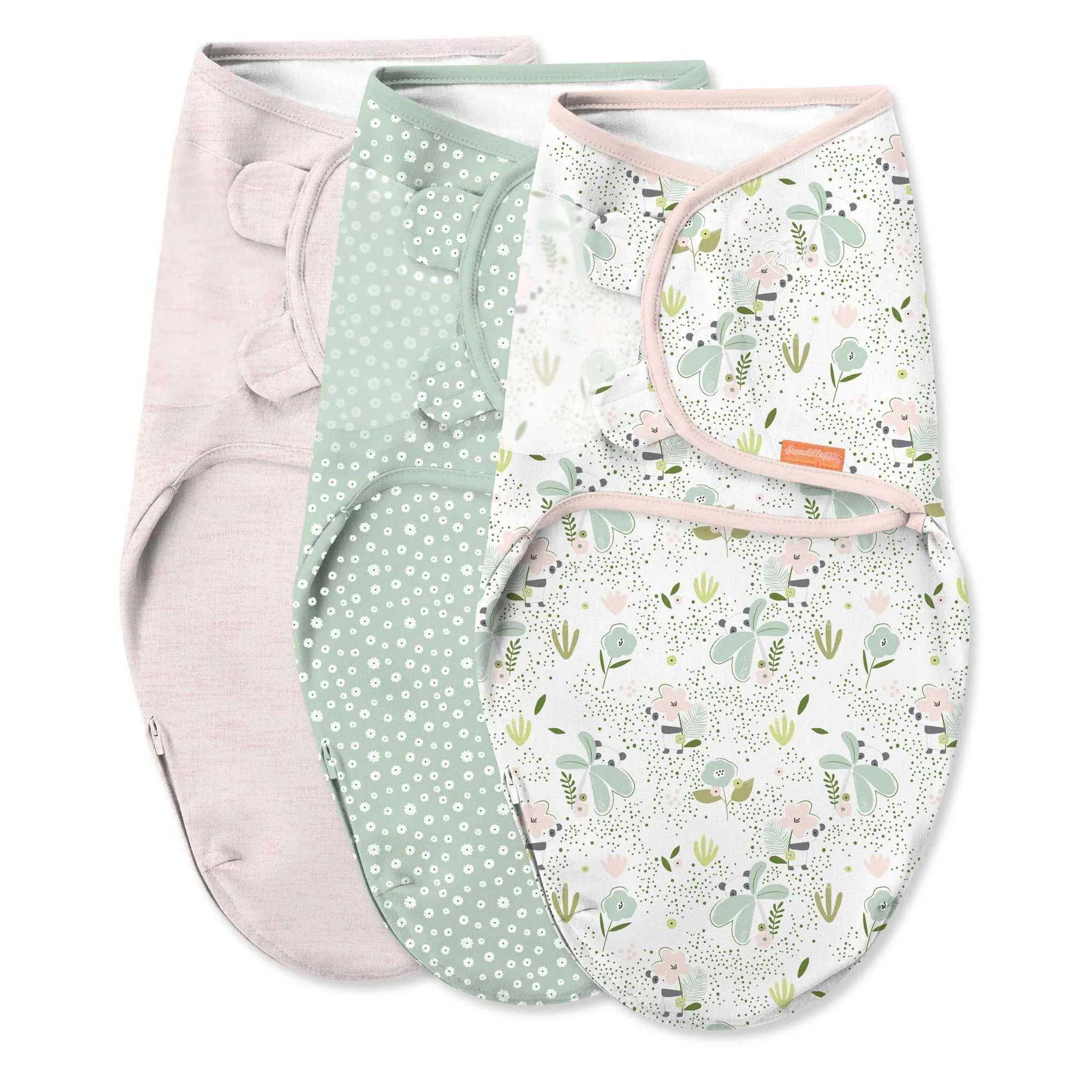
- SwaddleMe by Ingenuity All Season Swaddle, Size 0-3 Months, 1pk - Stardust: SwaddleMe by Ingenuity All Season Swaddle, Size 0-3 Months, 1pk - Stardust is a 100% cotton swaddle with a quick-flip layer that changes from 1.0 TOG to 2.5 TOG. This swaddle is sized for 0-3 months, so it is for younger siblings or pre-jumper sleep routines, not for a baby already using an activity center.
- SwaddleMe by Ingenuity Velboa Original Swaddle, Size SM, 0-3 months, 1PK (Hugs & Kisses): SwaddleMe by Ingenuity Velboa Original Swaddle, Size SM, 0-3 months, 1PK (Hugs & Kisses) fits babies 0-3 months, 7-14 pounds, and up to 26 inches long, with hook-and-loop closures. Use the weight and length ranges to check whether a swaddle still fits before you rely on it during the same stage when your baby is starting to use a jumper.