Quick answer
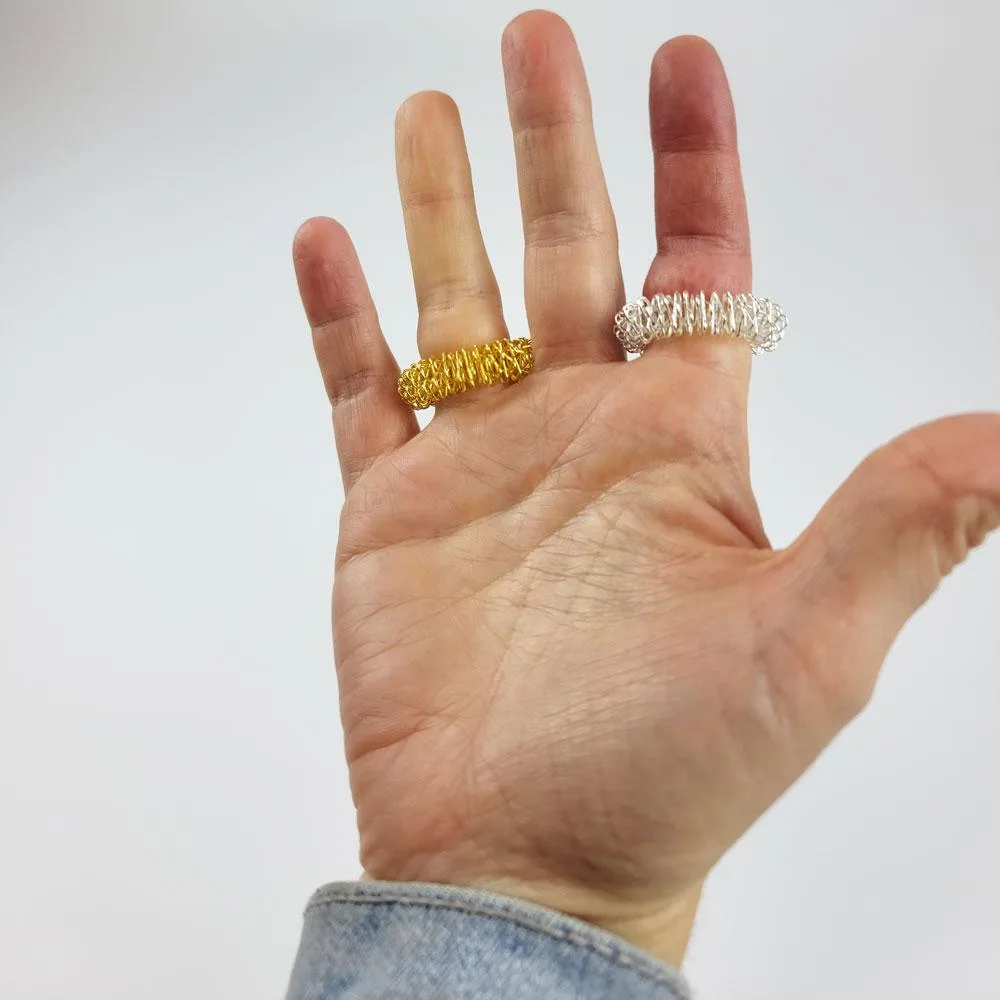
Slide an acupressure fidget ring onto a finger so the inner points rest against the sides, then roll it slowly up and down from base to tip for 30–60 seconds per finger. Keep the pressure firm but never painful, and switch hands so both get equal time. This simple rolling action delivers finger acupressure that can help you feel calmer and more focused during stressful moments.
Why finger acupressure works for anxiety
Finger acupressure uses steady pressure on specific points along the fingers to promote relaxation. Unlike a massage that needs oil or a table, a ring puts that pressure right where your hand is already resting. The repetitive rolling motion also gives your hands something to do, which is why many adults use acupressure rings as a discreet fidget for meetings, commutes, or waiting rooms. The goal is not to treat a medical condition but to add a portable, low-effort calming habit to your day.
Find the pressure points on your fingers
The points that most acupressure rings target sit along the sides of each finger, roughly halfway between the joints. When you slide the ring on, you should feel two or three small contact points pressing gently into those side channels. If the ring only presses on the top or bottom of your finger, rotate it slightly until the inner bumps settle into the sides. This is where finger acupressure for anxiety is usually applied, so getting the alignment right makes the rolling feel more even and effective.
How to size an acupressure ring
Sizing is the step most people rush. A ring that is too loose will slide off mid-roll; one that is too tight can pinch and leave marks. You want a fit that stays on when you shake your hand gently but still slides up and down with light effort. Start with your index or middle finger, since those are often the easiest to fit. If the ring feels tight on one finger, try the next finger rather than forcing it. Because ring sizes vary by finger and by hand, test each finger you plan to use before settling on a routine.
Step-by-step: your first acupressure ring session
- Start with clean, dry hands: Wash and dry your hands so the ring glides smoothly and does not slip. Common mistake: using lotion right before, which makes the ring slide off and reduces the friction you need for steady pressure. Checkpoint: your hands should feel dry to the touch, not slick.
- Slide the ring onto your index or middle finger: Push it down to the base of the finger, just above the knuckle. Do not force it past a joint if it feels stuck. Checkpoint: the ring should sit snugly but still rotate with a light push.
- Roll slowly from base to tip: Use your thumb to push the ring upward in one smooth, slow motion. Aim for about two seconds per pass. Common mistake: rolling too fast, which skips the pressure points and turns it into a nervous habit instead of a calming one. Checkpoint: you should feel steady pressure on the sides of the finger, not a sharp pinch.
- Roll back down and repeat: Reverse the motion and roll back to the base. Do 5–10 full up-and-down passes per finger, then move to the next finger. Keep the pressure consistent rather than pressing harder on the way down. Checkpoint: if the skin starts to feel sore, ease off or switch fingers.
- Switch hands and finish with a pause: Give your other hand the same number of passes so both sides get equal time. When you finish, rest your hands flat for a few breaths and notice whether your shoulders or jaw have relaxed. Common mistake: only using your dominant hand, which can leave the other hand stiff and tense. Next step: repeat this short session 2–3 times a day, such as after meetings or before bed.
Product facts
- Acupressure Fidget Rings (x2): Acupressure Fidget Rings (x2) are portable self-massage tools that you slide on and roll up and down your fingers to improve hand circulation, relieve tension, and wake up tired fingers. The two-ring set lets you keep one at your desk and one in a bag, so a short rolling session is always within reach.