Quick Answer
To use a book stand comfortably, place it at eye level on a stable surface, adjust the angle to reduce neck strain, and secure the pages so they stay open while you read.
Why a Book Stand Helps Your Posture
Reading a book flat on a table or held in your hands often forces you to hunch forward, which can strain your neck and shoulders. A book stand lifts the material to a more natural viewing angle, so you can keep your spine aligned. This is especially useful for long study sessions, cooking from a recipe, or reading at a desk.
The key is to position the stand so the top of the book is roughly at eye level. If it sits too low, you will still look down; if it is too high, you may tilt your head back. Adjust the stand's angle to about 45 degrees for most tasks, then fine-tune based on your seating height.
Choosing the Right Surface and Location
A book stand works best on a stable, flat surface. A kitchen counter, desk, or bedside table all work well, but avoid soft surfaces like a bed or couch where the stand might wobble. If you are using it for cooking, place it away from heat and splashes. For reading in bed, consider a stand with a weighted base or one that can be clamped to a headboard.
Also think about lighting. Position the stand so that light falls on the pages without glare. A lamp behind you or to the side often works better than direct overhead light, which can create shadows.
Step-by-Step Guide to Using a Book Stand
- Position the stand at eye level: Place the book stand on a stable surface and adjust its height or tilt so the center of the book is roughly at eye level. This prevents hunching or tilting your head. Common mistake: placing the stand too low and still looking down. Check that your neck is in a neutral position before you start reading.
- Open the book and secure the pages: Open the book to the page you need and use the stand's page holders or clips to keep it flat. If your stand doesn't have clips, use a book weight or gently bend the spine. Common mistake: forgetting to secure the pages, so they flip when you turn a page. Make sure the page stays open without you holding it.
- Adjust the angle for your task: For reading, set the stand at a 45-degree angle. For cooking or reference work, a steeper angle may be better so you can glance quickly. Common mistake: using the same angle for every task, which can cause strain. Change the angle when you switch from reading to cooking or writing.
A Book Stand That Keeps Books Present
-
NM Bookstand: The NM Bookstand is crafted from solid oak and holds everything from cookbooks and magazines to art monographs and well-worn paperbacks, keeping them open, upright, and always within reach. Its simple, sturdy form means you can leave a book open on the stand without worrying about pages flipping, making it easy to glance at a recipe or a passage while you work.
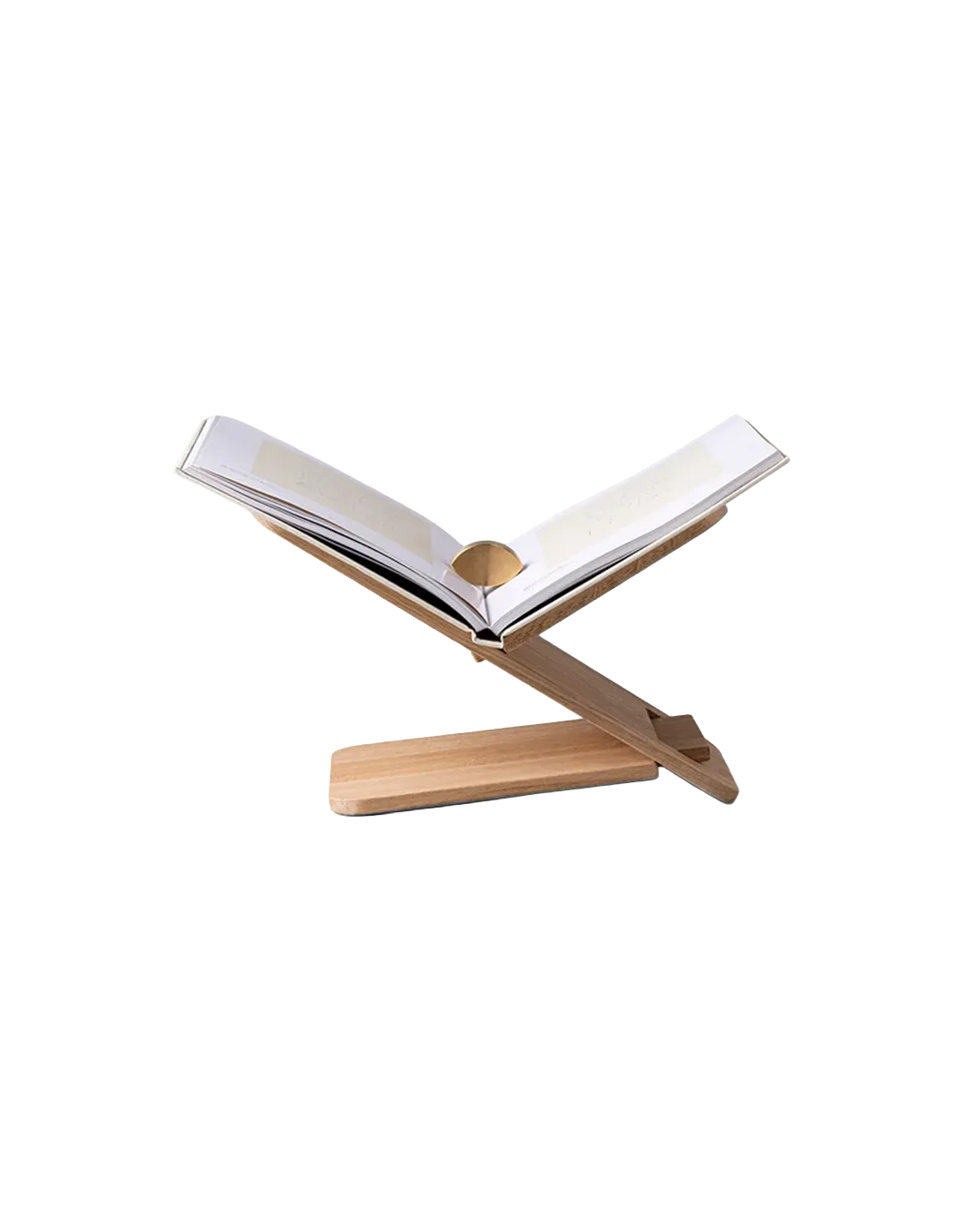
NM Bookstand