Quick answer
Start by introducing the deck as a fun game, then guide the child through sorting, choosing, and practicing coping strategies. Use the five coping styles—relaxation, distraction, movement, processing, and sensory—to help children identify what works best for them in moments of stress.
Why Coping Cue Cards Work in Therapy
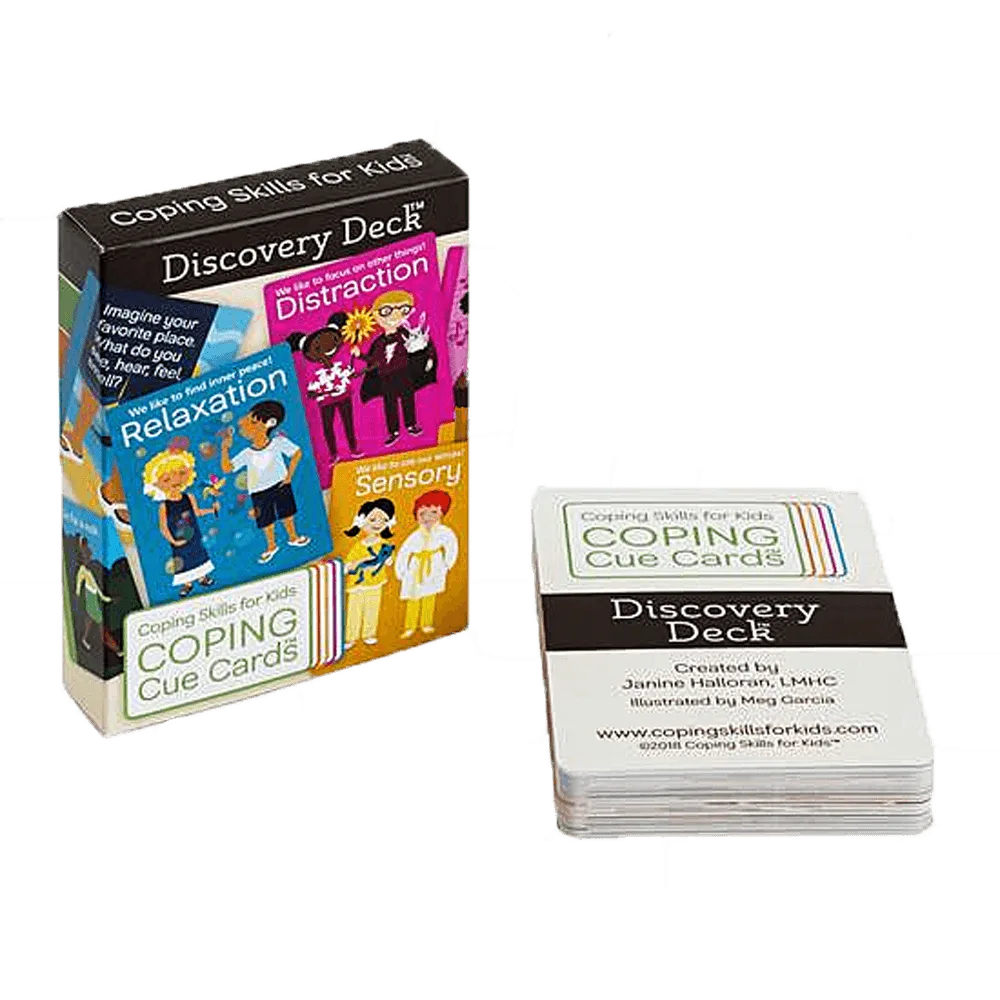
Coping Cue Cards offer a simple, visual way for children to explore healthy coping skills without feeling overwhelmed. The deck covers 40 strategies across five coping styles: relaxation, distraction, movement, processing, and sensory. This variety helps children discover that there is no single right way to cope—different situations call for different tools. Because the cards are small and portable, they can be used in individual sessions, group therapy, or even sent home as a takeaway resource.
Step-by-step: Using Coping Cue Cards in a Session
- Introduce the deck as a discovery game: Lay the cards face up and let the child flip through them. Ask, 'Which one looks interesting to you?' Avoid labeling the activity as 'coping practice'—keep it playful. Common mistake: Presenting the cards as a serious lesson can make children shut down. Keep the tone curious and light.
- Sort cards by coping style: Help the child group cards into the five categories: relaxation, distraction, movement, processing, and sensory. Use the color or icon cues on the cards if available. Checkpoint: If the child struggles to sort, narrow the selection to 10–12 cards from two or three styles to avoid overwhelm.
- Let the child choose one card to try: Ask the child to pick one card from the style they are most drawn to. Read the strategy aloud and demonstrate it together (e.g., take three deep breaths or do a shoulder shrug). Common mistake: Forcing a child to try a card they resist. Let them pick again—buy-in is more important than the specific strategy.
- Practice the skill in a calm moment: Use the card during a neutral part of the session, not during a meltdown. Practice the strategy for 1–2 minutes so the child learns it before needing it under stress. Checkpoint: After practicing, ask, 'When could you use this at home or school?' This builds generalization.
- Create a personal coping card ring: Help the child select 3–5 favorite cards and put them on a binder ring or in a small pouch. This becomes their portable coping kit for use outside sessions. Next step: Encourage the child to add or swap cards as they discover new strategies that work.
Product spotlight
- Coping Cue Cards: 40 coping skills cards covering simple strategies for stress, anxiety, & anger. Encourages exploration, practice, & discussion of various strategies. 5 coping styles covered: relaxation, distraction, movement, processing, & sensory. Helpful for children & adolescents. The broad range of strategies means you can match a card to a child's current emotional state or developmental level, making the deck flexible for ages 6 through teens.