Quick answer
For an effective facial recovery routine, use cryo-ice massage sticks on clean skin in gentle upward strokes for 5–10 minutes per session. Focus on puffy areas like under the eyes and along the jawline, and always wrap the ice globes in a thin cloth if you have sensitive skin.
Why cold therapy works for facial recovery
Cold therapy has long been used to help reduce puffiness and calm redness after a long day or a restless night. When you apply a cold tool like a cryo-ice massage stick to your face, the cool temperature helps constrict blood vessels, which can temporarily reduce swelling and make the skin look more refreshed. This is why facial ice massage is a popular step in morning routines or after treatments like facials or microdermabrasion.
The cooling sensation also stimulates circulation as your skin warms back up, which can give your complexion a natural glow. While the effects are temporary, regular use can help you maintain a smoother, calmer appearance. It's a simple, non-invasive addition to your skincare routine that doesn't require any special products.
How to prepare your skin and tools
Before you begin, make sure your face is clean and free of makeup or oils. You can apply a light layer of facial oil or serum to help the ice globes glide smoothly over your skin—this also helps prevent any tugging. If you have very sensitive skin, wrap the ice globes in a thin, clean cloth to create a barrier between the cold surface and your skin.
Your cryo-ice massage sticks should be chilled in the freezer for at least 2–4 hours before use. Some people prefer to keep them in the fridge for a milder cooling effect. Always check the temperature on the back of your hand first to ensure it's not too cold for your comfort.
Best practices for facial ice massage
Work in gentle, upward strokes from the center of your face outward. This motion follows the natural contours of your face and helps encourage lymphatic drainage, which can reduce puffiness. Spend extra time on areas that tend to hold fluid, like under the eyes, along the cheekbones, and the jawline.
Keep the ice globes moving at all times—don't hold them in one spot for more than a few seconds. This prevents over-chilling and reduces the risk of skin irritation. Limit each session to 5–10 minutes, and always follow with your regular moisturizer or serum to lock in hydration.
Step-by-step facial recovery routine
- Cleanse and prep your skin: Wash your face and pat it dry. Apply a thin layer of facial oil or serum to help the ice globes glide and protect your skin barrier. Checkpoint: Your skin should be slightly damp or slick, not dry, before starting.
- Chill your cryo-ice massage sticks: Place the ice globes in the freezer for at least 2–4 hours. For a milder effect, keep them in the fridge instead. Checkpoint: Test the temperature on your inner wrist—if it feels too cold, wait a minute or wrap in a cloth.
- Massage in upward strokes: Starting from the center of your face, glide the sticks upward along your cheeks, forehead, and jawline. Use gentle pressure and keep the tools moving. Mistake to avoid: Pressing too hard or holding still can cause redness or irritation.
- Focus on puffiness-prone areas: Spend extra time under the eyes, along the cheekbones, and on the jawline to help reduce fluid retention and calm redness. Checkpoint: Each area should get about 30–60 seconds of massage.
- Finish with hydration: After your facial ice massage, apply your usual moisturizer or facial oil to lock in the benefits and keep your skin hydrated. Verdict: Regular use (3–4 times a week) can help maintain a refreshed, de-puffed look.
What to look for in facial recovery tools
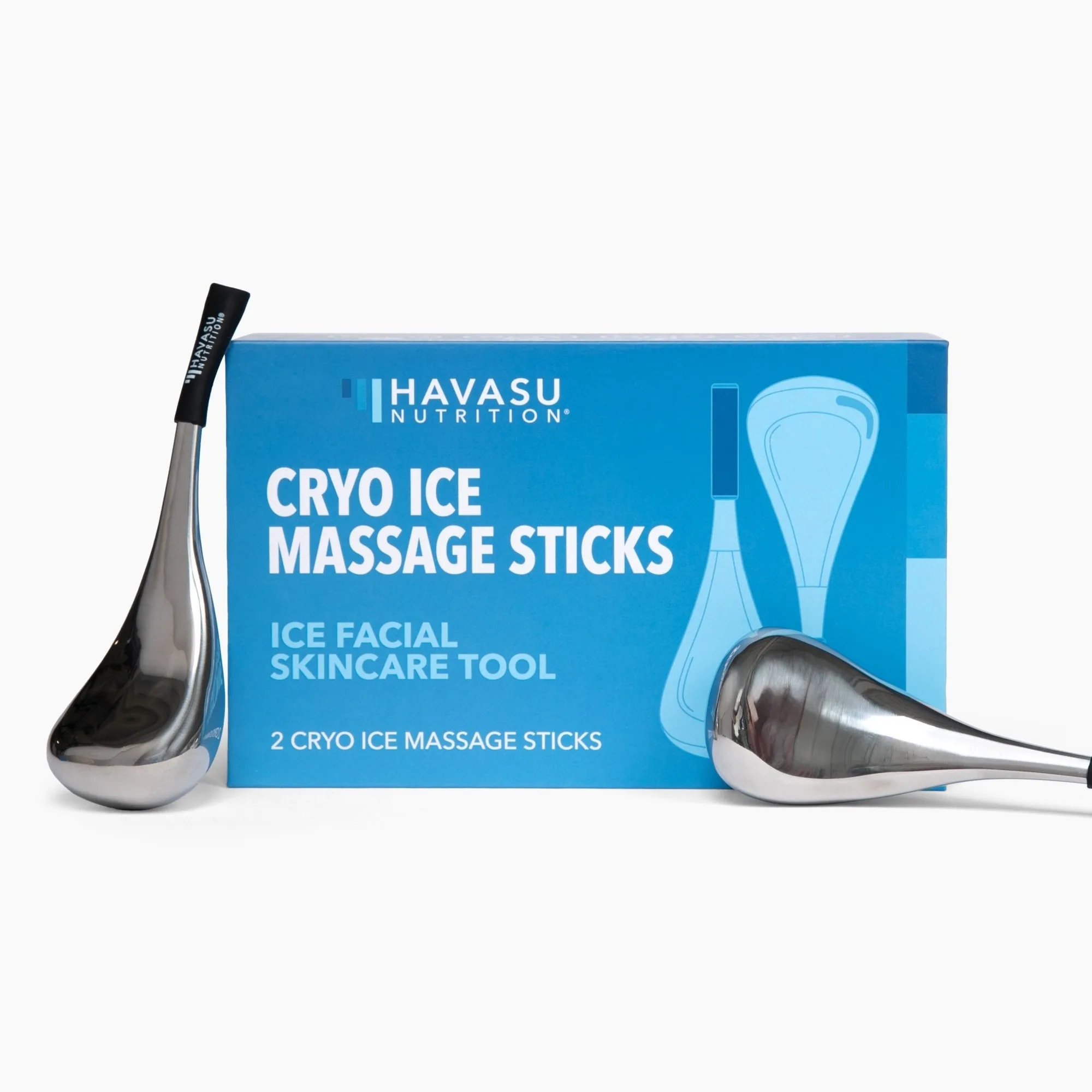
- Cryo-Ice Massage Sticks, Ice Globes Facial Skin Care Tools (Pack of 2 Cryo Ice Massage Sticks): The Havasu Nutrition Cryo-Ice Massage Sticks are a pack of 2 ice globes for face that deliver an instant cooling sensation to refresh your skin and reduce visible inflammation. Having two sticks lets you treat both sides of your face at once, cutting your routine time in half and ensuring even application.