Quick answer
Use a 1-quart hybrid saucepan as your everyday small-batch pan: preheat it over medium, add fat and aromatics, then build the sauce or reheat liquid with the lid on only when you want to trap heat. For reducing, leave the lid off and keep the heat at a steady simmer so the sauce thickens without scorching.
Match the pan to the batch size
A 1-quart saucepan is the right choice when you are cooking for one or two, reducing a pan sauce, warming a single bowl of soup, or melting a small amount of butter or chocolate. If you are feeding four or more, or making a batch you intend to freeze, a larger pot will heat more evenly and give you room to stir without splashing. The practical rule is simple: the liquid should fill the pan no more than about two-thirds of the way up the side. Any fuller and a simmer turns into an overflow risk, especially with starchy pasta water or dairy-based sauces.
Preheat and control the heat
Hybrid cookware heats quickly, so preheat over medium rather than high and give the pan a minute to come up to temperature before adding oil or butter. A quick water test—a few drops should sizzle and skitter, not instantly evaporate—tells you the surface is ready. If you are new to the pan, start lower than you think you need and adjust upward. The most common mistake is treating a small saucepan like a large stockpot and blasting it with high heat, which can burn garlic or reduce a delicate sauce before the flavors have time to meld.
Build the sauce in stages
For a pan sauce, sear your protein or vegetables first, then remove them and add your aromatics—shallots, garlic, ginger—to the same pan. Deglaze with wine, broth, or vinegar, scraping up the browned bits, and let the liquid reduce by about half. Off the heat, swirl in cold butter or a splash of cream to finish. This order matters because the fond left by searing is where most of the flavor lives, and the small surface area of a 1-quart pan means reduction happens fast. Stay nearby; a sauce that took five minutes to build can tighten in thirty seconds.
Know when to use the lid
The tempered glass lid is most useful when you are warming soup, steaming vegetables, or bringing rice or grains to a simmer and want to trap heat. For reducing a sauce, leave the lid off—trapped steam slows evaporation and you will wait far longer for the same thickness. When you do cover the pan, tilt the lid slightly to let some steam escape if you are worried about boil-over. The stay-cool handle means you can lift the lid and check progress without reaching for a towel, which makes mid-cook adjustments much easier.
Clean and store without damaging the surface
Let the pan cool before washing—thermal shock is harder on cookware than most people realize. Warm water, a soft sponge, and a little dish soap handle most sauces; for stuck-on starch or reduced glaze, simmer a cup of water in the pan for a minute or two to loosen it. Avoid metal utensils and abrasive scrubbers, which can dull the surface over time. A 1-quart saucepan takes up little cabinet space, but if you use it daily, keeping it on the stovetop is a reasonable trade-off for the convenience.
Step-by-step: sauces and small batches in a hybrid saucepan
- Preheat over medium: Set the pan on medium heat for 1–2 minutes before adding fat. Check with a water droplet: it should sizzle and move, not vanish instantly. If the pan smokes, it is too hot—pull it off the heat and let it cool slightly before continuing.
- Add fat and aromatics: Add oil or butter, then shallots, garlic, or ginger. Stir for 30–60 seconds until fragrant but not browned. Browned garlic turns bitter; keep the heat moderate and keep the aromatics moving.
- Deglaze and reduce: Pour in wine, broth, or vinegar and scrape up the browned bits. Simmer uncovered until the liquid reduces by about half. Reduction happens quickly in a 1-quart pan—stay at the stove and check every minute.
- Finish off the heat: Remove the pan from the burner and swirl in cold butter, cream, or a starch slurry to thicken and gloss the sauce. Adding butter off the heat prevents the sauce from breaking.
- Use the lid for warming, not reducing: Cover with the tempered glass lid when reheating soup, steaming vegetables, or simmering grains. Leave it off when you want evaporation. A covered pan traps steam, so a sauce will not thicken as quickly with the lid on.
- Cool, clean, and store: Let the pan cool, then wash with warm water and a soft sponge. Simmer water in the pan to loosen stuck-on sauce before scrubbing. Avoid metal utensils and abrasive pads to keep the surface in good shape.
Product facts
- Hybrid Saucepan with Lid, 1-Qt: Thanks to its stay-cool handle and tempered glass lid, this petite Hybrid pot is one you'll grab for everyday cooking and reheating. It's ideal for reducing sauces and warming up soups or stews for solo diners. The lid and handle make it practical for frequent small-batch tasks like reheating and sauce reduction, where you need to check progress often without burning your hand.
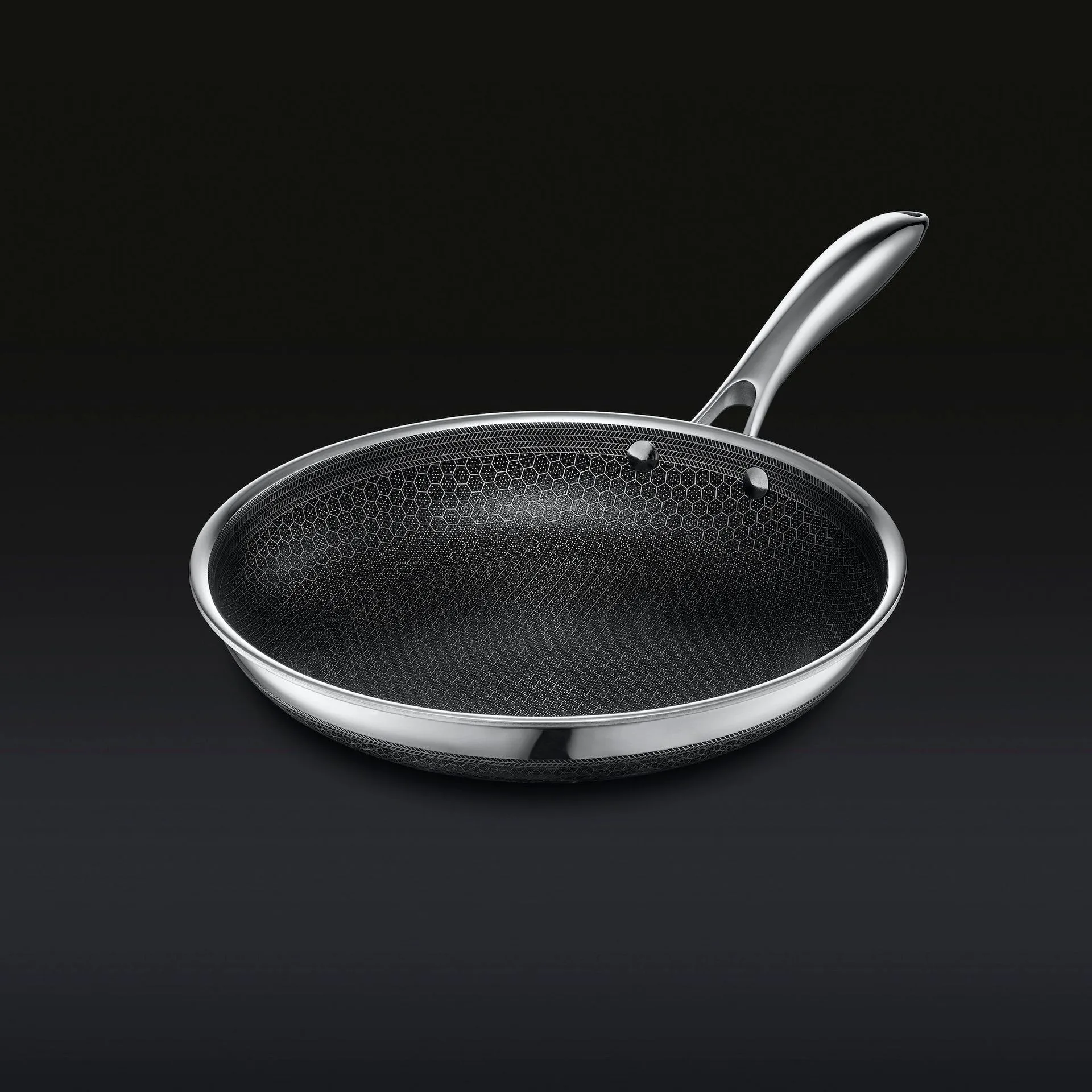
- Hybrid Fry Pan, 8": The HexClad 8" Pan is smaller but big on versatility. It's the perfect multi-functional pan for preparing smaller servings like veggies, eggs, or the almighty omelet. If your small-batch cooking leans toward searing or sautéing rather than liquid-based sauces, an 8-inch fry pan is a better fit than a saucepan for eggs, vegetables, and single servings of protein.