Quick answer
Use magnetic dress-up dolls as character starters for simple stories. Dress the figure, name the character, and build a short tale around the outfit and setting.
Why magnetic dress-up dolls work for storytelling
Magnetic dress-up dolls give children a concrete, changeable character to anchor a story. Instead of imagining a character from scratch, kids can dress the doll and immediately see who they are—an astronaut, a fairy, a chef—which makes the next step of inventing a plot feel natural and fun.
The sets include multiple costumes and accessories, so children can change the character's role mid-story. This flexibility encourages plot twists and problem-solving as the story evolves.
Trade-offs to keep in mind
Younger toddlers may need help attaching the magnetic pieces, especially if they are small. The dolls and stands are sturdy, but the pieces can be a choking hazard for children under 3. Always supervise play.
The magnetic pieces stay in place well, but they can shift if the doll is handled roughly. For very active storytelling, consider using a flat surface or tray to keep the pieces organized.
Steps to use magnetic dress-up dolls for storytelling
- Choose a character and dress the doll: Let your child pick one outfit from the set and dress the doll. Ask: "Who is this character? What do they do?" Common mistake: rushing to the story before the character is fully dressed. Let the child explore the pieces first.
- Name the character and set the scene: Give the character a name and decide where the story takes place. Use a simple setting like "in the kitchen" or "on the moon." Checkpoint: If the child struggles, offer two choices (e.g., "Is this story at the castle or the park?").
- Start a simple problem or goal: Introduce a small challenge: the character lost something, needs to help a friend, or wants to reach a place. Ask: "What happens next?" Common mistake: making the problem too complex. Keep it one-sentence and relatable (e.g., "The fairy's wand is missing").
- Change the outfit to advance the story: Mid-story, suggest changing the doll's outfit to show a new role or solution. For example, the astronaut becomes a doctor to fix the spaceship. Checkpoint: If the child hesitates, demonstrate by changing the outfit yourself and narrating the new direction.
- End the story and reflect: When the problem is solved, ask the child to tell you the whole story from start to finish. This builds narrative recall and confidence. Common mistake: skipping the ending. A clear finish ("And they lived happily ever after") gives the story closure.
Product facts for storytelling
-
Julia Magnetic Dress-Up: The Julia Magnetic Dress-Up set includes 24 magnetic clothing pieces to create eight occupational uniforms and outfits, plus a wooden stand. Eight distinct roles (astronaut, firefighter, doctor, etc.) give children a wide range of character options to start different stories without needing additional props.
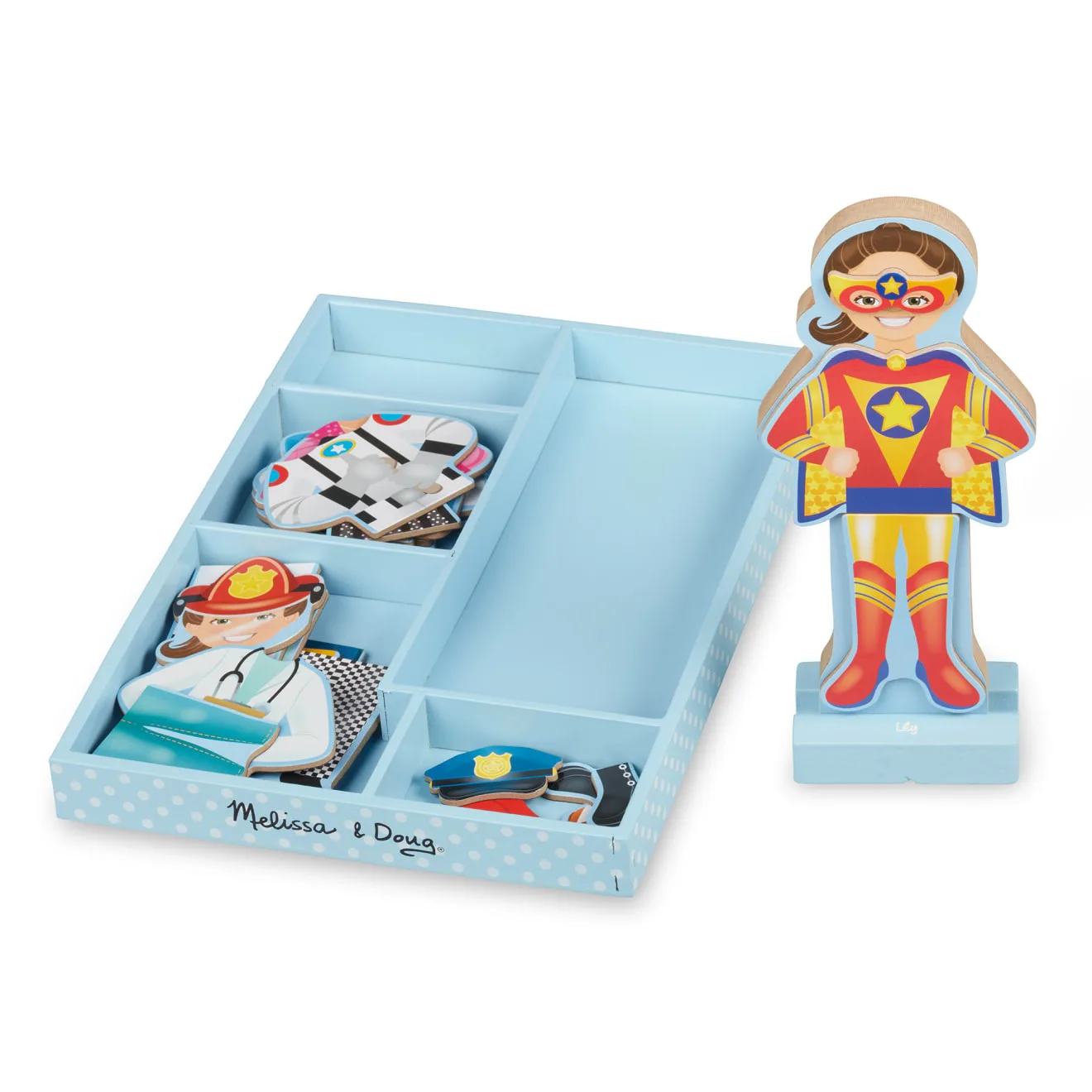
Julia Magnetic Dress-Up
-
Ballerina/Fairy Magnetic Dress-Up Play Set: The Ballerina/Fairy Magnetic Dress-Up Play Set includes 52 clothing and accessory pieces and a double-sided figure with a ballerina on one side and a fairy on the other. The double-sided figure and swan companion allow for instant character transformation and sidekick stories, which naturally introduce plot elements like disguise or partnership.
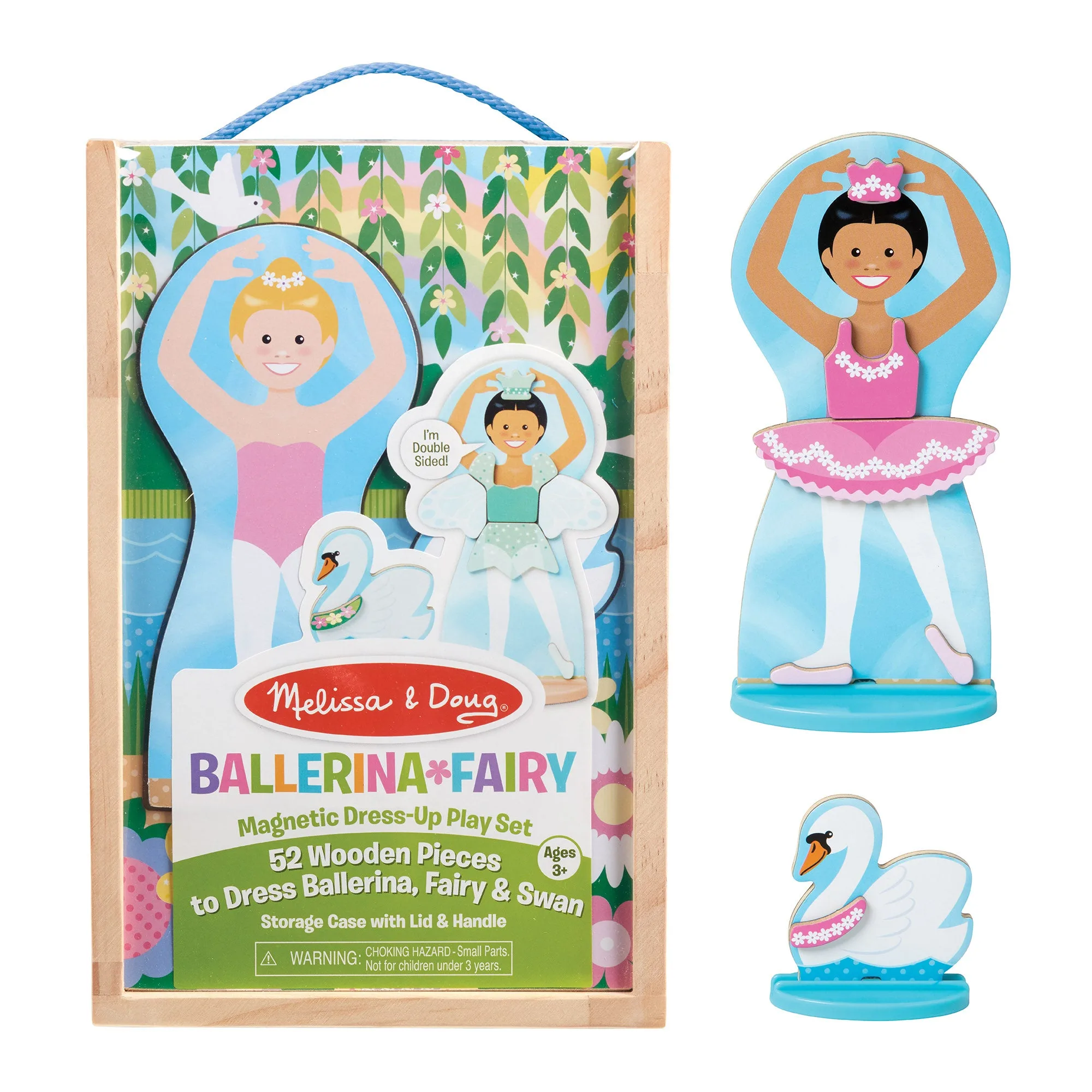
Ballerina/Fairy Magnetic Dress-Up Play Set