Quick Answer
Start by building rapport, then use the workbook's reproducible worksheets and strategies in a structured sequence to increase awareness, encourage empathy, and develop coping skills for relational aggression.
Why This Workbook Works for Relational Aggression
The Mean Girls workbook offers 101 ready-to-use resources designed specifically for relational aggression (RA). Unlike generic bullying resources, it targets the subtle, social forms of aggression common among adolescent girls—like exclusion, gossip, and manipulation. The reproducible format means you can use the same worksheet with multiple clients without extra prep.
Step-by-Step Guide to Using the Mean Girls Workbook
- Step 1: Assess Readiness and Build Rapport: Before opening the workbook, spend one or two sessions establishing trust. Relational aggression often involves shame and fear of judgment. Ask open-ended questions about friendships and social dynamics without labeling behaviors as 'bullying' yet. Common mistake: skipping rapport and jumping straight to worksheets can make resistant clients shut down.
- Step 2: Introduce the Concept of Relational Aggression: Use the workbook's introductory pages to define relational aggression in a non-blaming way. Frame it as a learned behavior that can be unlearned. Let the client read a short definition aloud to normalize the topic. Checkpoint: If the client denies any RA involvement, use third-person examples from the book to reduce defensiveness.
- Step 3: Select Worksheets Based on Client Needs: Review the reproducible worksheets and choose 2-3 that match the client's primary struggle—e.g., empathy building for the aggressor or assertiveness for the victim. Avoid handing out the entire book at once; use one sheet per session. Common mistake: overwhelming the client with too many worksheets dilutes focus and feels like homework rather than therapy.
- Step 4: Process the Worksheet Together: Complete the worksheet in session, not as take-home work. Discuss each answer aloud to explore underlying feelings and thought patterns. Use the client's responses as a springboard for role-play or discussion. Checkpoint: If the client gives superficial answers, gently probe with 'What would a friend in that situation feel?'
- Step 5: Build Coping Strategies and Practice: Use the book's strategy sections to teach specific skills like 'I feel' statements, conflict resolution scripts, or identifying trusted adults. Practice these skills through role-play within the session. Common mistake: teaching strategies without practice leads to poor retention. Always rehearse at least one scenario.
- Step 6: Reinforce and Generalize: Assign a simple real-world task between sessions, such as using one new skill in a low-risk social situation. At the next session, review what happened and adjust the approach using another worksheet if needed. Checkpoint: If the client reports the skill didn't work, explore context rather than abandoning the strategy—often timing or wording needs tweaking.
Product Details
-
Mean Girls: 101 1/2 Creative Strategies for Working With Relational Aggression: This book by Kaye Randall and Allyson Bowen provides 101 resources, insights, strategies and reproducible worksheets for working with relationally aggressive girls and those victimized by this type of bullying. The 101 ready-to-use strategies save planning time and give you a structured, evidence-informed approach to address relational aggression directly in sessions.
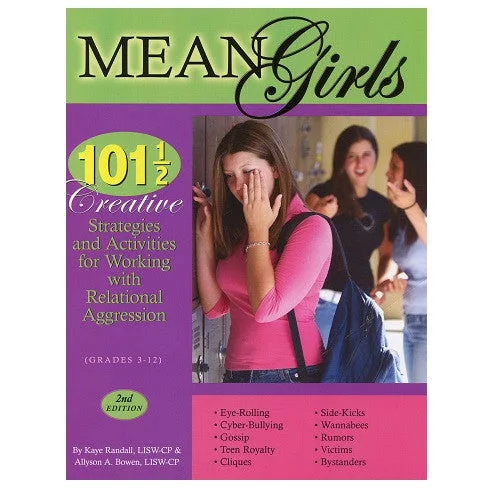
Mean Girls: 101 1/2 Creative Strategies for Working With Relational Aggression