Quick Answer
Use packing cubes with soft luggage by grouping items into cubes, placing heavier cubes at the wheel end, and filling gaps with soft items. Soft luggage flexes, so cubes create a rigid internal frame that keeps contents organized and easy to find. Start with two or three cubes for a weekend trip and adjust from there.
Soft luggage is flexible, lightweight, and forgiving when you need to squeeze in one last item. That same flexibility can turn into a messy pile of clothes and gear once you are on the road. Packing cubes solve this by giving soft bags an internal structure that keeps everything in place.
This guide walks through a practical step-by-step method for using packing cubes with soft luggage. You will learn how to choose cube sizes, pack them efficiently, and avoid the common mistakes that waste space or wrinkle clothes. The goal is simple: spend less time digging and more time enjoying your trip.
Why Packing Cubes Work Well with Soft Luggage
Soft luggage, like the Transit'r Plus M Monotone Khaki or the Travelpack Monotone Khaki, has fabric walls that can bulge and shift. Packing cubes add a semi-rigid layer that helps the bag hold its shape. This makes it easier to slide the bag into overhead bins or under seats, and it prevents your belongings from sliding around during transit.
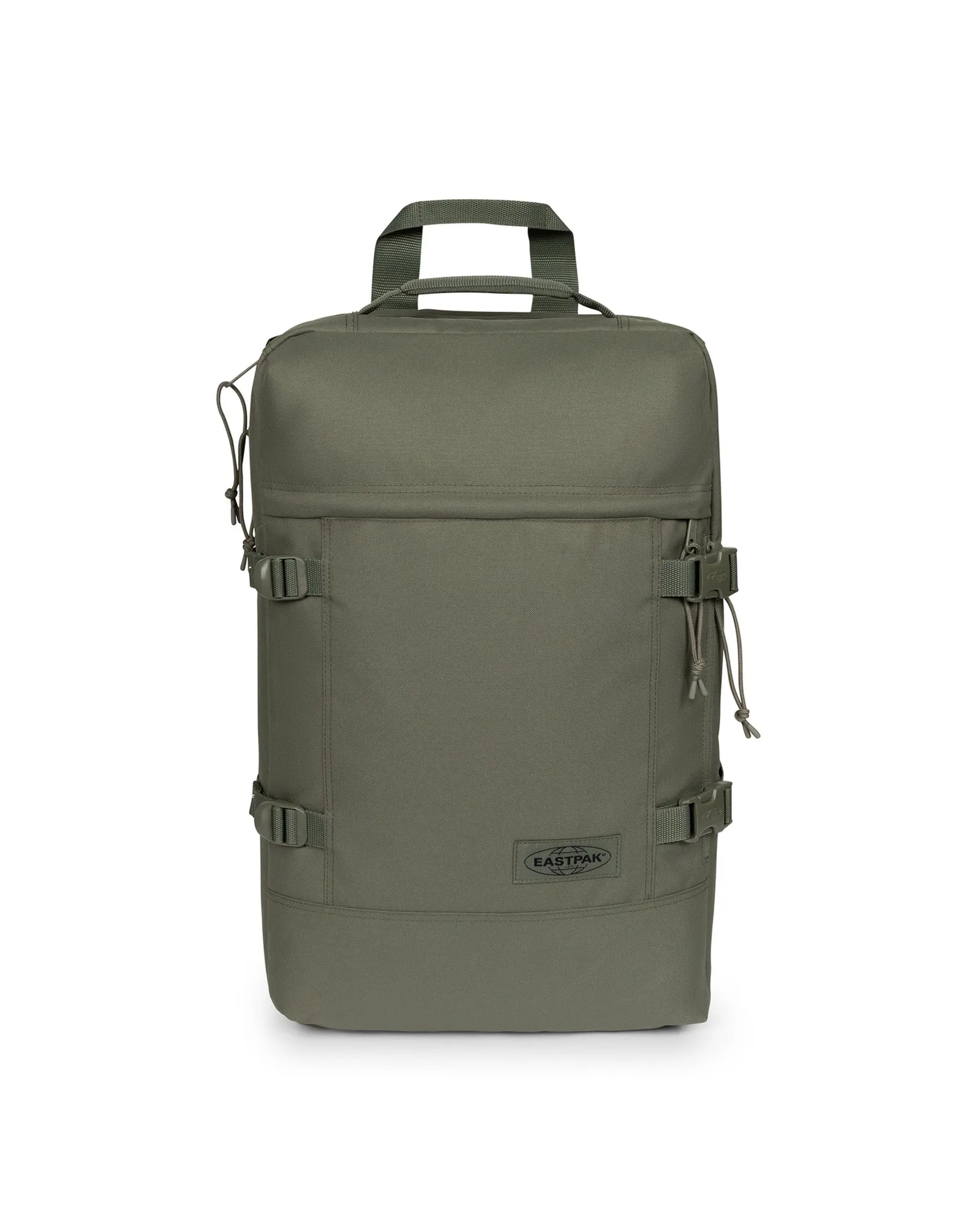
Travelpack Monotone Khaki
Cubes also create zones. Instead of one deep cavity, you get separate compartments for tops, bottoms, and accessories. That means you can find your charger without unpacking half the bag. For soft luggage organization, cubes are less about saving space and more about saving time and reducing stress.
- Use cubes that match the width of your bag to minimize wasted space.
- Choose lightweight cubes so you do not add unnecessary weight.
Step 1: Choose the Right Cubes for Your Soft Bag
Start by measuring the internal dimensions of your soft luggage. The Transit'r M Monotone Khaki, for example, has a 78L capacity with a height of 26 inches, width of 14 inches, and depth of 11.8 inches. That gives you a long, narrow space. Look for cubes that are roughly half the width of the bag so you can fit two side by side, or one large cube plus a small one.
If you use a travelpack like the Travelpack Monotone Khaki, which is carry-on sized, stick to two or three slim cubes. A common mistake is buying a set of cubes that are all the same size. Mix sizes instead: one large for bulkier items, one medium for shirts, and one small for socks and underwear.
- Checkpoint: Place empty cubes inside your bag before packing to see how they fit.
- Avoid cubes with hard frames if your soft luggage is already tight.
Step 2: Group Your Gear by Category, Not by Day
The biggest packing cubes benefit is separation, but only if you group smartly. Pack by category: one cube for tops, one for bottoms, one for sleepwear, and one for small accessories. This makes it easy to grab what you need without emptying the whole bag. If you pack by day, you end up with multiple half-empty cubes and wasted space.
For a weekend trip, you might only need two cubes. For a longer trip, use three or four. Remember that soft luggage like the Transit'r Plus L Monotone Blue has two zippered front pockets and double zippered compartments. Use those external pockets for items you need quick access to, like a book or snacks, and keep cubes in the main compartment.
- Common mistake: Overstuffing one cube so it bulges and does not fit.
- Checkpoint: Each cube should close easily without force.
Step 3: Pack Each Cube with a Purpose
How you fold matters. For t-shirts and light layers, roll them tightly and place them side by side in the cube. This minimizes wrinkles and lets you see everything at a glance. For bulkier items like jeans or sweaters, fold them flat and layer them. Use the smallest cube for socks, underwear, and chargers to keep them from scattering.
If you are using a bag with a laptop sleeve, like the Travelpack Monotone Khaki, keep your electronics in that dedicated compartment. Packing cubes are for clothing and soft goods. Do not put hard items in cubes unless they are padded, as they can press against the fabric of your soft luggage.
- Checkpoint: Weigh each cube in your hand. If it feels heavy, redistribute.
- Use compression cubes only for bulky items like jackets.
Step 4: Load Cubes into Your Soft Luggage
Place heavier cubes at the bottom of the bag, near the wheels. This lowers the center of gravity and makes the bag easier to roll or carry. Lighter cubes go on top. If your bag has a telescopic handle, like the Transit'r M Monotone Khaki, the handle mechanism takes up some space at the back. Pack around it with smaller cubes or soft items.
Fill gaps with loose items like a scarf or a light jacket. Soft luggage flexes, so you can squeeze these into corners. Just avoid overpacking to the point where the zipper strains. A good rule: if you have to sit on the bag to close it, remove a cube.
- Common mistake: Placing all cubes on one side, causing the bag to tip.
- Checkpoint: Close the bag and lift it. It should feel balanced.
Step 5: Adjust and Refine as You Travel
Your packing system will evolve. After the first day, you may find that one cube is unnecessary or that you need a dedicated dirty laundry cube. Many packing cubes come with a laundry bag or a separate compartment. Use it to keep dirty clothes away from clean ones. This is especially useful in soft luggage where smells can linger.
At the end of your trip, unpack and wipe down your cubes. Soft luggage like the Resist'r Zip L Monotone Blue has a water-resistant shell, but cubes can trap moisture. Let everything air out before storing. A quick check now prevents musty odors later.
- Checkpoint: Before returning, consolidate remaining items into fewer cubes.
- Store cubes inside your luggage so they are ready for the next trip.
Your Step-by-Step Packing Cube Routine
- Measure and choose cubes: Check the internal dimensions of your soft luggage and pick cubes that fit snugly. Mix sizes for flexibility. Checkpoint: Empty cubes should slide in without forcing.
- Group by category: Sort clothes and gear into tops, bottoms, sleepwear, and small accessories. Assign one cube per category. Common mistake: Packing by day leads to half-empty cubes.
- Roll and fold: Roll t-shirts and light layers; fold bulky items flat. Keep each cube loosely filled so it closes easily. Checkpoint: If a cube bulges, remove an item.
- Load heavy cubes first: Place heavier cubes near the wheels and lighter ones on top. Fill gaps with soft items like scarves. Checkpoint: The bag should feel balanced when lifted.
- Refine on the go: Use a dedicated laundry cube for dirty clothes. Consolidate items as you travel to free up space. Checkpoint: Before returning, combine remaining items into fewer cubes.
Soft Luggage That Works Well with Packing Cubes
- TRANSIT'R PLUS M MONOTONE KHAKI: Features two zippered front pockets, double zippered compartments, and a water-repellent finish. The double compartments let you separate cubed clothing from shoes or gear, while the front pockets keep travel documents accessible.
- TRAVELPACK MONOTONE KHAKI: A 2-in-1 carry-on sized travel bag with a 17-inch laptop sleeve, bottle holder, and tuck-away shoulder straps. The laptop sleeve keeps electronics separate from packing cubes, and the tuck-away straps let you convert it to a backpack for easy carrying.
- TRANSIT'R M MONOTONE KHAKI: A medium travel trolley with 78L capacity, dimensions of 26 x 14 x 11.8 inches, and an integrated TSA lock. The tall, narrow shape works best with slim cubes placed side by side, and the TSA lock adds security without needing a separate padlock.
Packing cubes turn soft luggage from a shapeless sack into an organized system. Start with two or three cubes, adjust as you go, and you will wonder how you ever traveled without them. For soft luggage that already has smart compartments, like the Transit'r Plus M Monotone Khaki or the Travelpack Monotone Khaki, cubes are the perfect complement.