Quick answer
Use a dog marking training aid as one part of a routine: clean the soiled spot with an enzymatic cleaner, apply a deterrent such as Don't Mark Here! to make that spot unappealing, supervise closely, interrupt any lifting or sniffing, and reward your dog for eliminating in the right place. Training aids discourage repeat marking, but they work best alongside supervision and consistent rewards.
Why marking isn't the same as a potty accident
Marking is a communication behavior, not just a full bladder. Dogs, especially males, leave small amounts of urine on vertical surfaces to claim space or respond to another animal's scent. That means punishment after the fact rarely works, and cleaning with an ammonia-based household cleaner can make the spot more attractive because urine contains ammonia. Treat marking as a location problem: make the old spot unappealing and make the correct potty spot rewarding.
What a marking deterrent can and cannot do
A deterrent spray changes how a surface smells, so a previously marked spot no longer smells like a bathroom invitation. It does not teach your dog where to go, and it will not fix marking driven by anxiety or an unneutered male's hormone cycle on its own. Expect the spray to buy you time while your supervision and reward routine does the actual teaching. If marking continues despite consistent training, or your dog strains, dribbles, or marks on horizontal surfaces frequently, talk to your veterinarian to rule out a medical cause.
Set up the environment before the first spray
Block access to the spots your dog has already marked, or keep your dog tethered to you indoors so you can see the pre-marking signals: circling, sniffing a vertical surface, lifting a leg, or a sudden pause mid-play. Take your dog out more often than usual for a few days, especially after meals, naps, and play. Keep the outdoor potty spot boring and consistent so it becomes the predictable place to go.
Step-by-step marking correction plan
- Clean the spot with an enzymatic cleaner: Soak the area, let it sit for the full dwell time on the label, then blot and let it air dry. Skip ammonia-based cleaners, which can smell like urine and attract your dog back to the same spot. Checkpoint: if you can still smell urine after drying, repeat the clean before spraying anything.
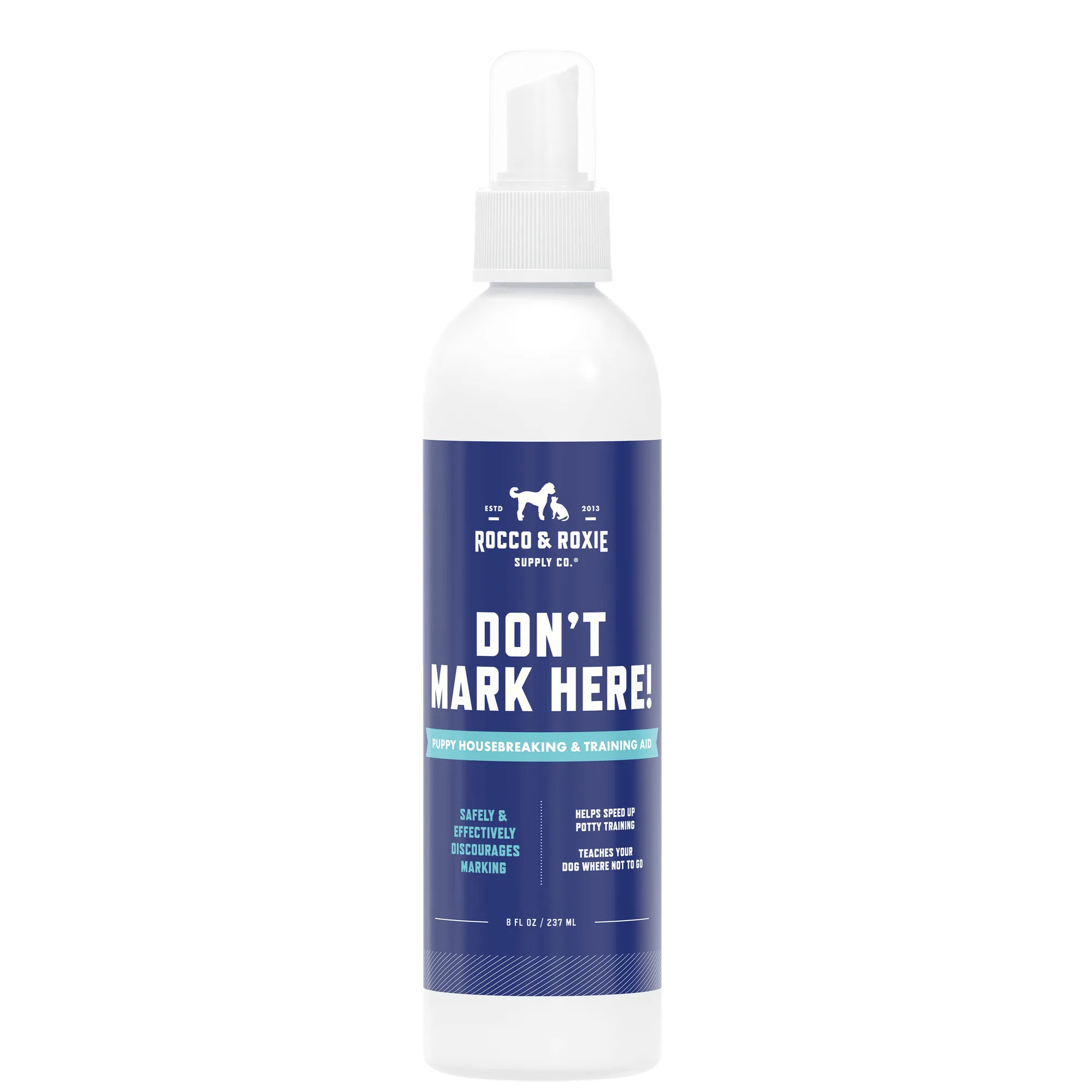
- Apply Don't Mark Here! to the cleaned spot: Spray the surface your dog targeted, including spots that have already been marked. Because it is safe on any surface in the house, you can treat flooring, furniture, and vertical edges where marking happens. Checkpoint: test on a hidden corner first if the surface is delicate, and let it dry before letting your dog near it.
- Supervise on a house line: Keep your dog tethered to you or in the same room for the first week. Watch for circling, sniffing, or a lifted leg, and interrupt with a cheerful cue like 'outside' rather than a scold. Checkpoint: if you cannot watch your dog, crate or gate them rather than risk a rehearsal of the behavior.
- Take your dog to the same potty spot: Go out on a leash, stand in one boring spot, and wait quietly for up to five minutes. Do not play or chat; the goal is to make that spot the predictable place to eliminate. Checkpoint: if nothing happens, go back inside, supervise closely, and try again in ten minutes.
- Reward the right spot immediately: Mark the moment with a calm 'yes' and give a treat within a second or two of the last drop. Reward every correct outdoor elimination for at least two weeks, then fade to praise and occasional treats. Checkpoint: if your dog marks indoors right after a successful outdoor trip, shorten the time between trips rather than adding punishment.
- Reapply the deterrent after each cleaning: Every time you clean a marked spot, re-spray it once dry. The scent barrier fades with cleaning, so reapplying keeps the spot unappealing while your dog builds the new habit. Checkpoint: if the same spot is targeted three times in a week, block access to it and add another outdoor trip to the schedule.
Product facts
- Don’t Mark Here!: Don't Mark Here! is a training aid that safely and effectively discourages peeing and marking as you teach your puppy where not to go. Its strong scent makes potential pee spots, including spots that have already been marked, unappealing. You can spray known marking spots to remove the scent invitation, which helps speed up training for even slow learners.
- Don’t Mark Here!: It is safe to use on any surface in your house. You don't have to worry about which flooring, furniture, or vertical surface your dog has marked before applying it.
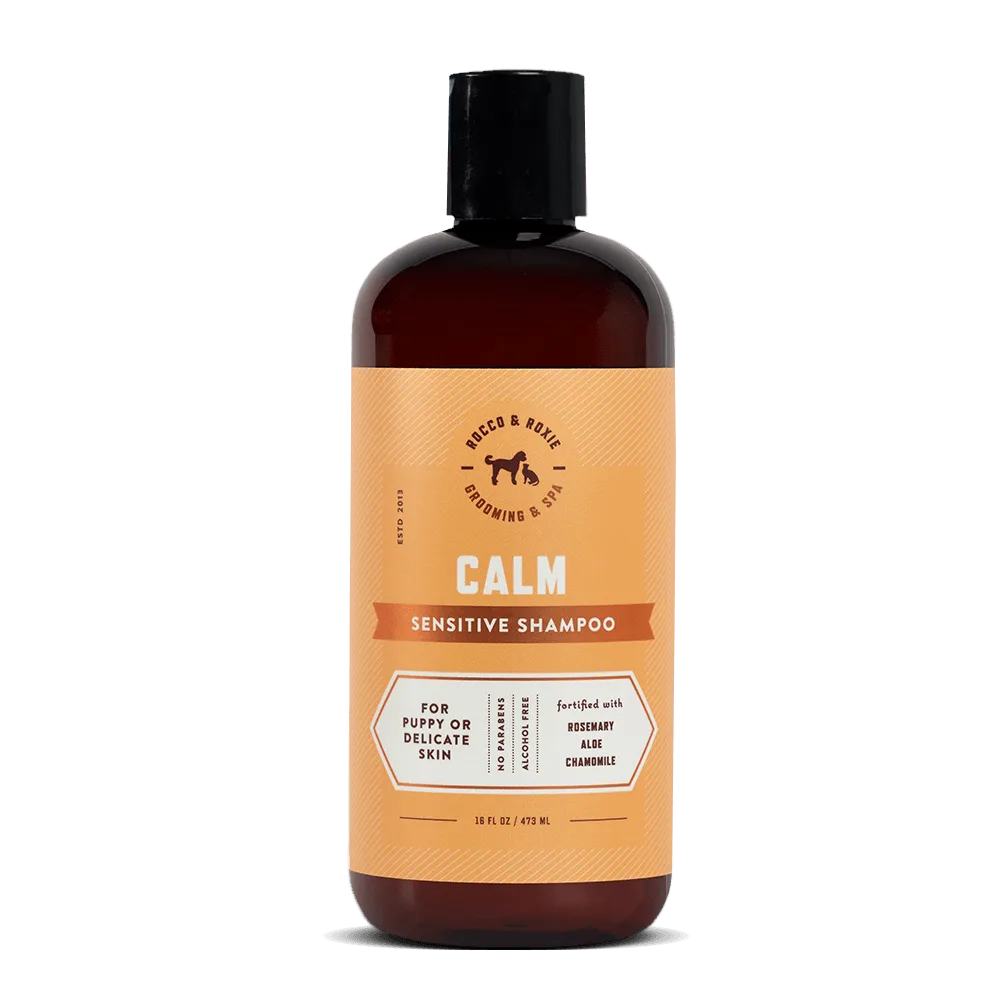
- Calm Sensitive Shampoo: Calm Sensitive Shampoo is designed for dogs' different coat lengths, textures, and densities, and for tender skin. If a marking cleanup or a nervous bath leaves your dog's coat or skin irritated, a sensitive-formula shampoo is a gentler follow-up.