Quick Answer
Use XLR rings as color-coded markers and cable organizers on your audio cables to quickly identify connections and keep your rig tidy.
Why Use XLR Rings?
XLR rings are small, color-coded rings that slide over XLR cables. They help you identify which cable goes where, reducing setup time and preventing accidental disconnections. They also keep cables neatly grouped, which is essential for clean studio or field setups.
Choosing the Right XLR Rings
When selecting XLR rings, consider the material and durability. The Rode XLR-ID Color-Coordinated XLR Rings are made of durable open-cell foam with a synthetic fur cover, designed to minimize wind noise and protect microphones. They are ideal for outdoor recording and come in a set of eight, providing enough variety for most setups.
Step-by-Step Guide to Using XLR Rings
- Identify Your Cables: Before attaching rings, label each XLR cable according to its purpose (e.g., mic 1, mic 2, line out). This will help you choose the right color for each connection. Plan your color coding before you start to avoid confusion later.
- Slide the Ring onto the Cable: Slide the XLR ring over the cable before connecting it to the microphone or mixer. The ring should sit snugly near the connector end, but not so tight that it restricts movement. Check that the ring slides freely but stays in place once positioned.
- Color-Code Each Connection: Use a different color for each type of connection (e.g., red for mic 1, blue for mic 2). This makes it easy to identify cables at a glance, especially in complex setups. Keep a small reference card near your rig to remind you which color means what.
- Group Cables Together: Once rings are in place, group cables that run together using Velcro straps or cable ties. The rings help you quickly identify which cable belongs to which device, even when they are bundled. Avoid over-tightening cable ties, as this can damage the cable insulation.
- Maintain and Replace as Needed: Inspect rings regularly for wear or damage. If a ring becomes loose or cracked, replace it to maintain clear identification and protection. Keep spare rings in your kit for quick replacements during shoots.
Product Facts
-
Rode XLR-ID Color-Coordinated XLR Rings (Set of 8): The Rode XLR-ID rings are made of durable open-cell foam covered with synthetic fur, designed to minimize wind noise and protect microphones. This material choice makes them suitable for outdoor recording, where wind noise can be an issue, and they also add a layer of protection to your gear.
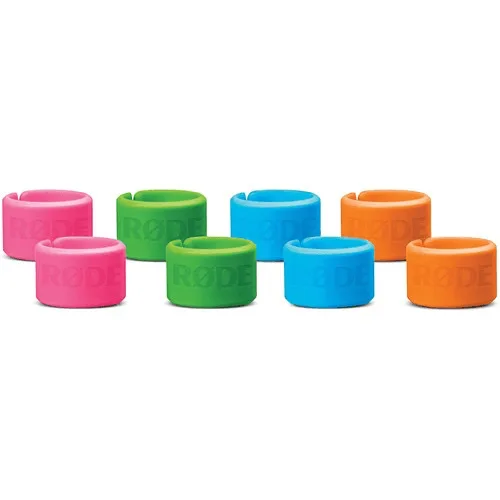
Rode XLR-ID Color-Coordinated XLR Rings (Set of 8)