Quick answer
The safest way to warm breastmilk or formula is to place the bottle in a bowl of warm tap water or hold it under warm running water for a few minutes. Never microwave breastmilk or formula because it heats unevenly and can create hot spots that burn your baby. Always test the temperature by shaking a few drops onto your inner wrist before feeding.
Why gentle warming matters for breastmilk
Breastmilk contains living cells, antibodies, and enzymes that support your baby's immune system and digestion. High heat can destroy some of these beneficial components, so the goal is to bring milk to a comfortable feeding temperature without overheating it. Formula is more heat-stable, but it still should not be boiled or microwaved because that can degrade nutrients and create dangerous hot spots. The good news: you do not need a special appliance to warm a bottle safely. Warm water and a few minutes are enough.
How to warm milk from the fridge step by step
If you stored breastmilk or prepared formula in the refrigerator, you can warm it directly from cold. Run warm tap water into a bowl or cup, then set the bottle in it so the water reaches about halfway up the bottle. Swirl the bottle gently every minute or so to distribute heat evenly. It usually takes 5 to 10 minutes for an 8-ounce bottle to reach a comfortable temperature, depending on how cold the milk is and the bottle material. Glass bottles tend to warm a bit faster than thick plastic because glass conducts heat more efficiently, but always check by testing a few drops on your wrist.
Warming formula without a bottle warmer
You can warm formula the same way: place the prepared bottle in a bowl of warm water or hold it under warm running tap water. Never microwave formula, even for a few seconds, because the liquid can heat unevenly and scald your baby's mouth. If you are mixing powder formula fresh, you can use warm water to dissolve the powder, but let the bottle cool to room temperature or body temperature before feeding. A simple trick is to prepare the formula with warm water, then run the bottle under cool water for a minute if it feels too hot. Always follow the manufacturer's instructions on the formula can for exact water temperature and mixing ratios.
Bottle warming dos and don'ts
Do use warm water, not boiling water, and never leave a bottle sitting in hot water for long periods. Don't microwave, don't use the stovetop to heat a bottle directly, and don't refreeze or reheat milk that has already been warmed and partially fed. If your baby doesn't finish a bottle within two hours of starting a feed, discard the remaining milk because bacteria from your baby's mouth can multiply. For formula, follow the same two-hour rule after a feed begins. When you're on the go, a insulated bottle bag or a thermos of warm water can help you warm a bottle without a warmer, but always test the temperature before feeding.
Step-by-step bottle warming guide
- Step 1: Gather your supplies: You'll need the bottle of breastmilk or formula, a clean bowl or cup, and warm tap water. If you're using a bottle warmer, follow its instructions, but always test the milk temperature before feeding. Checkpoint: never use boiling water or a microwave.
- Step 2: Warm the bottle in water: Place the bottle in a bowl of warm tap water or hold it under warm running water. Swirl gently every minute to distribute heat evenly. For an 8-ounce bottle, this usually takes 5 to 10 minutes. Checkpoint: the water should be comfortably warm to your touch, not hot.
- Step 3: Test the temperature: Shake a few drops of milk onto the inside of your wrist. It should feel slightly warm or neutral, not hot. If it feels hot, cool the bottle under cool running water for a minute and test again. Checkpoint: if you're unsure, it's safer to feed milk slightly cool than too warm.
- Step 4: Feed promptly and discard leftovers: Feed your baby within one hour of warming. If your baby doesn't finish the bottle within two hours of starting the feed, discard the remaining milk. Never reheat or refreeze leftover milk. Checkpoint: when in doubt, throw it out—bacteria can grow quickly in warmed milk.
Products that make warming and feeding easier
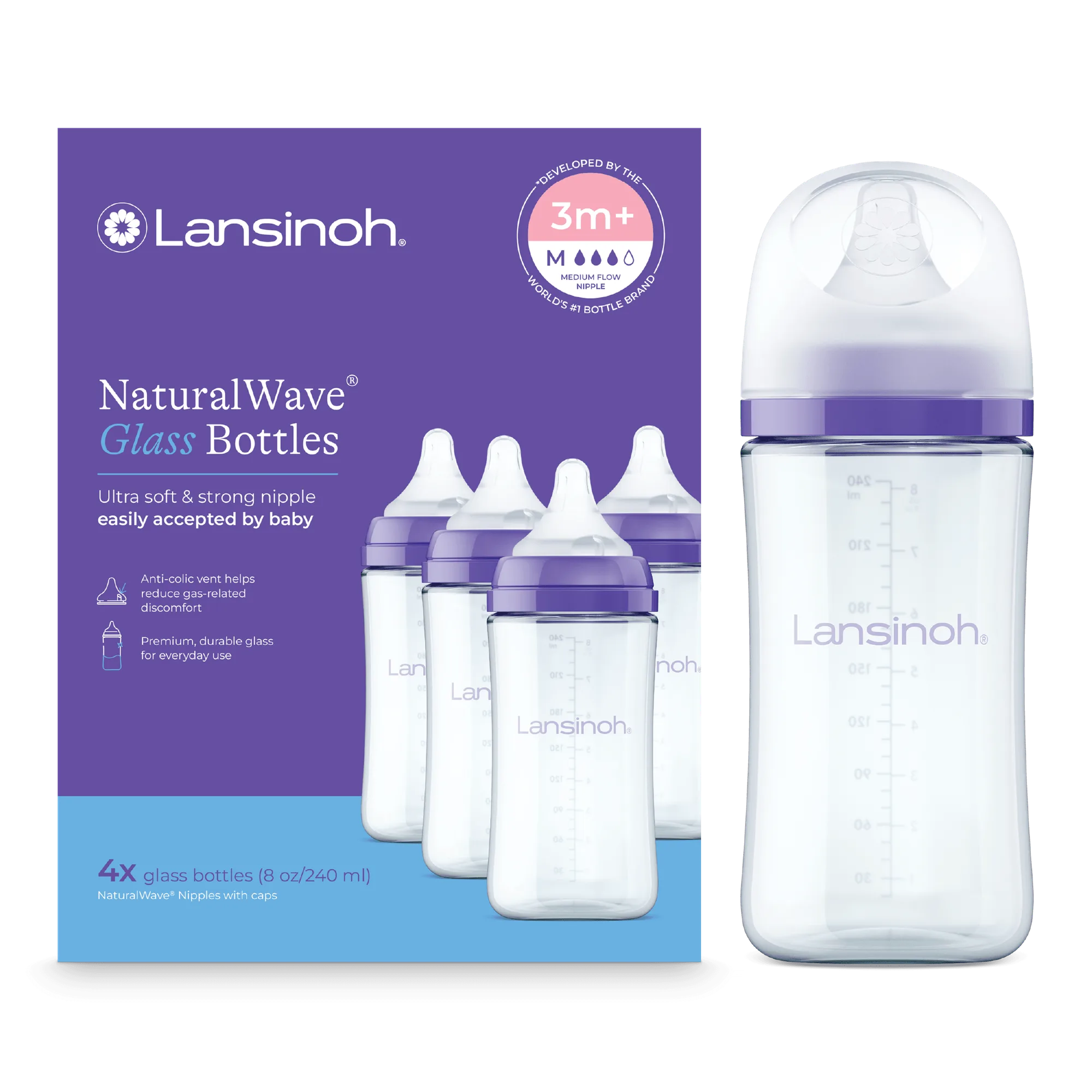
- Glass Baby Bottles 8oz (4 pack): Lansinoh Glass Baby Bottles 8oz (4 pack) feature the NaturalWave® Nipple, which is clinically proven to reduce nipple confusion. Glass warms evenly in a bowl of warm water, and the NaturalWave nipple supports the same sucking actions your baby uses at the breast, making the transition between breast and bottle smoother.
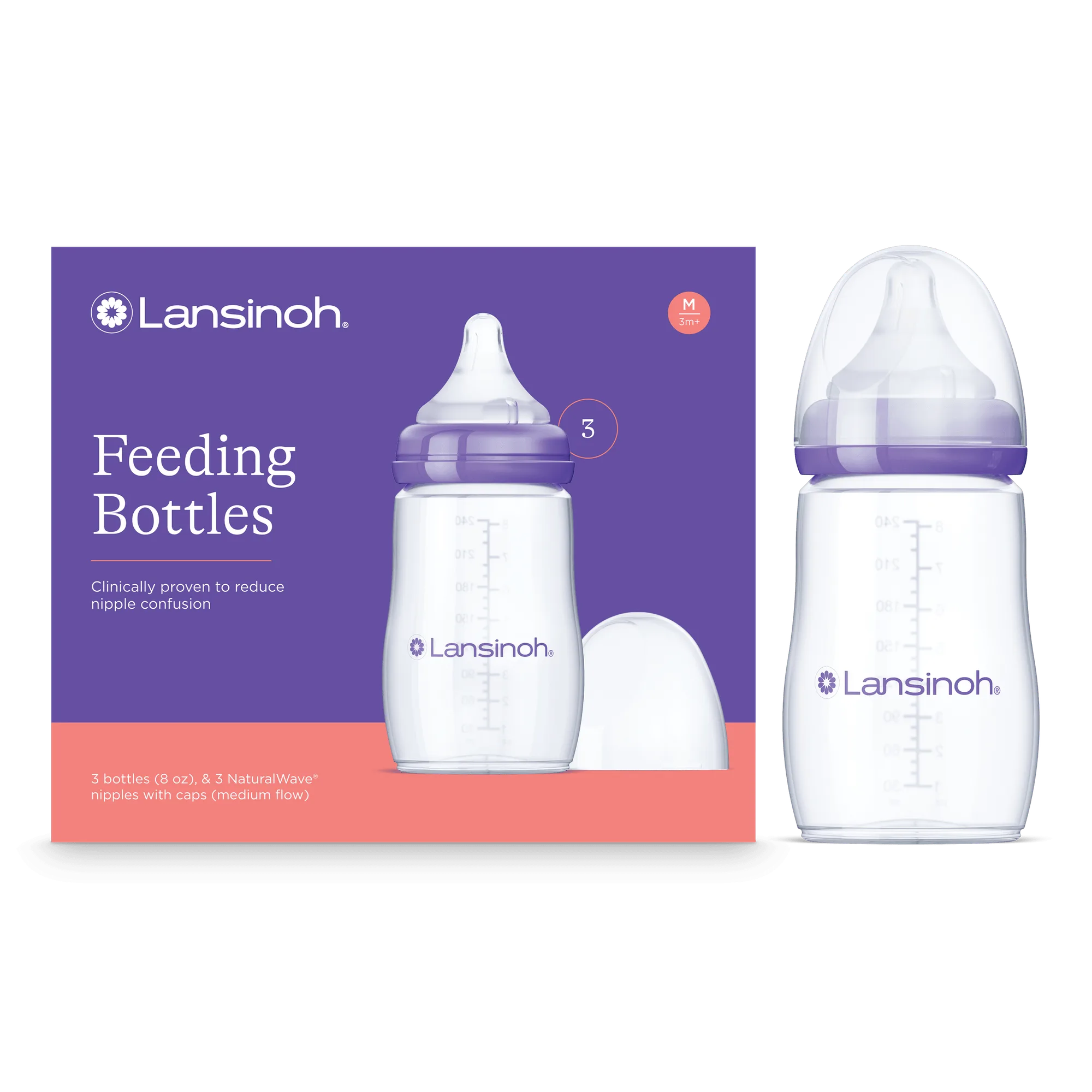
Baby Bottles 8oz
- Thrive 2-in-1 Breast Pump Valve for PowerPump & Wearable Pump: Thrive 2-in-1 Breast Pump Valve for PowerPump & Wearable Pump is a spare set of parts that is great to have on hand when you're pumping away from home or need to replace parts that wear over time. Having a spare valve means you can keep pumping and warming milk without interruption if a part gets lost or worn, so you're never stuck without a working pump.