Quick answer
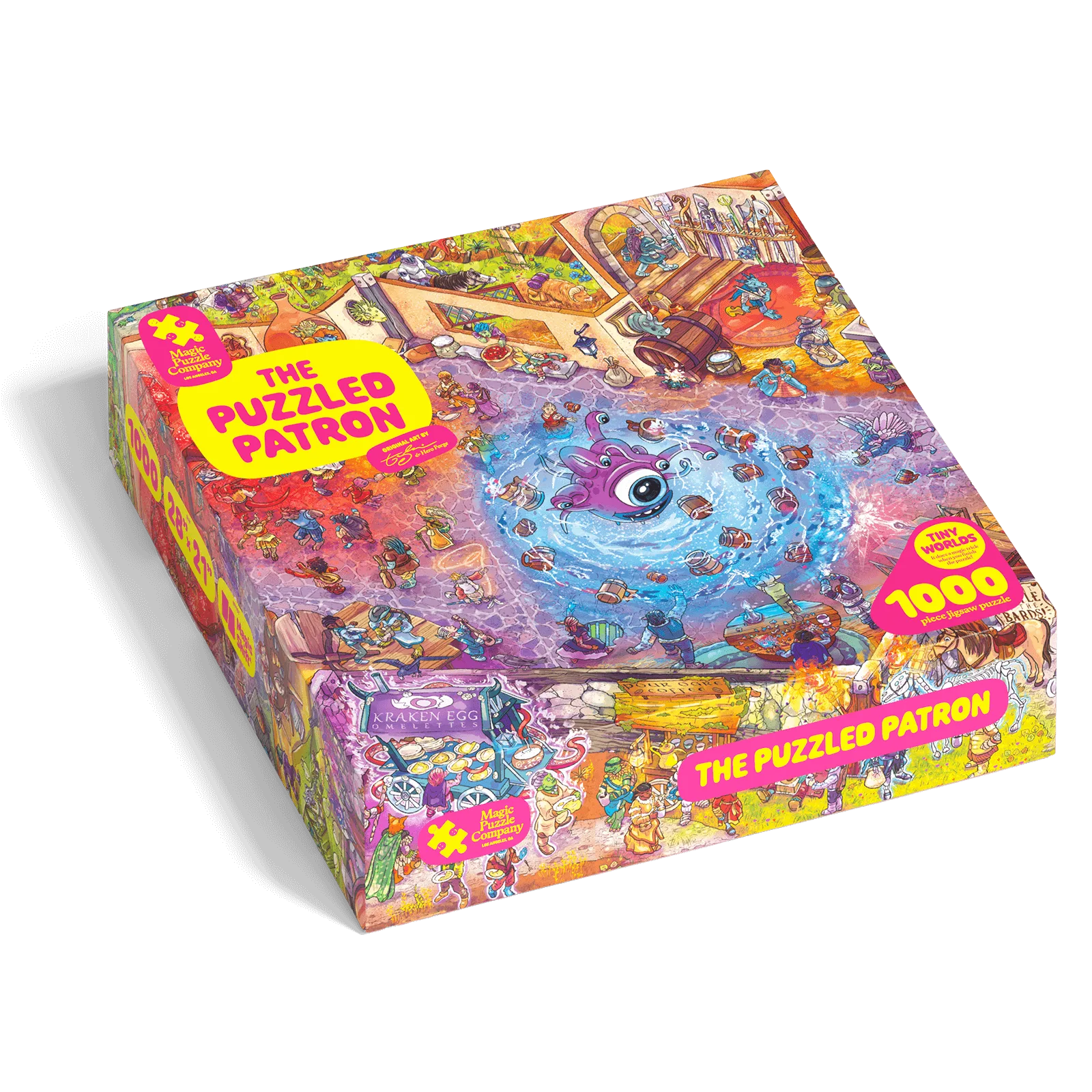
Start with a scene that has clear, recognizable areas rather than a dense crowd, sort pieces into a few broad groups, and work in short sessions with a shared goal. For a first magic puzzle with kids, pick The Forest Feast for its approachable, story-driven art and save busier scenes like The Puzzled Patron for a later session.
Set up a first session that avoids early frustration
Choose a table height where kids can reach the middle without leaning, and clear enough space to keep sorted groups separate from the growing puzzle. Keep the box lid or a tray nearby for pieces that clearly belong to one region, and leave the edge pieces in their own pile. A first session works best when you stop while everyone still wants more, so plan a natural end point before you begin.
Pick a scene that matches the solver, not the age
Age ranges on puzzle boxes are a rough guide, not a rule. What matters more is how much visual clutter a solver can tolerate and whether they enjoy searching for small details. A scene with distinct zones and a clear focal point gives beginners frequent wins, while a crowded, detail-heavy scene rewards patience and close looking. If you are unsure, start with the calmer scene and move up once the first puzzle is finished without help.
Use a three-pile sorting method
Instead of sorting by exact shape or color, have new solvers make three piles: edge pieces, pieces with a clear object or character, and pieces that look like background. This keeps the first sort fast and gives everyone a job. Background pieces can be the last pile, which means beginners spend their early effort on recognizable parts and feel progress quickly.
Keep the family puzzle activity moving with short rounds
Set a timer for 15 to 20 minutes and treat each round as its own small goal, such as finishing one corner or connecting two characters. When the timer ends, take a break even if the puzzle is going well. Short rounds reduce the chance that a stuck section turns into a power struggle, and they give younger solvers a clear sense of accomplishment.
Steps for introducing magic puzzles to new solvers
- Pick the scene together: Show two or three options and let the new solver choose. Start with a scene that has clear focal areas rather than a dense crowd. Checkpoint: if they hesitate, suggest The Forest Feast as a calm first option.
- Sort into three piles: Make piles for edges, recognizable objects or characters, and background. Skip sorting by exact shape on the first session. Mistake to avoid: sorting every piece by color before building anything, which delays the first win.
- Build one clear zone first: Choose a single character, object, or corner and finish it before moving on. This gives the group a visible anchor. Checkpoint: stop and look at the finished zone together before starting the next one.
- Work in 15 to 20 minute rounds: Set a timer and end each round on a small goal, such as connecting two characters or completing an edge section. Mistake to avoid: pushing through a stuck section until someone loses interest.
- Leave the background for last: Save the least distinctive pieces for the final stretch, when the remaining gaps make placement easier to judge. Next step: once the puzzle is done, pick a slightly busier scene for the next session.
Scenes that work well for a first solve
- The Forest Feast: The Forest Feast is from Series 2 and features art by Sanne-Marie Kohlmann, whose work focuses on connecting people with feelings and emotions through illustration. A story-driven, emotionally clear scene gives beginners recognizable areas to build first.
- The Puzzled Patron: The Puzzled Patron is from Series 3 and depicts a crowded, fantastical tavern, with art by scientific illustrator Taylor Rose. The busy tavern setting rewards close looking, so it suits a second or third solve rather than a first one.
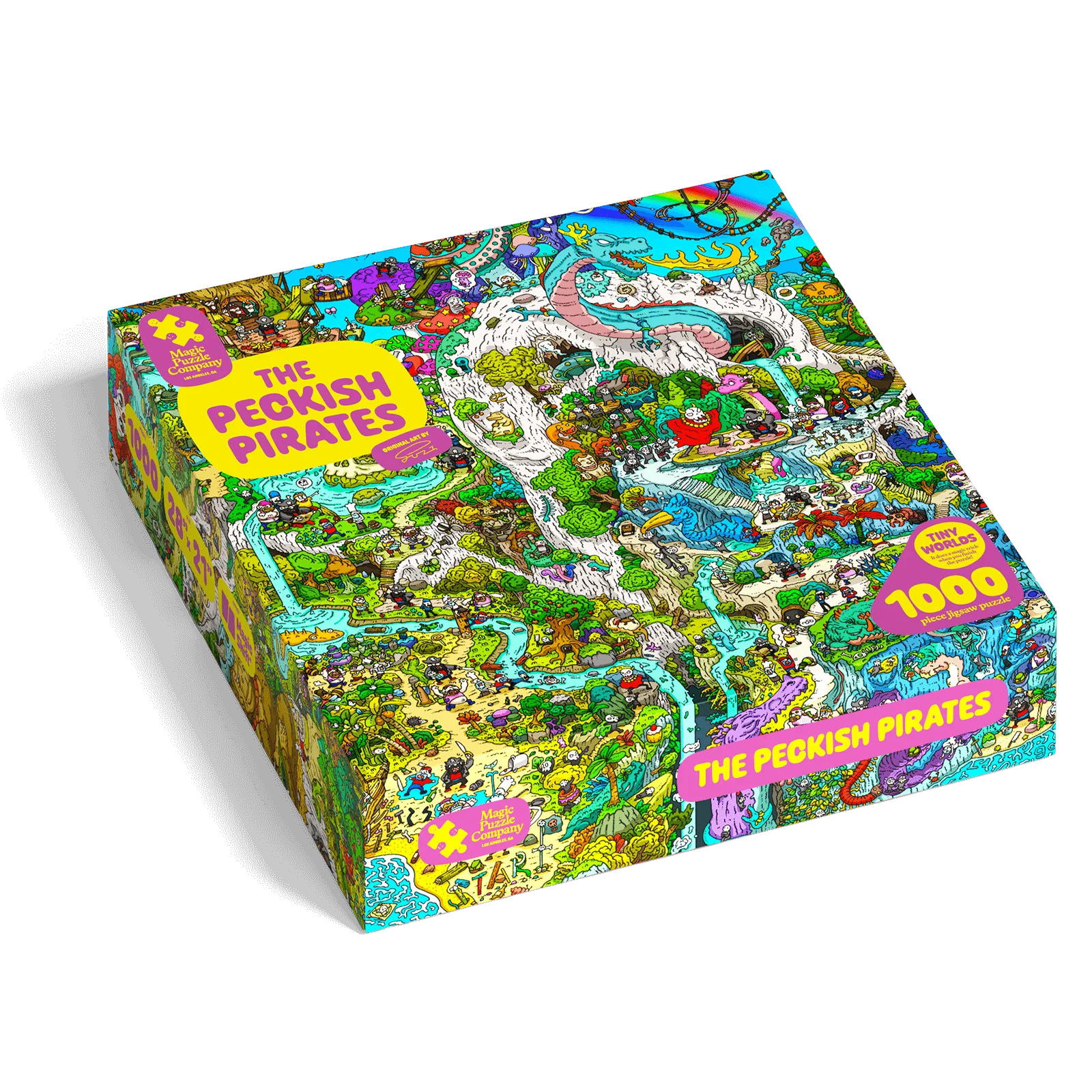
- The Peckish Pirates: The Peckish Pirates is from Series 4, illustrated by gozz, whose miniature garden-like scenes are packed with hidden narrative details. Hidden details keep experienced solvers engaged, but they can overwhelm a brand-new solver in the first session.