Quick answer
Match your dog's gear to the actual conditions, not the calendar. For most cold, dry winter runs, a warm, movement-friendly dog jacket is enough; add a full-body suit for snow, mud, or ticks, and check paws before and after every run. Build the habit in this order: assess conditions, layer your dog, protect paws, run, then dry and check.
Before you leave: match gear to the real conditions
Temperature alone is a poor guide. Wet snow, slush, road salt, and wind change what your dog needs far more than the number on the thermometer. A dry -5°C run and a wet 0°C run are completely different problems, and the second one is usually harder on your dog.
Check the surface you will actually run on: packed snow, fresh powder, icy pavement, or muddy trail. That tells you whether you need insulation, a shell, or full-body coverage. If you are unsure, start with less and add a layer on the next run rather than overdressing a dog that will be moving hard.
Layer your dog for movement, not for standing still
A running dog generates heat, so the jacket needs to allow a full stride and let excess warmth escape. Look for a design that follows the shoulders and chest without restricting the front legs, and check that the belly coverage does not drag or collect snow.
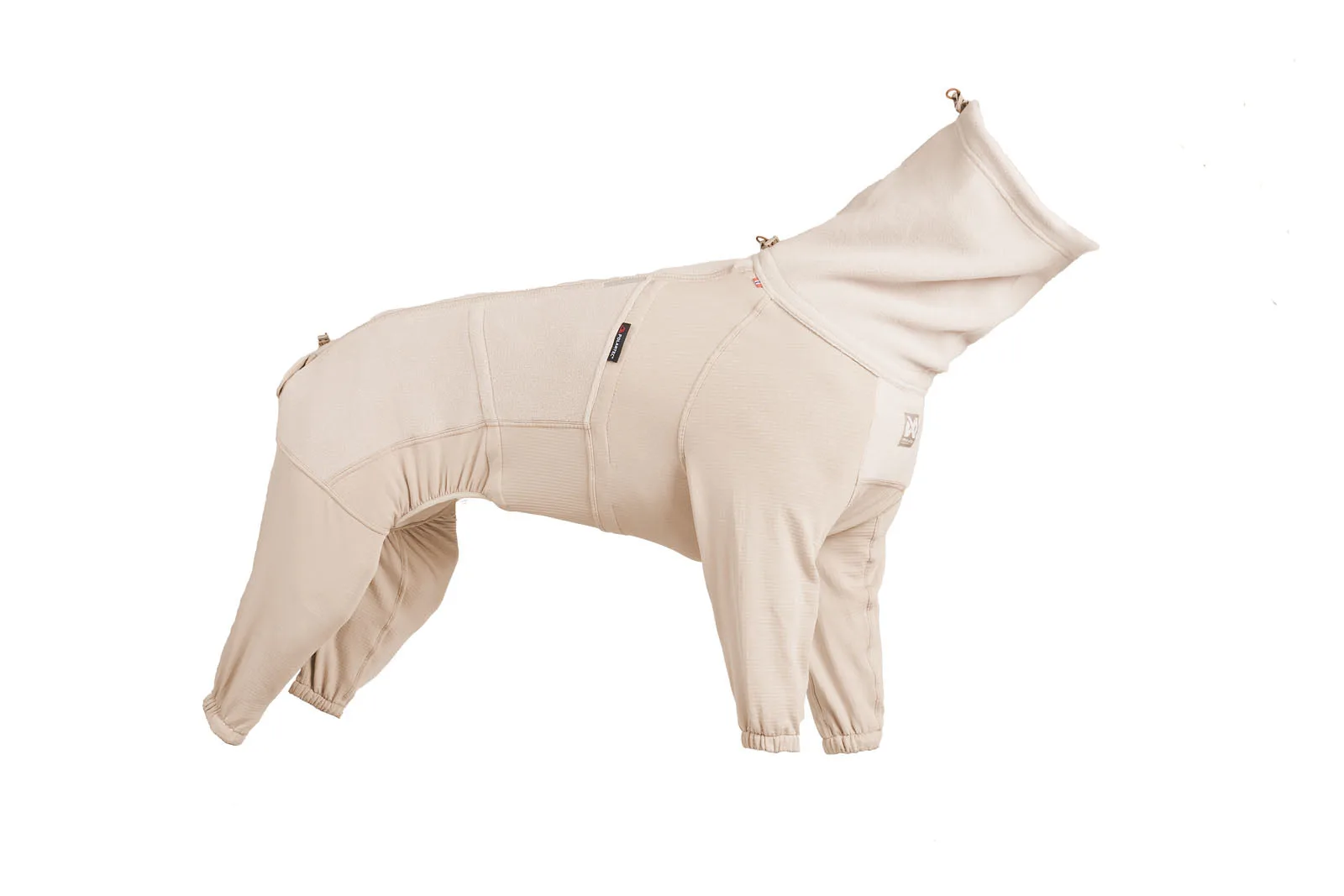
If your route mixes deep snow, mud, or tick-heavy terrain, a full-body suit can replace several separate pieces. It shields the body while still allowing natural movement, which matters more on a run than on a walk.
Protect paws and exposed skin
Snow packing between the pads is one of the most common reasons dogs stop mid-run in winter. Trim the fur between the pads if your dog grows long tufts there, and consider booties when the surface is icy, salted, or refreezing.
Check paw condition before you start. Cracked pads, ice balls, and salt irritation get worse once you are moving, and a dog that is limping is no longer getting useful exercise.
Run, then cool down and dry off properly
Slow the pace at the end instead of stopping abruptly, then get your dog out of the wind. Wet fur loses insulation value fast once the dog stops moving, so drying the chest, belly, and legs is the priority.
Do a quick post-run check: paws, armpits, and any area where snow or ice may have collected inside the jacket. If your dog was wet, dry the gear too, because frozen straps and shells are uncomfortable and can crack.
Winter run routine: step by step
- 1. Assess conditions and choose the layer: Check temperature, wind, precipitation, and surface type before you gear up. Dry cold usually needs a warm, movement-friendly dog jacket; wet snow, slush, or tick terrain may call for a full-body suit. Common mistake: dressing for the temperature alone and ignoring wet or wind, which is what actually makes a dog cold.
- 2. Fit the jacket before the run, not during it: Put the jacket on, then ask your dog to walk, trot, and turn. Check the shoulders, chest, and belly for rubbing or restriction, and confirm the straps stay put when the dog pulls. Checkpoint: if the front legs cannot reach full extension, the fit is wrong for running.
- 3. Protect paws and exposed skin: Trim pad fur if needed, apply paw protection when surfaces are icy or salted, and consider booties for refreezing snow. Check pads for cracks or ice balls before you start. Common mistake: waiting for a limp before checking paws; snow packing is easier to prevent than to remove mid-run.
- 4. Warm up gradually and run at a steady effort: Start with a few minutes of brisk walking or slow jogging so your dog's muscles and circulation are ready. Keep the pace steady rather than sprinting out of the car into cold air. Checkpoint: if your dog is tucking paws, shivering, or slowing unexpectedly, stop and reassess rather than pushing on.
- 5. Cool down, dry off, and check the gear: Slow to a walk for the last few minutes, get out of the wind, and dry the chest, belly, and legs. Inspect paws and any area where snow may have collected inside the jacket, then dry the gear. Next step: note what worked and adjust one variable on the next run instead of changing everything at once.
Gear that fits this routine
- Glacier jacket 2.0: A light and functional warm dog jacket, designed for unrestricted movement, that will also keep your dog warm when resting. Useful when you want insulation for cold runs plus warmth during rest stops, without a bulky layer that limits stride.
- Protector suit F: A full-body dog suit that protects from packing snow, mud, ticks, and more, made for year-round use with a lightweight, stretchy design that allows natural, unrestricted movement. A practical choice for snowy, muddy, or tick-heavy winter routes where a standard jacket leaves the legs and belly exposed.
- Trail isolator jacket 2.0 men's: A lightweight and packable year-round jacket suitable for all weather conditions, with a reinforced shell and multiple pockets, ideal for dog sports. Works as the human layer for winter canicross or dog-sport sessions, so you can adjust your own warmth without stopping to dig through a pack.