Quick answer
For everyday dry goods you use constantly, ceramic storage jars win: they seal, stack, and keep contents dust-free, so they suit busy cooks and small kitchens. Open shelves win for display, quick grabbing of mugs or oils, and making a tight room feel airier. The best setup often combines both: jars on shelves for the items you reach for daily, and closed cupboards for everything else.
How storage jars and open shelves differ in daily use
The real difference is not looks but what happens between uses. A jar with a lid protects its contents from dust, steam, and cooking splashes, and it keeps strong smells contained. An open shelf exposes whatever sits on it to the same kitchen air, so flour, grains, and spices can stale faster and need wiping more often. Jars also let you decant bulky bags into a smaller footprint, which matters when worktop or cupboard space is tight. Open shelves, by contrast, make everything visible at a glance and remove the door-opening step, which speeds up cooking but also means clutter is always on show. Neither is automatically tidier; the question is whether you value protection or immediacy more in your daily routine.
Where each option fits best in a small kitchen
In a small kitchen, wall space is often the only room you have. Open shelves use that vertical area without adding bulk, and because they have no doors they do not need clearance to swing open, which helps in narrow galley layouts. They also let light travel, so a compact room feels less closed in. Jars earn their place in small kitchens by consolidating half-empty packets into one neat row and by moving food off the worktop. A common mistake is treating open shelves as general storage: they work best when limited to a curated set of daily items, with the rest behind closed doors. If you cannot commit to keeping shelves styled, jars on a shelf or in a cupboard will be easier to live with.
Practical trade-offs: dust, access, and aesthetics
Open shelves demand regular dusting and careful arrangement, and they offer no hiding place for mismatched packaging. In return, you get instant access and a chance to display favourite pieces. Jars require an initial decanting step and take up a fixed amount of space, but they reduce visual noise because everything looks uniform. They also protect against pantry moths and moisture better than an open shelf can. A reasonable middle ground is to keep the items you use multiple times a day on open shelves and decant the rest into jars stored in a cupboard or on a higher shelf. That way you get speed where it matters and protection where it counts.
Combining jars and shelves without clutter
If you want both, assign roles. Use open shelves for items that are used daily and look good together: mugs, oils, a jar of coffee, a small stack of bowls. Use jars for dry goods that would otherwise sit in crumpled bags. Keep the shelf count low, and leave empty space so the eye can rest. Group by material or colour rather than by category, and choose a consistent jar shape so the shelf reads as one unit. For a cohesive look, repeat one finish across hardware and accessories. A solid brass handle with a living finish, for example, will age alongside wooden shelves and ceramic jars rather than fighting them. The goal is a system you can maintain on a busy Tuesday, not a styled photograph.
Trade-offs at a glance
- Protection vs. display: Jars with lids shield dry goods from dust and moisture; open shelves put everything on show and need more frequent cleaning. Choose jars for ingredients, shelves for items you use and want to see.
- Speed vs. tidiness: Open shelves remove a door-opening step and speed up cooking, but they leave no room to hide mismatched packaging. If you dislike daily tidying, keep most storage behind doors.
- Space efficiency vs. flexibility: Jars consolidate bulky packets into a smaller footprint; open shelves use wall space without needing door clearance and can be rearranged freely. In a small kitchen, combine both: jars for volume, shelves for access.
Products that make either approach work
- Handmade Stoneware Storage Jar, Large: A handcrafted stoneware storage jar with a delicately twisted handle on the lid, hand-thrown in ceramicist Nathalie Hammond’s Norfolk studio and glazed in cream or oatmeal tones. The lid and glaze make it a practical everyday jar that also looks intentional on an open shelf, so you get protection without hiding it in a cupboard.
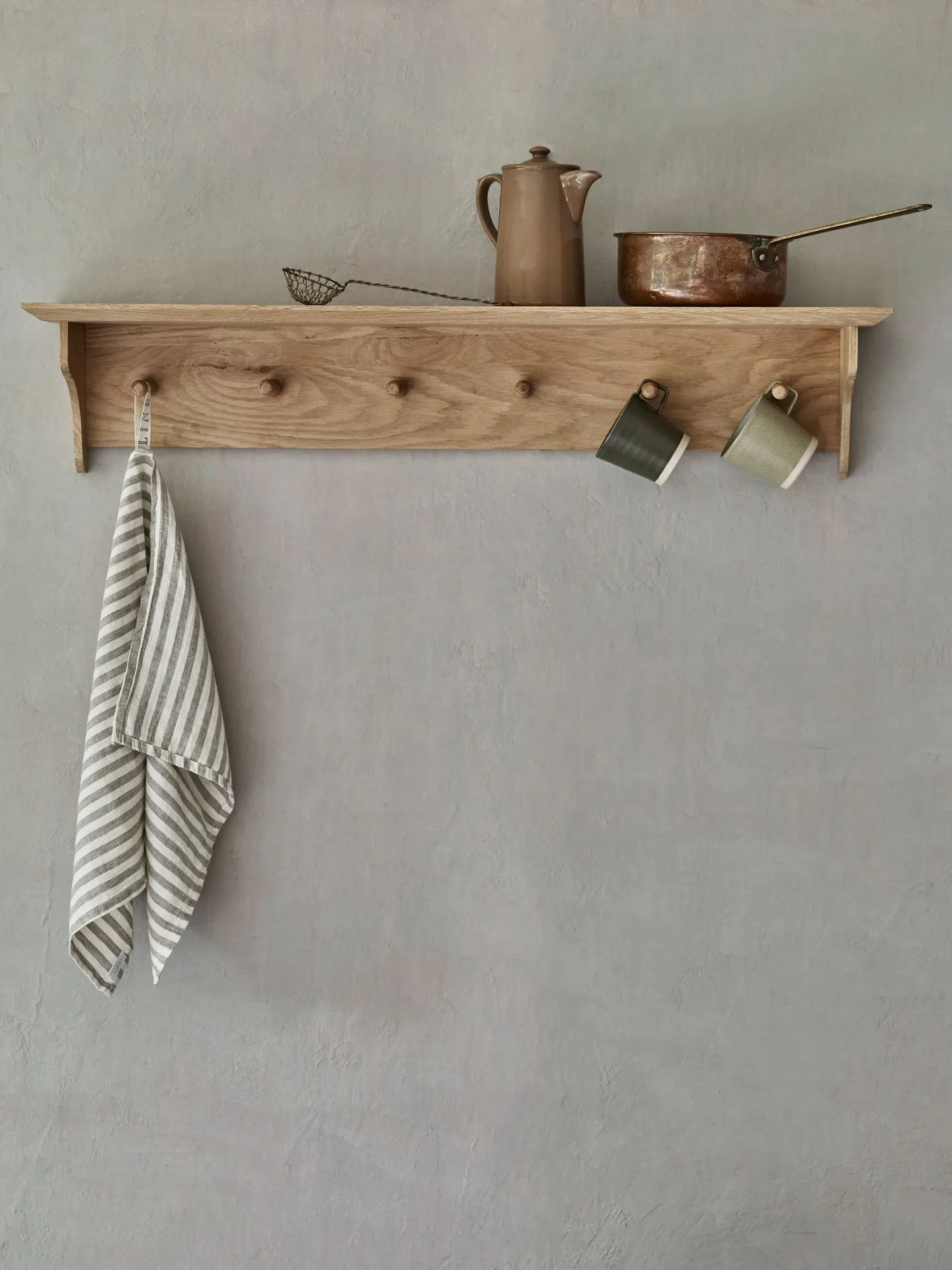
- Witham Oak Shelf: A wooden shelf with simple round hooks, handcrafted from sustainably sourced solid oak, for keeping coats, bags or towels in order with extra storage on top. This shows how open storage can combine a display shelf with hooks, which is useful in a hallway or utility area where you want both a surface and hanging space.
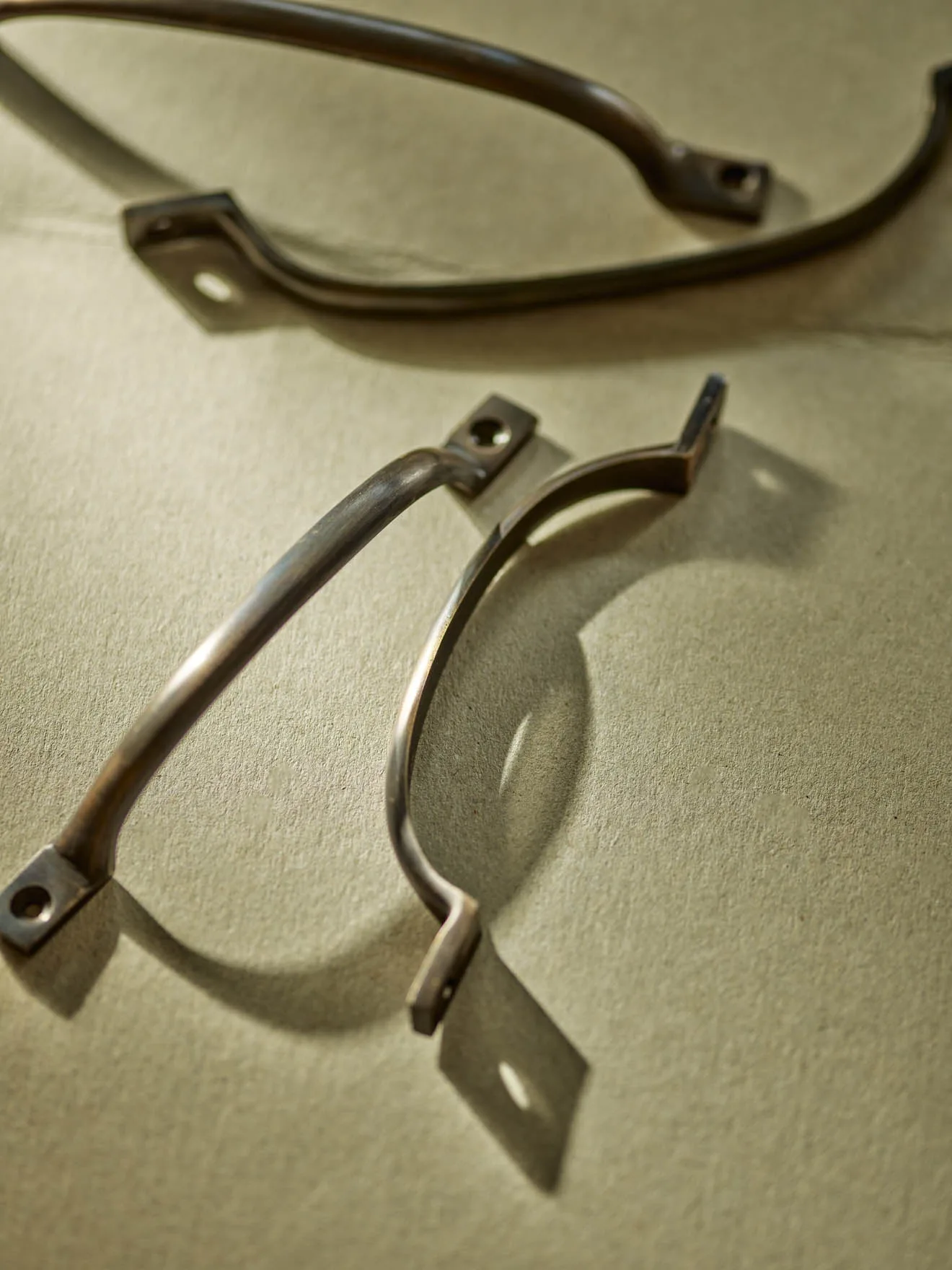
- Grove Rectangular Cup Handle, Antique Brass: A rectangular metal cup handle crafted from solid brass with concealed fixings, designed to develop a natural finish that lightens with use. If you choose closed cupboards over open shelves, hardware like this keeps the doors easy to pull and adds a warm, ageing finish that suits wooden and ceramic storage.
Which should you choose?
Best for
- Busy cooks who want dry goods protected and easy to reach
- Small kitchens where consolidating packets frees up worktop space
- Anyone who prefers a uniform, dust-free look in cupboards or on shelves
Not for
- People who want to display a rotating collection of mugs, oils, and decorative pieces
- Renters or those who change their kitchen layout often and need flexible, door-free storage
- Households that struggle to keep open surfaces tidy and would rather hide everyday clutter