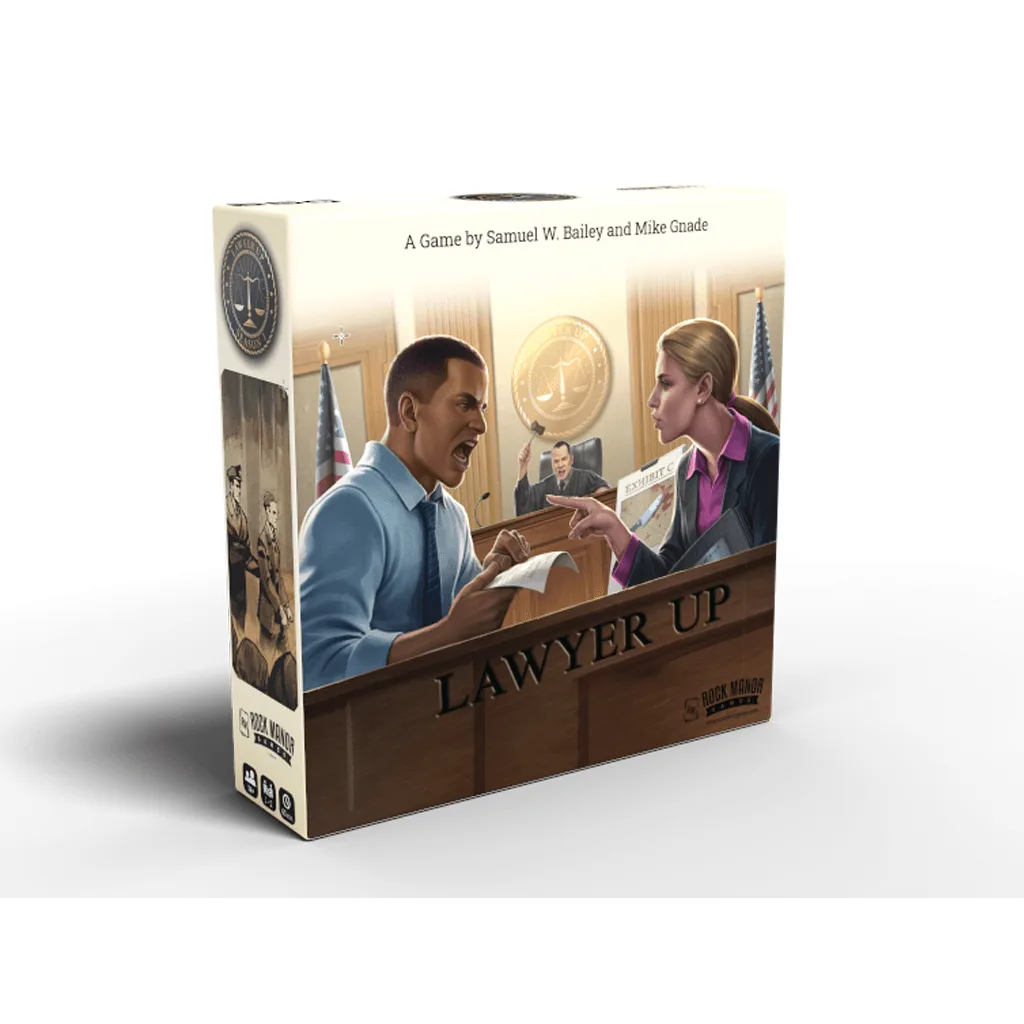
Quick answer
Most https://rockmanorgamesdz.com/products/lawyer-up-season-1-a650b3666936064541ad9e99-1730835Lawyer Up: Season 1 rules questions come down to three things: what your role lets you do, when you can play a card during a case, and how the jury track decides the verdict. If you resolve those in that order, almost every dispute at the table settles itself. The Lawyer Up: 1920s Courtroom Play Mat keeps the case, evidence, and jury areas clearly separated so you spend less time rebuilding the table and more time arguing.
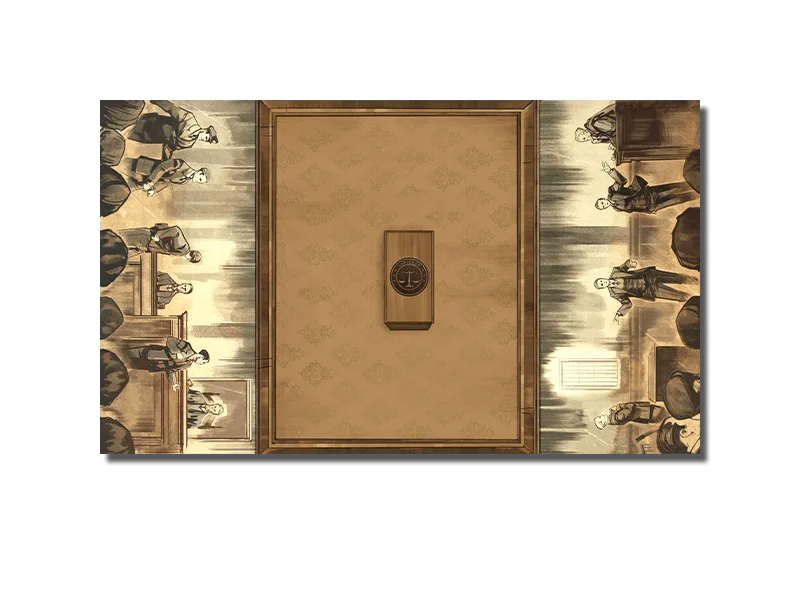
Lawyer Up: 1920s Courtroom Play Mat
Lawyer Up: Season 1 is a two-player card game of courtroom strategy: one side prosecutes, one side defends, and the jury track decides who wins. The rules are compact, but the first few games always raise the same questions — especially about role abilities, when cards can be played, and what counts as evidence.
This FAQ answers those questions directly, with no filler. Each answer stands on its own, so you can jump to the one your table is arguing about right now.
Roles: who you are and what you can do
Each player takes a role with a unique ability that bends the normal rules. Your role is not a one-time power; it is a persistent exception you can lean on every round. Read the role card aloud before the first case so both players know what the other can do — most rules arguments are really one player forgetting the other's exception.
Role abilities resolve in the order written on the card. If a role ability and a case card seem to conflict, the role ability wins unless the card explicitly says it overrides roles. When in doubt, apply the ability first, then resolve the card.
- Announce your role ability at the start of each case, not just the first one.
- If two effects trigger at once, resolve the active player's effect first.
- Keep role cards visible — hidden roles cause more disputes than bad draws.
Case flow: turn order and timing
A case runs in rounds. On your turn you take one main action, then play any number of cards you can legally pay for. The most common timing question is whether you can respond to an opponent's card — yes, if you hold a card with a reaction or objection window, and you pay its cost immediately.
The case ends when the evidence deck is exhausted or a card ends it early. Do not skip the end-of-case step: resolve all pending effects, then compare the jury track. Skipping this step is the single most common cause of a wrong verdict.
- Finish all pending effects before checking the jury track.
- You cannot take back a played card once the next player has acted.
- If a card says 'immediately,' resolve it before anything else.
Evidence, objections, and jury control
Evidence cards build your case; objection cards disrupt your opponent's. You may only play evidence on your turn unless a card says otherwise, but objections can be played whenever their trigger condition is met. Pay the cost, state the trigger, and resolve — no negotiation.
The jury track is not a score you accumulate passively. Cards that move the jury are often stronger than cards that add evidence, because the verdict is decided by jury position, not by who played more cards. Track jury movement every round so you are not surprised at the end.
- Objections need a stated trigger — 'I object' alone is not a legal play.
- Jury movement resolves after evidence effects, not before.
- If the jury track is tied at the end of a case, follow the tiebreaker printed on the case card.
Common disputes and how to settle them
The three disputes we see most: whether a reaction can be played after a card resolves (no — reactions must be played in response, before resolution), whether a role ability can be used more than once per case (yes, unless the card says once per case), and whether discarded cards can be recovered (only if a card explicitly returns them).
When a genuine ambiguity remains, agree on an interpretation before the next case starts and write it down. Consistency matters more than being right, especially in a two-player game where the same situation will come up again.
- Reactions must be played before the triggering card resolves.
- Role abilities are repeatable unless the card says otherwise.
- House interpretations should be written down and applied to both players.
Rules questions to settle before your next case
Can I respond to a card after it resolves?
No. Reaction and objection cards must be played in response, before the triggering card resolves. Once it resolves, the window is closed. State your reaction before the card takes effect.
How often can I use my role ability?
Every time its condition is met, unless the role card says once per case or once per game. Role abilities are persistent exceptions, not one-shot powers. Re-read your role card at the start of each case.
What decides the verdict?
The jury track, not the number of evidence cards played. Resolve all pending effects, then compare jury position; use the printed tiebreaker if tied. Track jury movement every round, not just at the end.
Table gear that supports cleaner play
- Lawyer Up: 1920s Courtroom Play Mat: An accessory for Lawyer Up from Rock Manor Games, themed around a 1920s courtroom. A dedicated mat keeps the case, evidence, and jury areas in fixed positions, which cuts down on the accidental shuffling of cards that causes most timing disputes.
- The Few and Cursed Art Book: A 144-page hardcover collecting over 150 artworks produced exclusively for the game, with process commentary from artists including Luke Ross, Will Conrad, and Harvey Tolibao. Useful if your group enjoys the visual side of tabletop games and wants a reference for the art style without buying another game.
Most Lawyer Up: Season 1 arguments are timing arguments. Announce your role, resolve effects in order, and check the jury track last — do that and your cases will run clean.