Start with what you can remove, not what you can add
Early rides rarely stay cold. A cold start often turns into a mild middle and a chilly finish, so the most useful accessories are the ones you can take off and stow without stopping for long. That makes removable warmers for cycling a practical first purchase, especially if you already own shorts you like.
This guide looks at two pieces that solve different parts of that problem: Leg Warmers for your legs and a Snood for your neck and head. It focuses on what the supplied Le Col catalog confirms, where the evidence stops, and how to decide between leg warmers and tights for your own riding.
What the Leg Warmers are built to do
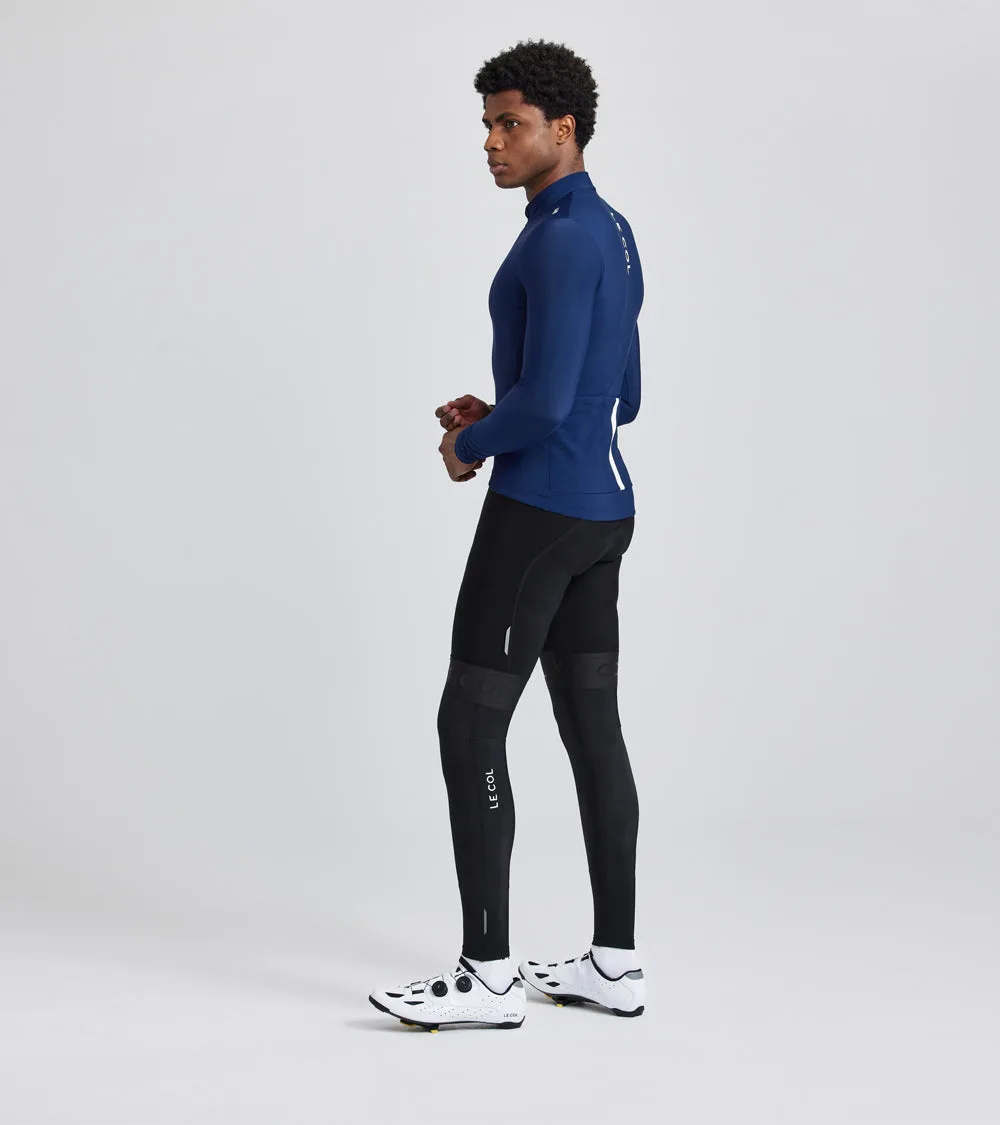
The Le Col Leg Warmers are described as an essential companion on chilly mornings or in between seasons. The catalog credits a luxurious Italian Roubaix fabric with thermal insulation and a soft next-to-skin feel, and adds a tapered construction with premium silicone grippers for a precise, secure fit. Reflective tabs are included for visibility.
Those details point to a piece designed to stay put while you pedal and to come off when the day warms up. The tapered shape and silicone grippers matter most if you have had warmers slide down or bunch behind the knee; the reflective tabs matter if your early ride starts before good light.
Catalog evidence: Leg Warmers
-
Leg Warmers: Crafted from a luxurious Italian Roubaix fabric to provide thermal insulation with an exceptionally soft next-to-skin feel. This is the core reason to choose warmers for a cold start: warmth against the skin without a bulky feel.
Leg Warmers
-
Leg Warmers: A tapered construction and premium silicone grippers ensure a precise and secure fit. Fit security is the main functional risk with removable warmers; this is the catalog's claim for keeping them in place.
-
Leg Warmers: Finished with reflective tabs for enhanced visibility. Useful if your early morning ride happens in low light.
-
Leg Warmers: Available in S, L and XL in Black. Size availability shapes the buying decision; the catalog lists these three sizes and one colour.
Leg warmers vs tights: a practical trade-off
The catalog does not compare these products directly, so treat this as a decision framework rather than a product claim. The right choice depends on how much your ride temperature changes and how much you value being able to remove a layer.
- Removable warmers: Best when the start is cold but the middle or end of the ride is milder. You can take them off and stow them, and you can wear them over shorts you already own. The Le Col Leg Warmers are the catalog example here.
- Tights: Better when the cold is consistent and you do not expect to remove a layer. The supplied evidence for this article does not include a tights product record, so check the Le Col tights range separately for fabric and fit details.
- What the catalog does not settle: The supplied information does not give a temperature rating, warmth comparison or recommended temperature range for the Leg Warmers. Use your own experience of similar Roubaix fabrics and the ride conditions you actually face.
Where the Snood fits in a cold-start kit
The Le Col Cycling Snood is described as an evolution of the classic neck warmer and as part of the base layer system. The catalog says it keeps body warmth locked in while not letting the cold in, and that it can extend warmth up over the head in various ways as temperature and intensity dictate. It is shaped in line with your body, with seams to the rear, raw cut edges to reduce irritation, and a soft brushed inner fabric.
In practice, that makes the snood the piece you adjust most often. Pull it up over your chin at the start, lower it as you warm up, and use the over-the-head options when the wind picks up or you stop moving. It is one size, available in Black, Grey and Navy, so the choice is colour rather than fit.
Catalog evidence: Snood
-
Snood: As part of the base layer system, the snood keeps body warmth locked in while not letting the cold in, and extends warmth up over the head in various ways as temperature and intensity dictate. This describes the adjustable coverage that makes a snood useful across a cold start and a milder middle.
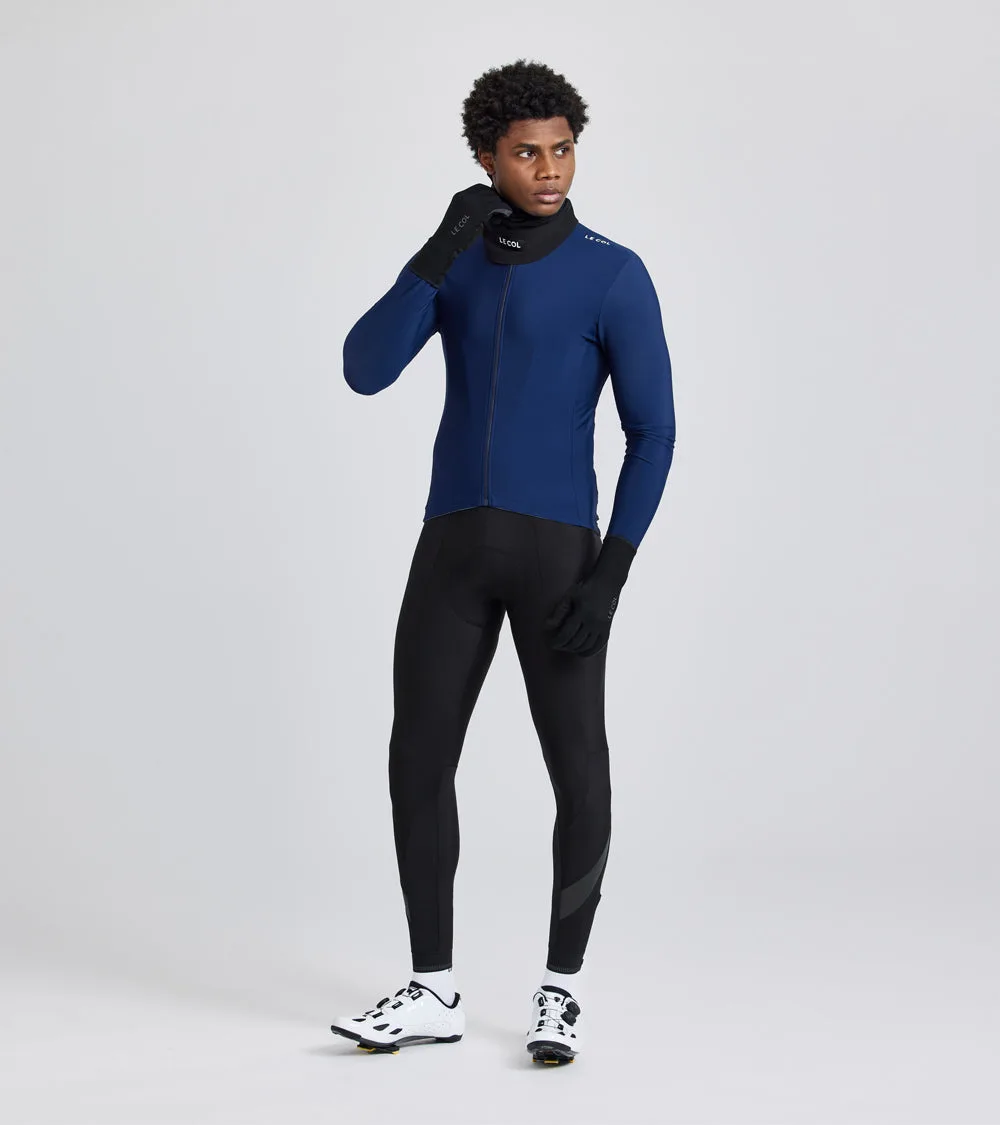
Snood
-
Snood: Shaped in line with your body, with seams to the rear, raw cut edges to remove chances of irritation and a soft brushed inner fabric. Comfort against the neck and face is the main reason to choose one snood over another.
-
Snood: Available in One Size in Black, Grey and Navy. One size simplifies the purchase, but it also means fit is not adjustable by size; colour is the only variant choice.
How to choose between the two for your early rides
Use these questions to decide which piece to buy first, or whether both belong in your kit.
- Does your ride warm up quickly?: If yes, removable warmers for cycling give you an exit strategy that tights do not. The Leg Warmers are the catalog option built for that job.
- Is your cold concentrated at the start?: A snood handles the first part of the ride well because you can lower it or raise it as conditions change. The catalog describes exactly that kind of adjustable coverage.
- Do you already own shorts you like?: Warmers let you keep using them. If you do not, compare the cost of warmers plus shorts against a pair of tights before deciding.
- How much low-light riding do you do?: The Leg Warmers include reflective tabs; the supplied Snood information does not mention reflectivity. If visibility is a priority, that difference matters.
- What size and colour are available?: Leg Warmers come in S, L and XL in Black. The Snood is one size in Black, Grey or Navy. Check the size guide on each product page before ordering.
What the supplied evidence does not tell you
The catalog does not provide care instructions, temperature ratings, waterproofing claims or a direct comparison between these accessories and tights. It also does not confirm how the Leg Warmers perform in rain or how the Snood fits different head sizes. Those are genuine gaps in the supplied information, not confirmed limitations of the products.
For care, follow the instructions on the product label or the Le Col product page when it arrives. For fit, use the size guide rather than guessing, especially with the one-size Snood.