Quick answer
Buy the step-up ring whose first number matches your lens filter thread and whose second number matches your filter thread. If you own several lenses, standardize on the largest filter you plan to use and buy one ring per smaller lens instead of duplicate filters. For phone shooting, skip rings and use a clamp-style holder sized for the filter you already own.
How to read the two numbers on a step-up ring
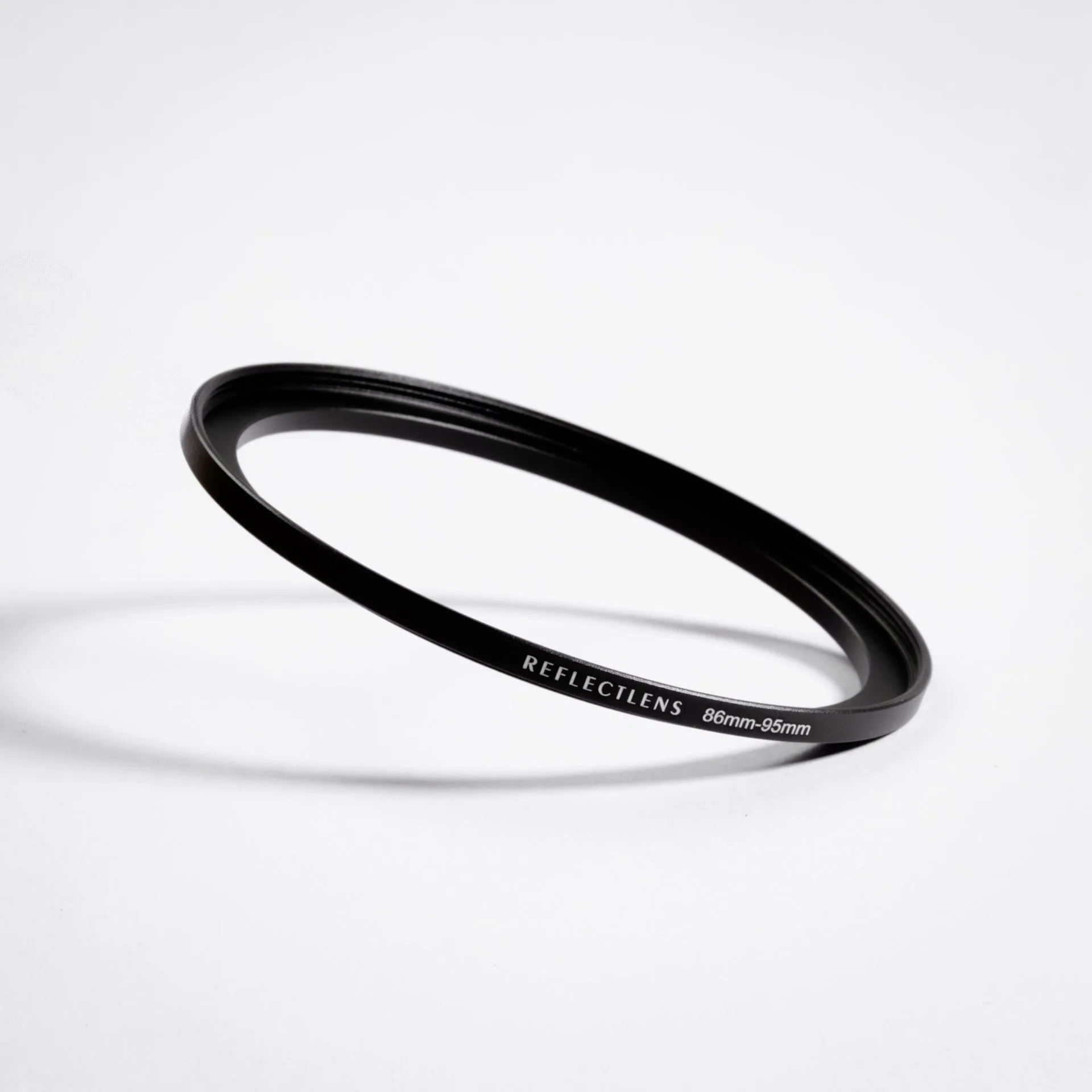
A step-up ring is marked with two values. The first is the lens thread size — the diameter printed on your lens barrel or cap, usually next to a ⌀ symbol. The second is the filter thread size the ring accepts. A 52–77 mm ring screws onto a 52 mm lens and holds a 77 mm filter. The ring only steps up; it never steps down, because a larger filter cannot be squeezed onto a smaller mount without an additional adapter.
Measure before you buy. Lens caps, body caps, and old filter boxes often carry the number, but a cheap caliper across the inner threads settles it in seconds. If the number is worn off, check the lens manual or the manufacturer's spec page rather than guessing.
Why one large filter beats many small ones
Effect filters are the expensive part of a kit, and buying the same effect in four thread sizes is the fastest way to overspend. A single 77 mm or 82 mm filter plus a set of step-up rings covers every smaller lens you own. The trade-off is bulk: a large filter on a small lens adds front weight and can block a built-in hood, so you may need to remove the hood or shoot without it.
Rings also stack. Two rings chained together (for example 43–52 mm then 52–77 mm) work in a pinch, but each joint adds a hair of vignetting risk and another surface to keep clean. Where possible, buy the single ring that spans the full gap.
Sizing rules for effect filters and wide lenses
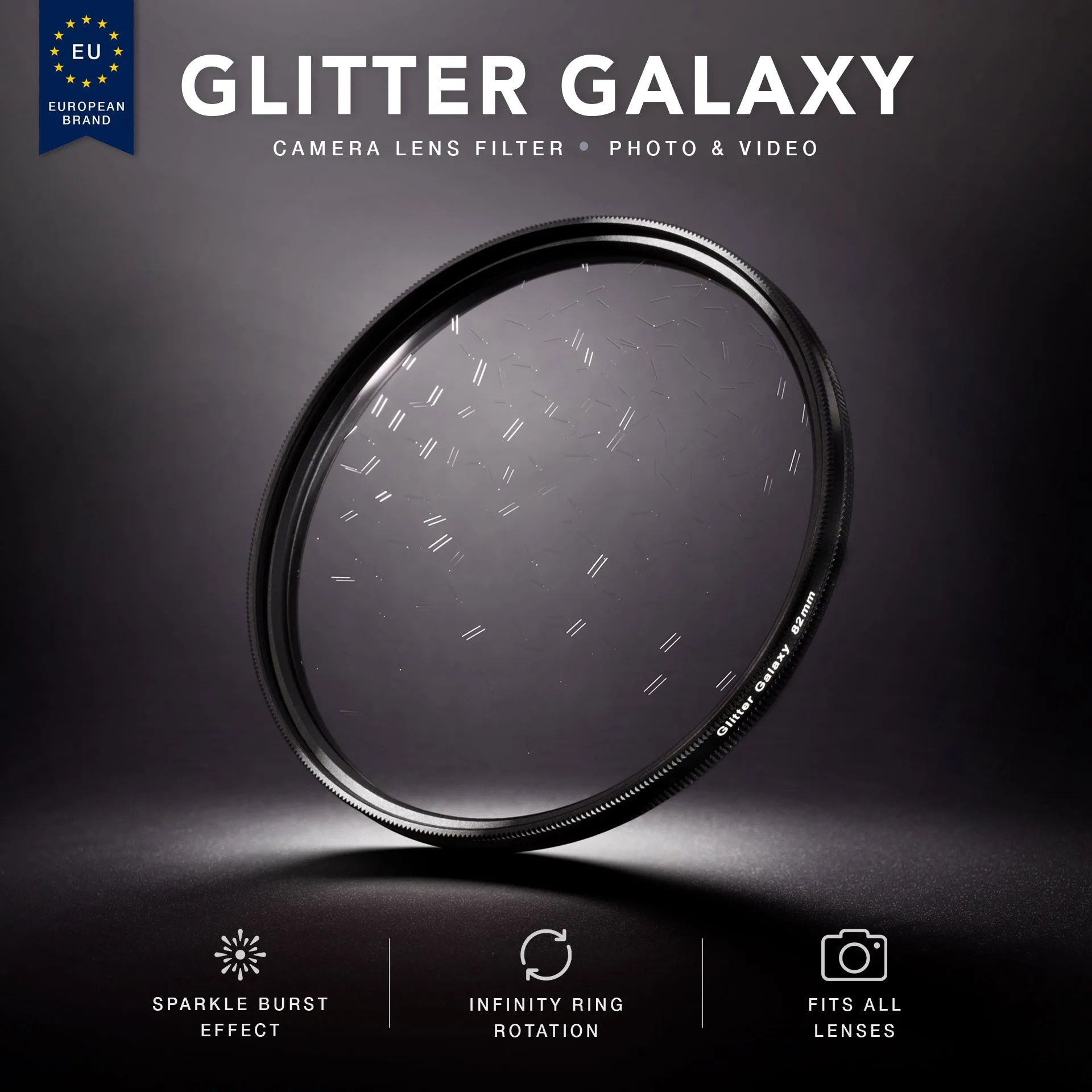
Effect filters such as star, glitter, or prism styles behave differently from plain UV or ND glass because their surface is the effect. A ring that is too thin, or a filter that is too small for the front element, can clip the effect at the corners. As a rule, the filter diameter should be at least as large as the lens's front element, and wider lenses benefit from stepping up one size beyond the bare minimum.
Ultra-wide lenses are the common failure case. If you see dark corners or a hard circular edge in the frame, the ring or filter is intruding. Step up to the next size, or accept that the widest lens in your bag needs its own dedicated filter.
Phone and mixed-kit setups
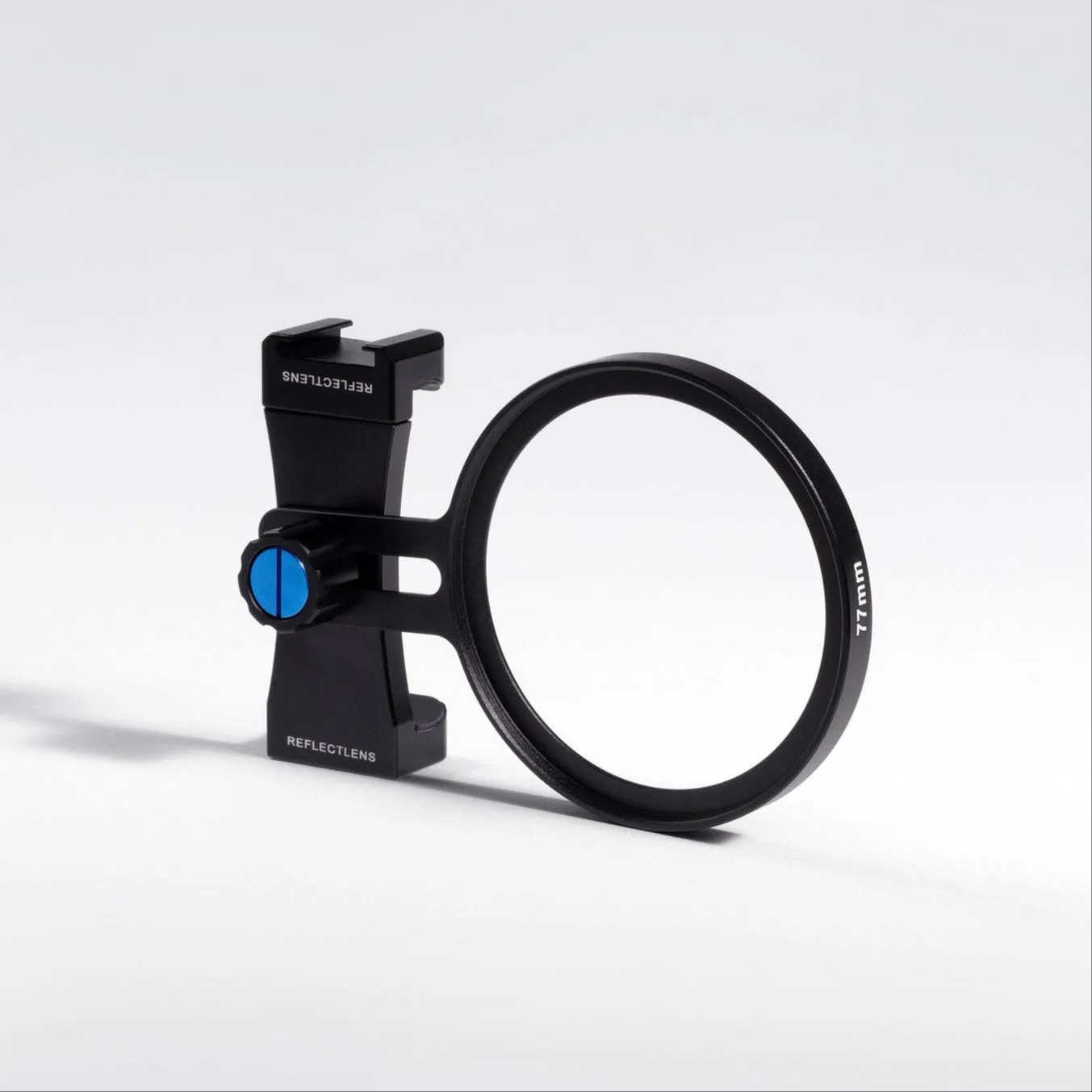
Phone shooters do not need a thread-matched ring at all. A clamp-style holder grips the phone and positions a filter over the built-in lens, which is why the RFL Phone adapter is specified for 67 mm and 77 mm filters rather than a lens thread. That means the same 77 mm effect filter you use on your camera can double on your phone, provided you own the holder.
If you shoot both camera and phone, the practical rule is: buy filters in 77 mm, buy step-up rings for your camera lenses, and buy one phone holder. That single decision removes most compatibility guesswork.
Decision rules for choosing a ring
- Match the first number to your lens: Read the thread size off the lens barrel, cap, or manual. The ring's first value must equal it exactly — there is no tolerance for a close guess. Wrong first number means the ring will not screw on at all.
- Match the second number to your filter: The ring's second value must equal the filter thread you intend to use. If you own 77 mm filters, every ring you buy should end in 77. Standardize on one filter size and buy rings, not filters.
- Step up, never down: Rings only adapt a smaller lens to a larger filter. Going the other direction requires a different adapter and risks vignetting. If you need to go smaller, buy a smaller filter instead.
- Check the widest lens first: Test the ring and filter on your widest focal length before committing. Corner shading shows up there first and rarely improves at longer focal lengths. If corners darken, step up one more size.
- Count your lenses before ordering: List every lens thread size you own, then buy one ring per lens that differs from your chosen filter size. Two or three rings usually cost less than a second filter.
Products that solve common fit problems
- Lens-Filter Adapter Rings: RFL Step-Up Rings mount larger filters on lenses with smaller thread sizes, from 43 mm up to 95 mm, and each ring is marked with the lens thread size first and the filter size second. One ring per lens lets you reuse a single high-quality filter across your whole kit instead of buying duplicates in every size.
- Glitter Galaxy: GLITTER GALAXY is a star-style effect filter made of neutral, colorless micro-strips that scatter highlights into shimmering flares without tinting the image. Because it does not tint, it is a good candidate for the one-large-filter strategy — a single 77 mm copy can serve multiple lenses through step-up rings.
- RFL Phone adapter: The RFL Phone Filter Holder mounts 67 mm and 77 mm REFLECTLENS® filters onto a smartphone using an adjustable clamp. If your filters are already 67 mm or 77 mm, this holder extends them to phone shooting without any thread adapter.
Who this approach fits
Best for
- Photographers with several lenses in different thread sizes who want one set of effect filters
- Creators who shoot both camera and phone and want to share 67 mm or 77 mm filters
- Buyers who already own a large filter and need to mount it on a smaller lens
Not for
- Shooters who only own one lens and one filter — a direct-mount filter is simpler
- Users who need a step-down adapter, which step-up rings cannot do
- Ultra-wide shooters whose lens already vignettes with any front filter