Quick answer
Lloyd Loom is a specific woven technique using twisted paper or fibre over a rigid frame, while rattan is the plant material and wicker is the general name for any woven furniture. For a garden or garden room, a Lloyd Loom-style piece with a sustainable rattan frame, like the Ledbury Lloyd Loom Sofa or Side Table, gives you the classic woven look with a handcrafted feel. If you want the same aesthetic without the weave, choose a stoneware or linen accent instead. The trade-off is that woven furniture needs occasional cleaning and protection from prolonged damp, but it is lighter and more forgiving than solid wood or metal.
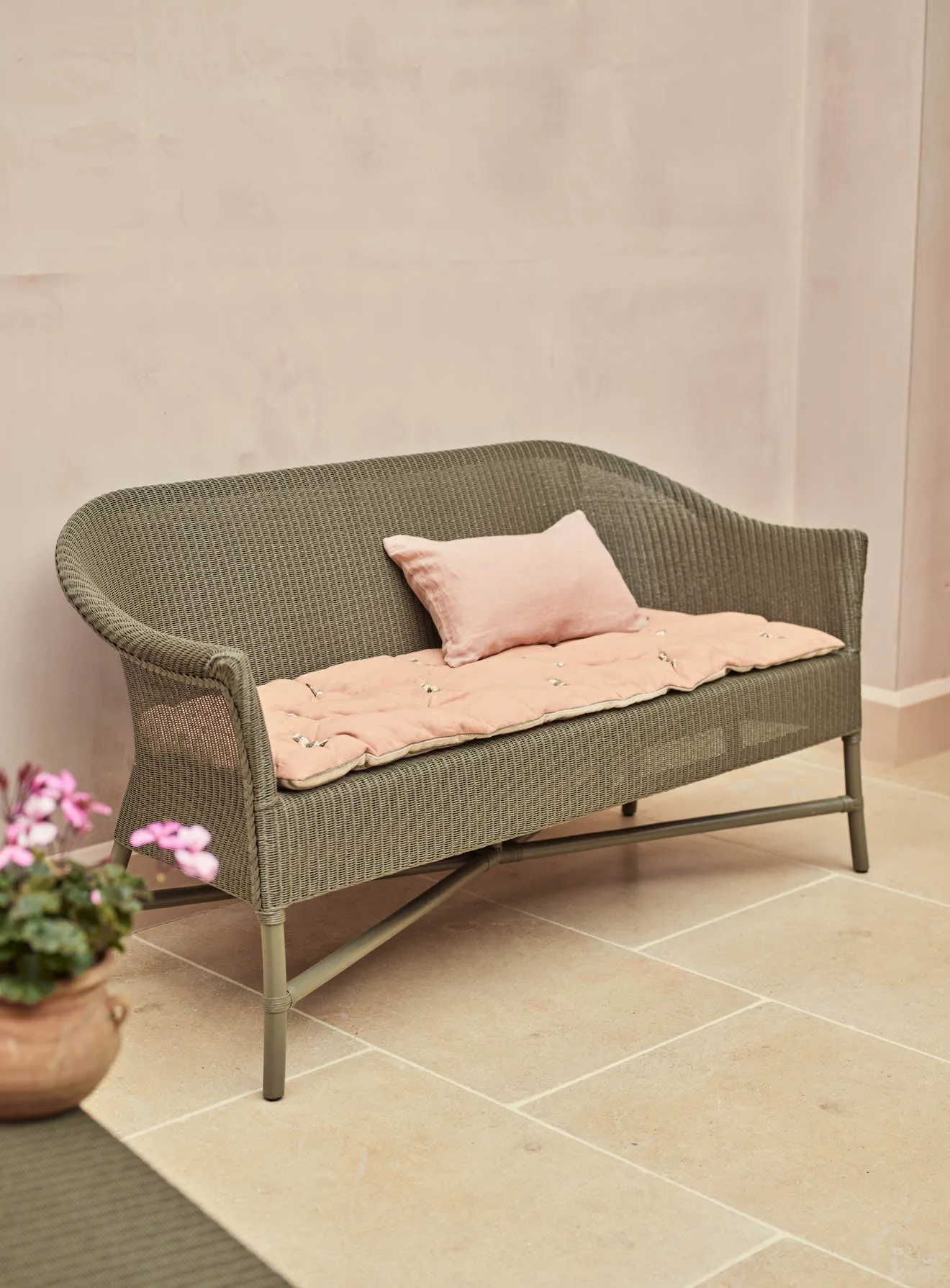
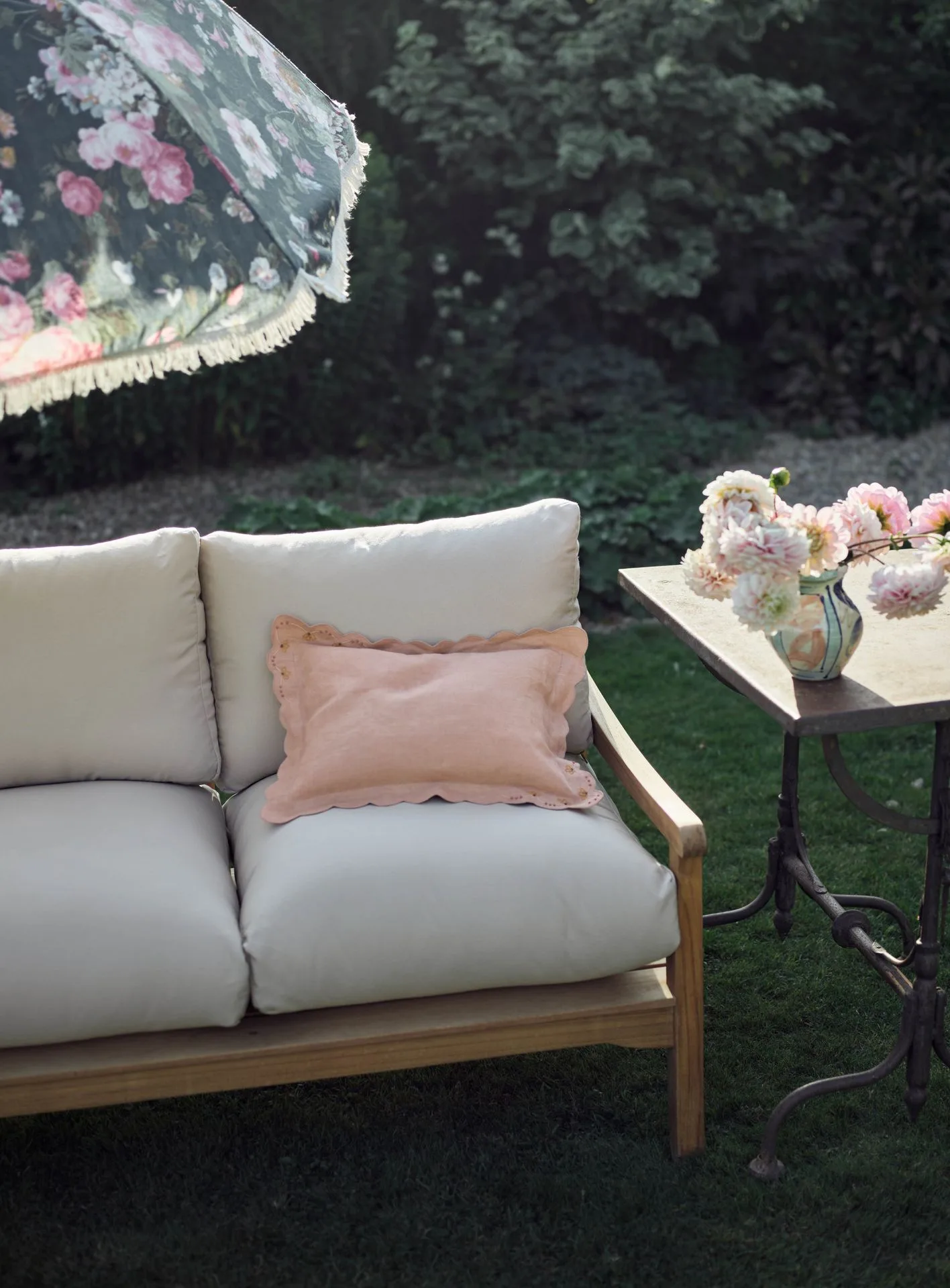
Ledbury Lloyd Loom Sofa
What each term actually means
Lloyd Loom is a method, not a material. It involves wrapping strong paper or fibre around wire and weaving it into a panel, then fixing that panel to a frame. Rattan is a climbing palm harvested from tropical forests; it can be woven into wicker, but it can also be used as solid poles or frames. Wicker is the broadest term: any woven furniture made from rattan, willow, bamboo or synthetic strands. So a piece can be rattan and wicker at the same time, but Lloyd Loom is a distinct construction style.
How they weather outdoors
Natural rattan and Lloyd Loom-style weaving are not fully waterproof. They handle occasional damp and humidity, but prolonged rain or standing water can soften the weave and encourage mould. That is why they are best for covered porches, garden rooms or spaces where you can bring cushions inside. Synthetic wicker (often called all-weather rattan) is more rain-resistant, but it can fade or become brittle over years of direct sun. A handcrafted rattan frame with a painted finish, like the Ledbury pieces, needs less fuss than untreated natural rattan but still benefits from a dry spot in winter.
Comfort, weight and maintenance
Woven furniture is generally lighter than teak or metal, so you can move a side table or sofa to follow the shade. The trade-off is that lightweight pieces can shift in strong wind unless you add weight or store them. Maintenance is simple: dust with a soft brush, wipe with a barely damp cloth, and avoid harsh chemicals. Loose cushions should be brought in overnight or during rain. If you want a low-maintenance accent that never needs covering, a handmade stoneware piece like the Handmade Stoneware Berry Colander is a better fit for a garden table than another woven item.
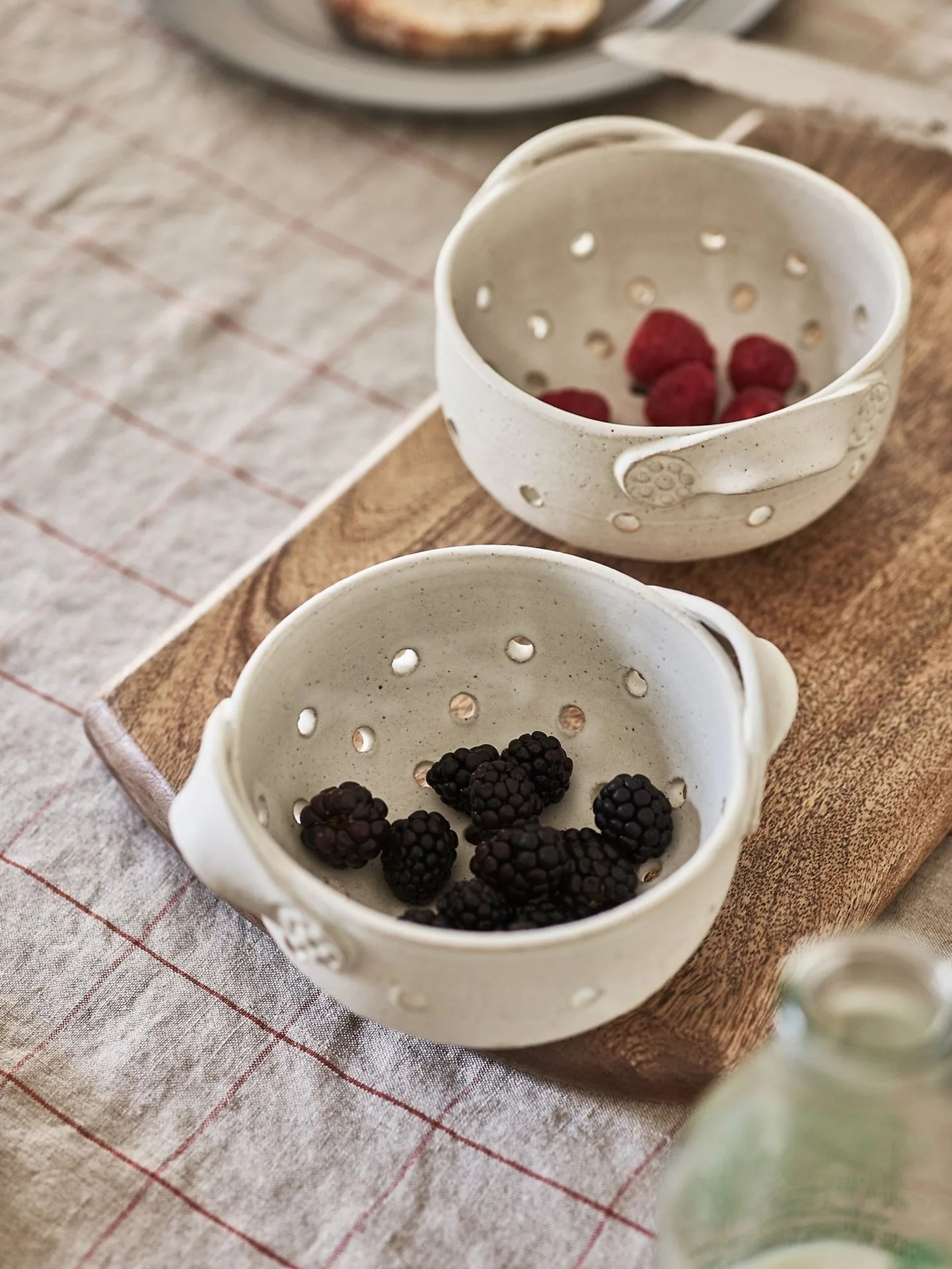
Handmade Stoneware Berry Colander
Trade-offs at a glance
- Lloyd Loom-style vs natural rattan: Lloyd Loom-style pieces use a woven panel over a frame, often with a painted finish; natural rattan is the raw material, sometimes left unpainted. Both need shelter from heavy rain. Choose Lloyd Loom-style for a uniform, painted look; choose natural rattan if you prefer a more organic, untreated finish.
- Wicker vs synthetic wicker: Traditional wicker is woven from plant fibres and can dry out or mould if left wet. Synthetic wicker is man-made and more water-resistant but may fade in strong sun. For a covered garden room, traditional wicker is fine. For an exposed patio, synthetic wicker is the lower-maintenance choice.
- Woven furniture vs solid materials: Woven pieces are lighter and often more affordable than teak or metal, but they are not as structurally rigid and need more careful storage. If you rearrange your garden often, woven wins. If you want to leave seating out year-round, consider teak or metal instead.
Products that illustrate the differences
- Ledbury Lloyd Loom Side Table: A Lloyd Loom-style side table with a frame handcrafted from sustainable rattan, finished in soft moss green, with nylon glides to protect floors. Shows how a Lloyd Loom-style piece combines a woven look with a rattan frame, and the glides mean you can use it indoors or on a patio without scratching.
- Ledbury Lloyd Loom Sofa: A Lloyd Loom-style sofa with a handcrafted sustainable rattan frame in moss green; it may display subtle marks or variations in the finish as part of its character. The gently imperfect finish is a trade-off: you get the same comfort and timeless charm at a lower price, but the appearance will not be pristine.
- Adeline Linen Cushion, Straw Stripe: A frilled stripe cushion in 100% linen with gingham piping and an ethically sourced feather inner, in warm yellow tones. Linen is breathable and soft, but it is not weatherproof, so this cushion belongs on a covered porch or brought inside after use.
Which should you choose?
Best for
- Covered porches, garden rooms or conservatories where furniture stays dry
- Anyone who wants a lightweight side table or sofa they can move easily
- Shoppers who value handcrafted details and are happy to bring cushions in overnight
Not for
- Fully exposed patios with no shelter, where synthetic wicker or metal is more practical
- Households that want zero maintenance and will leave furniture out in all weather
- Spaces where a pristine, uniform finish is essential, unless you choose a non-imperfect piece