Start with your lens's filter thread, not the camera
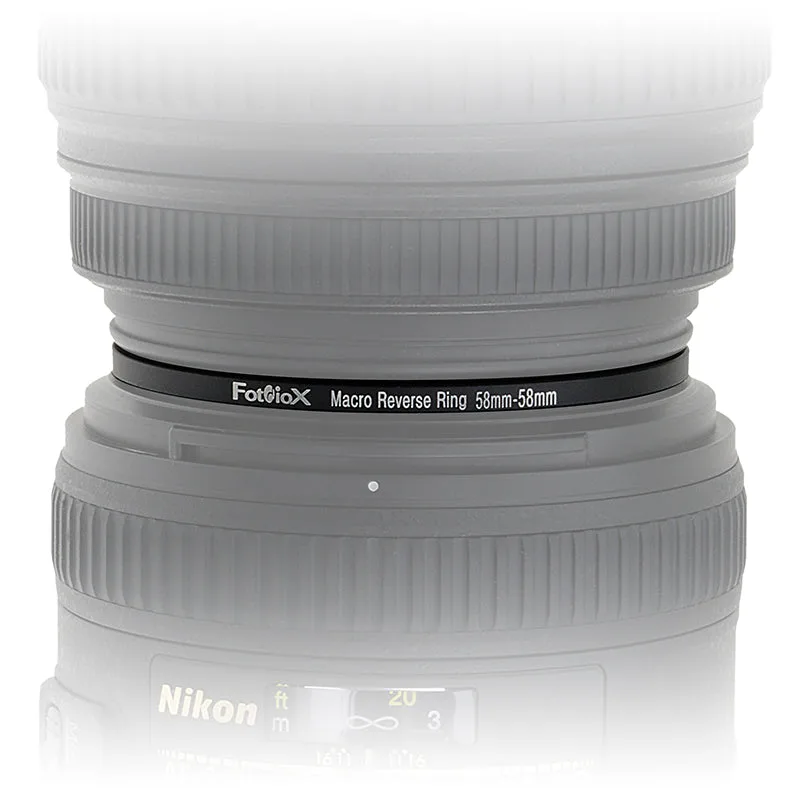
The Fotodiox Macro Reverse Ring for Canon RF mounts to any Canon RF mirrorless body on the camera side, but the lens side is a filter thread. That means the first decision is not which camera you own—it is which lens you plan to reverse. Check the filter thread diameter printed on your lens barrel or front cap. The ring is available in 49mm, 52mm, 55mm, 58mm, 62mm, 67mm, 72mm, and 77mm versions.
If your lens thread does not match one of those sizes exactly, the supplied information notes that step-up or step-down rings can expand compatibility. However, those rings are not included, and the adapter's thread pitch is 0.75. Confirm your lens thread pitch matches before assuming a step ring will seat correctly.
What the reverse ring actually is
-
Macro Reverse Ring for Canon RF - Camera Mount to Filter Thread Adapter for Canon RF Mount Mirrorless Camera Mounts: All-metal hardened anodized aluminum design with no optical insert; weight is 0.5–0.8 oz. No glass means your lens keeps its original optical quality, and the low weight keeps the reversed lens from stressing the mount.
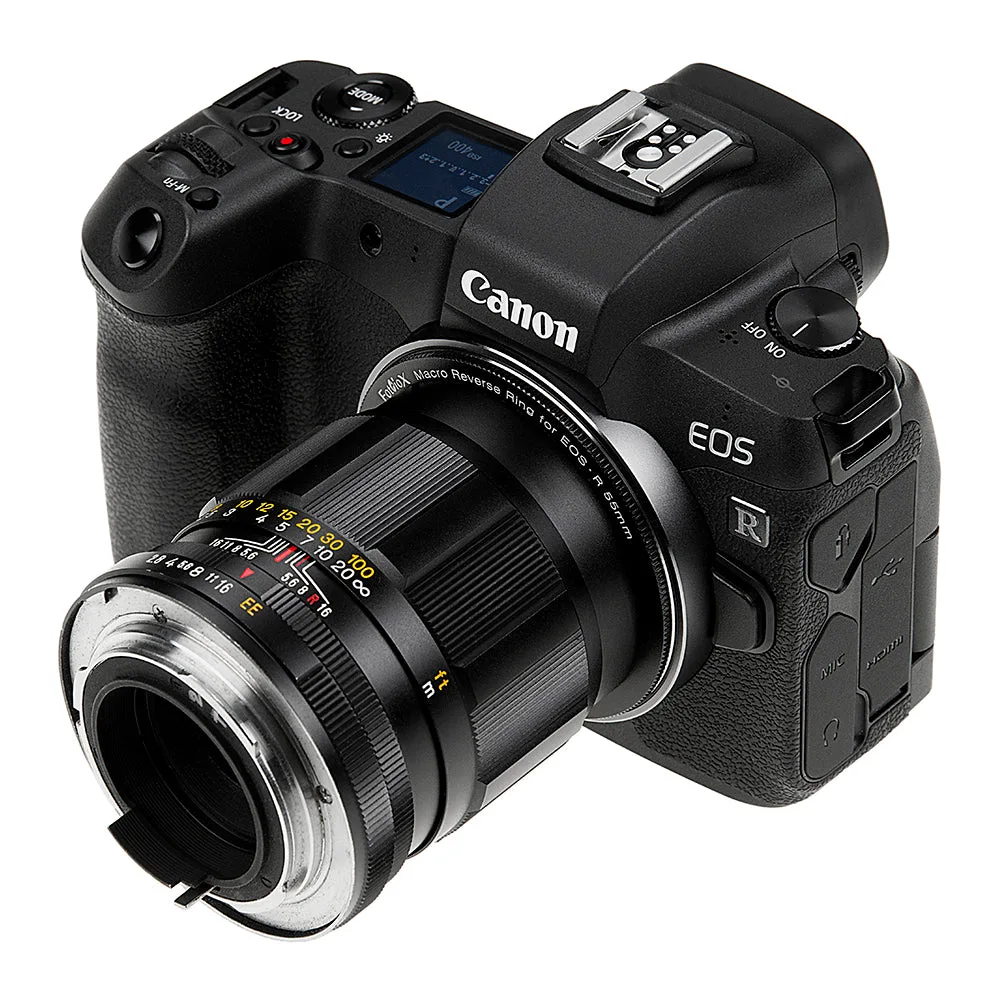
Macro Reverse Ring for Canon RF - Camera Mount to Filter Thread Adapter for Canon RF Mount Mirrorless Camera Mounts
-
Macro Reverse Ring for Canon RF - Camera Mount to Filter Thread Adapter for Canon RF Mount Mirrorless Camera Mounts: Works with all Canon RF mount camera bodies and any lens with a filter thread, not just Canon RF lenses. You can reverse legacy glass or other brands' lenses onto your RF body, which broadens your macro options beyond native RF lenses.
Which lenses make sense to reverse
Not every lens is a good candidate. The adapter has no electrical contacts, so autofocus, AE metering, and image stabilization are disrupted. You will focus manually and set exposure manually or use aperture priority mode. Lenses that rely on electronic communication for basic operation are poor fits.
Focus-by-wire lenses—such as Canon STM or Nikon AF-P designs—need power to engage their manual focus rings. Since this adapter does not power the lens, those lenses will not be able to focus when reversed. Similarly, if your lens has no manual aperture control ring, the aperture will revert to its default position, which may be wide open or stopped down depending on the lens. A lens with a physical aperture ring gives you more control.
Practical lens checks before you buy
- Filter thread diameter: Must match one of the eight available sizes (49–77mm) or be adapted with step rings you supply.
- Manual aperture control: A lens with an aperture ring lets you stop down; without one, the aperture stays at its default position.
- Focus mechanism: Avoid focus-by-wire lenses, which cannot focus without power. Choose a lens with a mechanical manual focus ring.
- Focal length: The supplied information notes that you will need to experiment with various lens lengths to find a pleasing magnification and focusing range.
What to expect when you reverse a lens
Reversing a lens gives extreme close-up results, but the working distance and magnification depend on the lens you choose. The adapter does not add optics, so the image preserves the lens's original optical properties. You may see a message like 'Error Lens Not Attached - Check lens' on some cameras; the supplied notes suggest checking the Fotodiox Knowledge Base for possible solutions by camera brand.
This is a manual connection, so expect to focus by moving the camera or using the lens's focus ring, and to meter in aperture priority or set exposure manually. It is an affordable way to try macro without buying a dedicated macro lens, but it requires patience and experimentation.
Cost and warranty at a glance
- Macro Reverse Ring for Canon RF - Camera Mount to Filter Thread Adapter for Canon RF Mount Mirrorless Camera Mounts: Catalog price is USD 10.94 (comparison price USD 14.99) and includes a limited 2-year manufacturer warranty. At this price, the ring is a low-risk way to explore reverse-lens macro before committing to a dedicated macro lens.
When a reverse ring is the right call—and when it isn't
Choose the Fotodiox Macro Reverse Ring for Canon RF if you already own a suitable lens with a matching filter thread and manual controls, and you want to experiment with extreme close-ups on a budget. It is also a good fit if you enjoy manual focus and are comfortable working without autofocus or stabilization.
Look elsewhere if you need autofocus, electronic aperture control, or a lens that focuses by wire. In those cases, a dedicated macro lens or extension tubes that maintain electronic communication may be a better path. The reverse ring is a simple, lightweight tool—not a replacement for a native macro lens in every situation.