Quick answer
Use the six items in your Montessori Educational Box (7-12 Months) to create short, child-led play sessions that strengthen fine motor skills and sensory awareness. Focus on one or two toys per session and let your baby explore at their own pace.
Why structured play ideas matter at this stage
Between 7 and 12 months, babies shift from reflexive grasping to intentional reaching, transferring objects between hands, and beginning to understand object permanence. A Montessori-aligned box gives you tools that match these emerging skills, but knowing how to present each item makes the difference between a toy that sits ignored and one that invites deep concentration.
The key is to offer the right challenge without overstimulating. One or two toys per session, placed within easy reach on a low shelf or play mat, encourage your baby to choose and repeat actions. Repetition is how infants build neural pathways, so don't rush to rotate everything every day.
Common mistake: doing too much at once
It is tempting to lay out all six products from the box at once to see what your baby likes. This often backfires because a baby under 12 months can only process a few visual and tactile inputs before becoming overwhelmed. Instead, introduce one new item every few days and keep two or three familiar favorites available. Watch for signs of focus (quiet, repetitive action) versus frustration (turning away, fussing) to adjust.
Step-by-step play ideas for your Montessori box (7–12 months)
- Step 1: Demonstrate the Object Permanence Box slowly: Sit facing your baby and place the box on the mat. Drop the ball into the hole with a deliberate motion, then pause. Let your baby see the ball roll out into the tray. Repeat two or three times, then slide the box toward them. Do not guide their hand; let them discover the cause-and-effect on their own. If your baby drops the ball but does not look for it, they may not be ready for permanence games yet. Put the box away and try again in two weeks.
- Step 2: Offer Rainbow Nesting bowls for stacking and sorting: Place the bowls nested together on the mat. Slowly unstack them, placing each one beside the others. Let your baby handle the bowls freely. They may mouth them, bang them, or attempt to stack. All of these actions build spatial awareness and hand strength. Avoid correcting how they stack. If they place a small bowl under a large one, that is still valuable trial-and-error learning.
- Step 3: Use the First Mirror Puzzle for self-awareness: Set the puzzle pieces on the mat with the mirror facing up. Let your baby look at their reflection. Point to their nose, eyes, or mouth in the mirror and say the name. Then show how one piece fits into the frame. Do not expect them to complete the puzzle; just exploring the mirror and the shapes is the goal. If your baby seems more interested in mouthing the pieces than looking in the mirror, that is normal at 7–8 months. The mirror work becomes more engaging closer to 12 months.
- Step 4: Rotate the sensory items based on your baby's cues: Each week, swap out two of the six items. Keep the Object Permanence Box and Rainbow Nesting available longer because they offer multiple levels of difficulty. When your baby masters dropping the ball consistently, add a slight challenge by placing the box on a low stool so they have to reach up. A common mistake is rotating too fast. If your baby still shows focused interest in a toy, leave it in the rotation. Boredom looks like throwing or ignoring, not just brief glances.
- Step 5: End each session before your baby loses interest: Watch for the first sign of distraction—looking away, dropping toys deliberately, or rubbing eyes. Say, 'We are done playing,' and calmly put the toys back on the shelf. This teaches your baby that play has a natural end and that they can return to the same toys later. If you wait until your baby is crying or fussy, they associate the activity with frustration. A short, positive session builds trust and curiosity.
Featured product
-
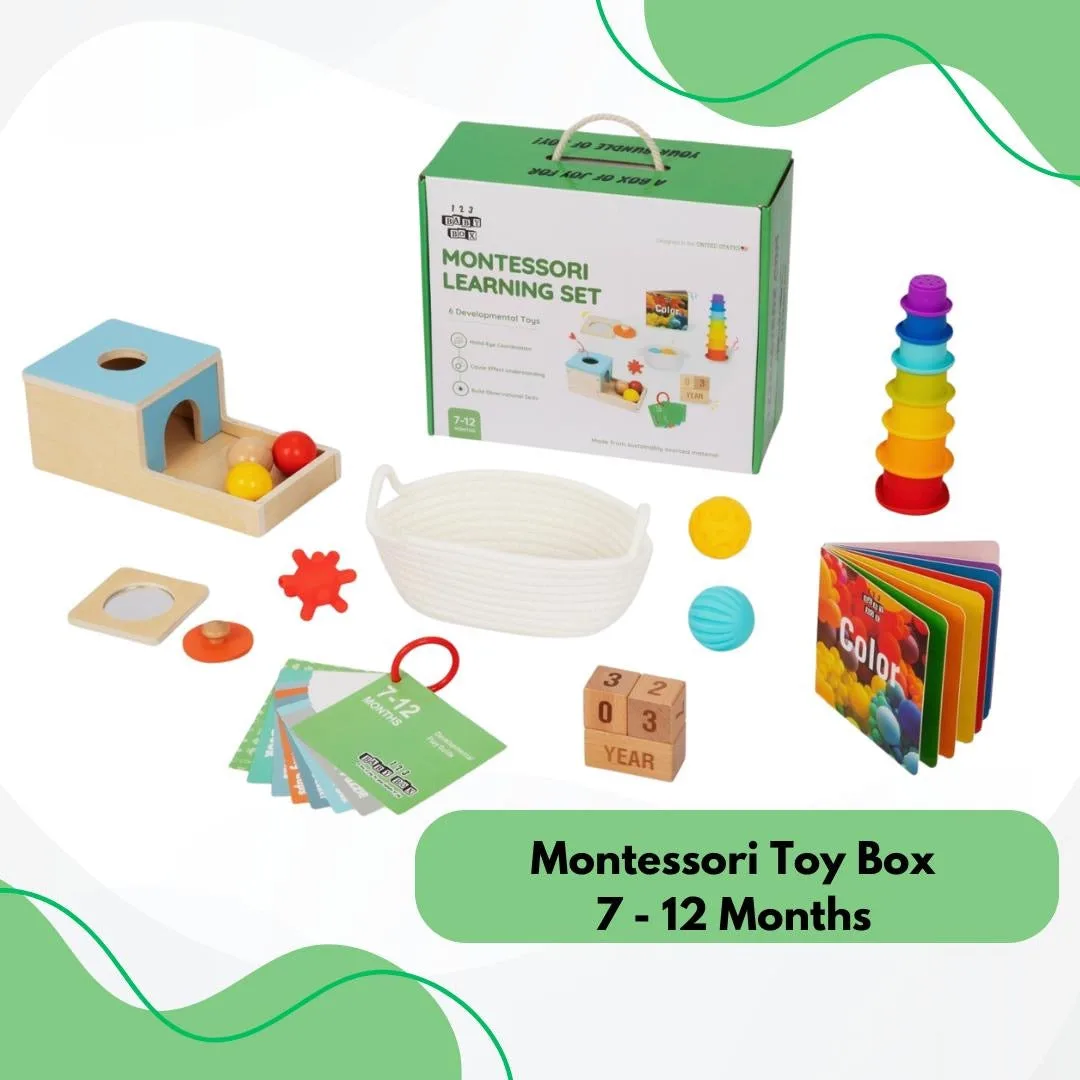
Montessori Educational Box (7-12 Months): Each box contains 6 products made from sustainable, safe materials, including an Object Permanence Box, Rainbow Nesting, and a First Mirror Puzzle. These items target specific developmental leaps—like object permanence and hand-eye coordination—so you can choose the right activity for your baby's current milestone rather than guessing.
Montessori Educational Box (7-12 Months)